
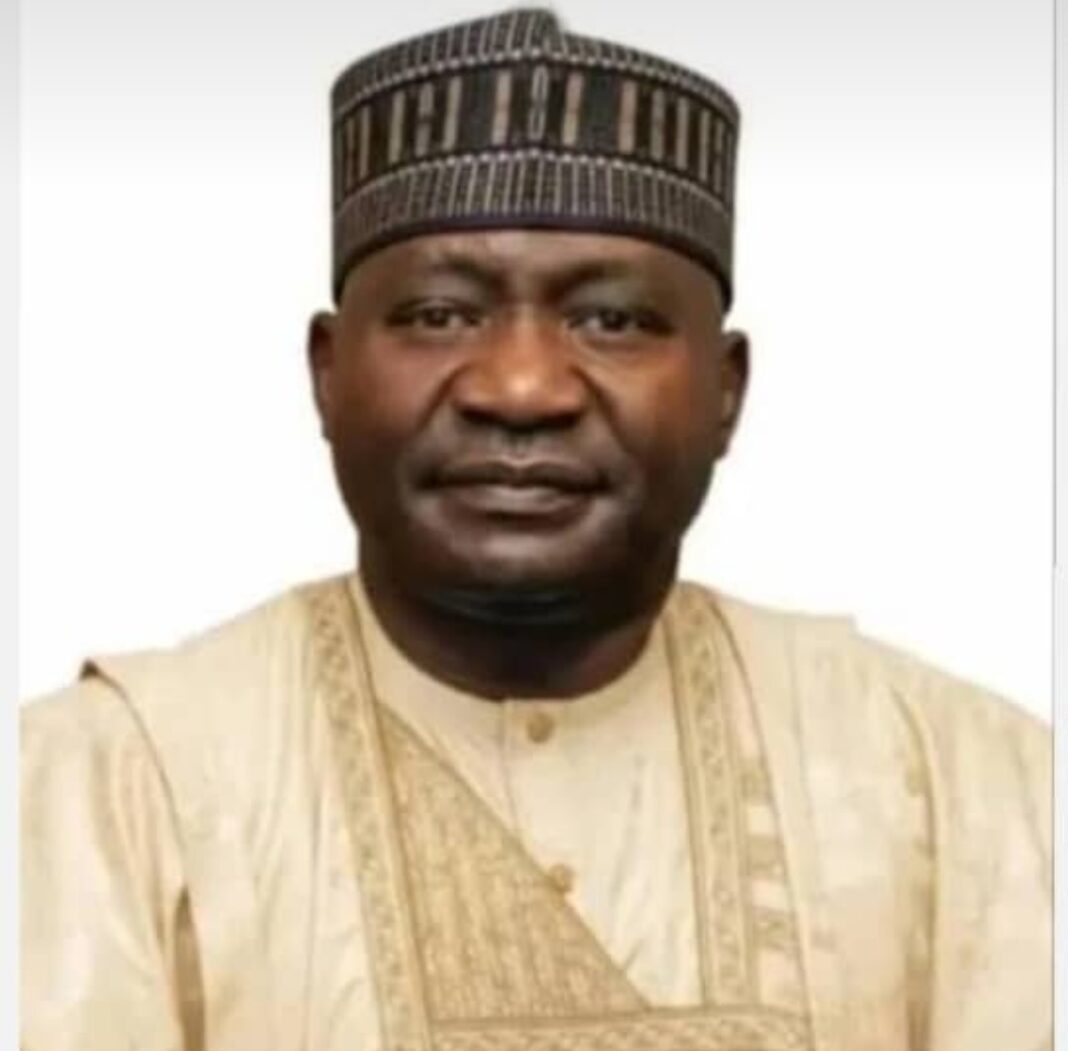
Christopher Musa accuses former Kaduna governor of dividing state, paying bandits and presiding over a ‘toxic’ era – says Southern Kaduna victims remain deeply traumatised – El-Rufai yet to publicly respond
A fresh political storm has erupted over the bloody history of Southern Kaduna after Minister of Defence, Gen. Christopher Musa (rtd.), accused former Kaduna State Governor Nasir El-Rufai of deliberately planning the killing of people in the region during his administration.
Musa made the allegation on Thursday during an appearance on Channels Television’s Politics Today, describing the atmosphere in Kaduna under El-Rufai as “toxic” and accusing the former governor of creating deep divisions between northern and southern communities.
The Defence Minister’s comments have reopened a longstanding and emotionally charged argument over the violence that shook Southern Kaduna during El-Rufai’s eight-year tenure, from 2015 to 2023.
“We know how it was when El-Rufai was there; it was toxic,” Musa said.
“El-Rufai did a lot of terrible things in Kaduna State. He divided the state into two.”
According to Musa, the division became so pronounced that people increasingly found it difficult to live outside their traditional ethnic or geographical areas.
“If you are from the south, you cannot go to the north to live. Those ones from the north were moving to the south.”
Musa contrasted that situation with what he described as efforts by Governor Uba Sani to rebuild trust between communities.
“It’s not 100%, but you can see that he’s making deliberate effort in uniting the state,” the minister said.
But it was his allegation concerning the killings in Southern Kaduna that is likely to generate the greatest political and public reaction.
‘We Can Never Be Happy With Him’
Asked whether Southern Kaduna residents remained unhappy with El-Rufai, Musa rejected the description as inadequate.
“I think if there’s anything worse than unhappy, we can never be happy with somebody who has deliberately planned for the killing of our people.”
The minister did not, in the interview, publicly present documentary evidence establishing that El-Rufai personally planned killings. The allegation should therefore be understood as Musa’s accusation rather than an independently established fact.
Nevertheless, his comments touch on a genuine historical wound.
Southern Kaduna has experienced repeated cycles of communal violence, particularly involving ethnic, religious, land and political tensions. Human-rights organisations and authorities have recorded hundreds of deaths over successive outbreaks, while thousands of residents have been displaced.
The violence reached a particularly intense phase around 2016 and 2017.
In January 2017, the National Emergency Management Agency said 204 people had been killed in the Southern Kaduna crisis during the period covered by its assessment. The figure was contested by Catholic Church authorities in Kaduna, who put the death toll considerably higher.
The competing casualty figures themselves became part of the controversy over the government’s handling of the crisis.
The 2016–17 Bloodshed
The violence was not a single event but a series of attacks and reprisals affecting communities across Southern Kaduna.
The area’s conflict has historically involved disputes between farming communities and pastoralists, ethnic rivalry, religious tension, competition over land and accusations of political marginalisation.
A 2016 peace agreement involving communities in five Southern Kaduna local government areas ‐ including Sanga, Kachia, Kaura, Zangon Kataf and Jema’a – reflected attempts to break the cycle of violence.
Yet attacks continued.
In July 2020, Human Rights Watch reported that at least 43 people had been killed in attacks over several days in Southern Kaduna. The organisation described the area as having a long history of communal violence and criticised the failure to adequately protect civilians and prosecute perpetrators.
The crisis consequently became one of the defining security controversies of the El-Rufai years.
And it remains one of the most politically sensitive chapters of his legacy.
El-Rufai and the ‘Bandit Payment’ Controversy
Musa also returned to another controversial issue involving the former governor – allegations concerning payments to armed Fulani groups.
“He told us he paid bandits. He told us he did this, he did that. He didn’t hide it,” Musa alleged.
The historical record is more complicated.
In December 2016, El-Rufai publicly said his administration had reached out to Fulani communities beyond Nigeria’s borders as part of efforts to end attacks in Southern Kaduna.
He said compensation had been paid in relation to cattle losses, arguing that some of the violence was connected to grievances arising from earlier conflicts.
The statement provoked an immediate political backlash.
Critics argued that paying people associated with armed groups could encourage further violence, while El-Rufai defended his actions as part of an attempt to end the killings.
Years later, the issue remained politically explosive.
El-Rufai himself subsequently became a prominent critic of government negotiations with bandits, arguing that criminals should not be rewarded for kidnapping and violence.
That apparent contradiction has continued to feature in political attacks against the former governor.
‘Southern Kaduna People Are Still Pained’
For Musa, however, the issue is ultimately about the victims.
He said residents of Southern Kaduna had not forgotten what happened during the years of violence.
“The Southern Kaduna people are still very pained.”
He added: “If you look at the number of deaths recorded there, he didn’t give opportunities, we couldn’t do a lot of things, but now you see that breath of fresh air.”
The remarks are likely to resonate strongly in communities where memories of killings, displacement and destroyed property remain fresh.
But they are also likely to provoke a fierce response from El-Rufai’s supporters, who have historically rejected attempts to attribute the violence principally to the former governor.
A Divided Kaduna
One of Musa’s central criticisms was that El-Rufai’s administration allegedly deepened the political and social separation between northern and southern Kaduna.
The minister described a situation in which residents increasingly felt they belonged to one side or the other.
“He divided the state into two.”
Musa said the situation has changed under Sani, whom he credited with deliberately trying to rebuild relationships between communities.
“Now everybody is free, everybody has a say,” he said.
But even Musa stopped short of declaring the problem solved.
“It’s not 100%.”
That qualification is significant.
Despite improvements reported by the state government, Kaduna continues to face insecurity in some rural communities, including kidnapping and armed attacks.
Sani inherited Kaduna’s complex security problems when he succeeded El-Rufai in May 2023.
His administration has increasingly promoted dialogue, reconciliation and community engagement alongside conventional military and police operations.
The governor has also promoted what his government calls the Kaduna Peace Model, involving traditional rulers, religious leaders, communities and security agencies.
In 2024, Sani said his administration had created mechanisms for dialogue with armed groups and communities, while insisting that ransom was not being paid.
The governor has also publicly credited traditional leaders and local communities with providing intelligence to security agencies.
In 2025, Sani said Kaduna had gone two years without an ethno-religious or communal clash – a claim presented by his administration as evidence that its reconciliation strategy was producing results.
But isolated attacks have continued, illustrating the difference between a reduction in communal conflict and the complete elimination of insecurity.
Southern Kaduna Warns Politicians
The renewed political argument over Southern Kaduna has itself generated concern among people from the region.
In February 2026, the Southern Kaduna Professionals Forum warned political actors against turning the area’s suffering into ammunition for elite political battles.
The group said: “Southern Kaduna is not a tool for elite political battles. Our pain is not a campaign slogan, and our losses are not bargaining chips in power struggles.”
It added that the scars of the violence remained visible in displaced families, abandoned farms, damaged livelihoods and communities attempting to rebuild.
The warning is particularly relevant now that Musa’s remarks have placed Southern Kaduna at the centre of another political confrontation.
Musa’s Message: Reject Divisive Politicians
Musa did not restrict his criticism to El-Rufai.
The Defence Minister used the interview to make a larger argument about Nigeria’s political culture, warning against politicians who exploit ethnicity and religion.
“We should get politicians that want to unite Nigeria,” Musa said.
He continued: “For me, any individual who is using either religion, tribe, creed, or anything to divide the state can never be a friend; can never be somebody we look up to.”
And in an even stronger warning: “Anybody who is using religion or tribe or whatever to divide Nigeria is an enemy of the state.”
The comments come as Nigeria approaches another politically consequential period, when questions of regional identity, religious balancing and political alliances are once again expected to dominate public debate.
From Political Ally to Bitter Critic
The Musa-El-Rufai confrontation also has a wider political context.
Sani, whom Musa praised, was himself once closely associated with El-Rufai.
Sani served as senator for Kaduna Central before becoming governor in 2023 and was widely regarded as El-Rufai’s preferred successor.
Their relationship has since deteriorated dramatically.
The former allies have become involved in increasingly public political disputes, with disagreements over the performance of the Sani administration, the legacy of El-Rufai’s government and the future direction of Kaduna politics.
Musa’s intervention adds another powerful voice to the debate.
What Exactly Does Musa’s Allegation Mean?
The most serious question arising from the interview is whether Musa was alleging that El-Rufai personally ordered or planned killings, or whether he was using “planned” in a broader political sense to describe policies and actions he believes contributed to the violence.
The distinction matters.
A claim that a former governor deliberately planned killings is an allegation of extraordinarily serious conduct. It would require evidence capable of demonstrating intent, planning and responsibility.
Musa did not publicly disclose such evidence during the interview.
Neither does the existence of widespread killings during El-Rufai’s tenure, by itself, establish that the governor planned them.
At the same time, critics of the former governor have for years pointed to his controversial statements and policies as evidence of what they regard as an antagonistic approach to Southern Kaduna.
In 2023, for example, El-Rufai came under criticism after remarks circulated in which he discussed voting patterns and the distribution of political appointments between predominantly Muslim northern communities and predominantly Christian Southern Kaduna communities.
His supporters have consistently argued that such remarks have been taken out of context and that his administration’s policies should be judged against the security and political realities it inherited.
El-Rufai’s Silence
At the time of publication, no direct response from El-Rufai to Musa’s latest allegation had been publicly established.
That response will be closely watched.
The former governor has historically been outspoken when challenged over his record, particularly on security, governance and allegations concerning his administration.
A response could reopen several disputed questions: the number of people killed during the Southern Kaduna crises; the identity and nationality of attackers; the government’s negotiations with Fulani groups; allegations of official negligence; and whether the administration’s policies contributed to ethnic polarisation.
The Unfinished Kaduna Story
Beyond the politicians, the central issue remains the people who lived through the violence.
For farmers who abandoned their land, families who lost relatives, communities that were displaced and businesses destroyed, the argument is not simply about El-Rufai or Sani.
It is about whether the Nigerian state can guarantee that violence will not return.
The political narratives surrounding Southern Kaduna have changed repeatedly.
Governments have blamed armed groups. Communities have accused authorities of failing to protect them. Politicians have blamed one another. Security agencies have announced operations. Religious and traditional leaders have repeatedly called for peace.
Yet the underlying question has remained remarkably constant: Who protects the civilian when the state fails to prevent the attack?
Musa’s intervention has now added another question: Was the violence merely the consequence of a government struggling to contain a complex security crisis — or, as the Defence Minister alleges, was there deliberate political planning behind the killing of Southern Kaduna residents?
For now, the second claim remains an allegation awaiting evidence.
But Musa’s words have ensured that the debate over El-Rufai’s legacy, and the unresolved pain of Southern Kaduna, will not disappear quietly.
Musa’s intervention has transformed an old Kaduna political dispute into a fresh national controversy. His accusation against El-Rufai is grave but remains unproven publicly. What is beyond dispute is that Southern Kaduna suffered repeated deadly violence during the former governor’s tenure and that the communities in the area continue to debate questions of accountability, justice and reconciliation.
The coming response from El-Rufai and his political camp could determine whether Musa’s remarks become a brief political controversy – or the beginning of a much larger reckoning over the violence and governance of Kaduna State between 2015 and 2023.