
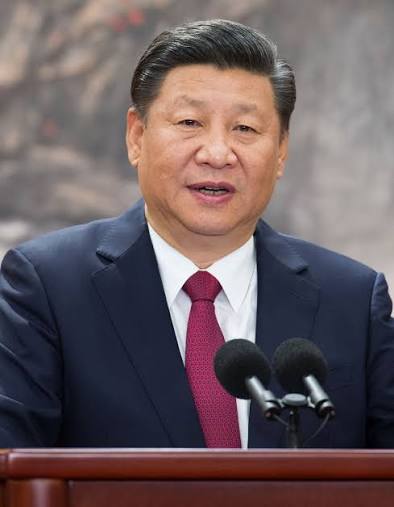
A disturbing Chinese video in English language that questions the integrity of the Federal Government in turning to French and Israeli firms for its satellite programme has surfaced on social media, raising concerns over the intention of the producers and whether it has the endorsement of the Chinese government.
Everyday.ng is investigating the source of the video, but it comes as Nigeria’s growing ambition to expand its satellite communications infrastructure has brought renewed attention to the country’s financial and technical relationship with China, following allegations that the Federal Government owes a Chinese aerospace contractor more than $11.4 million for services provided to the country’s only operational communications satellite.
Watch the video below:
The dispute involving China Great Wall Industry Corporation (CGWIC), the Chinese state-owned aerospace company responsible for technical support to Nigeria’s NigComSat-1R satellite, comes as the Federal Government moves ahead with plans to acquire new communications satellites from French and Israeli manufacturers under an ambitious programme estimated to cost about $2 billion.
The development has raised questions about Nigeria’s management of strategic national infrastructure, its obligations to foreign technical partners, the transparency of public procurement and the financial implications of embarking on new satellite investments while an outstanding payment dispute involving an existing satellite remains unresolved.
The $11.4 million Chinese claim
The controversy came into public attention in March 2026, following an investigation by TechCabal, which reported that CGWIC had claimed an outstanding payment of $11,442,335.89 as of December 31, 2025.
According to the report, the alleged debt arose from technical services provided to NigComSat-1R, including telemetry, tracking and command (TT&C) operations, which enable engineers to monitor the satellite’s condition, maintain its orbital position and transmit operational instructions.
Nigeria’s ground-control infrastructure in Abuja reportedly suffered lightning damage in 2018, forcing the country to depend on technical support from China’s ground station in Kashgar.
What was initially intended as a temporary arrangement reportedly became a long-term operational arrangement.
CGWIC alleged that it had continued providing the services without receiving payment since 2019.
In correspondence dated February 28, 2026, the Chinese company reportedly informed NIGCOMSAT management that the outstanding amount had risen to more than $11.44 million.
The company maintained that it had continued supporting the Nigerian satellite despite the accumulated financial obligations.
However, NIGCOMSAT disputed the reported debt figure.
The Nigerian satellite operator maintained that its relationship with the Chinese contractor remained healthy and rejected reports suggesting that it was facing a crisis over the alleged outstanding payment.
In its response, the agency did not confirm the $11.44 million figure.
The dispute therefore remains an allegation by the Chinese contractor rather than an independently established debt acknowledged by the government.
From China to France and Israel
Interestingly, months after the Chinese debt controversy emerged, Nigeria announced plans to engage French and Israeli companies for the production of two next-generation communications satellites.
In August 2026, the Federal Executive Council approved the acquisition and deployment of NigComSat-2A and NigComSat-2B.
The two satellites are expected to be delivered through partnerships involving Israel Aerospace Industries (IAI) and France’s Thales Alenia Space.
The Federal Ministry of Communications, Innovation and Digital Economy and NIGCOMSAT are coordinating the initiative.
According to the government, the new satellites will expand broadband capacity, improve broadcasting services, strengthen enterprise connectivity and provide communications support to government institutions and other critical sectors.
They are also expected to improve connectivity in rural and underserved communities where laying fibre-optic infrastructure is difficult or commercially unattractive.
The new satellites will eventually complement or replace the existing NigComSat-1R, which was launched in December 2011 and designed for an operational lifespan of approximately 15 years.
NIGCOMSAT has indicated that the launches are expected to take place in phases, beginning around the end of 2028, with subsequent deployment expected between 2029 and 2030.
The selection of the French and Israeli companies represents an important development in Nigeria’s international satellite partnerships, although it does not mean that the country has completely ended its relationship with China.
Indeed, China Great Wall Industry Corporation has also been mentioned among the international technical partners involved in Nigeria’s larger satellite development programme.
The controversial $2 billion programme
The financial dimension of the new satellite initiative has attracted further attention.
On October 2, 2026, it was reported that Nigeria’s procurement process for six new satellites, under a programme estimated at approximately $2 billion, had reached 95 per cent completion.
The Director-General of the National Space Research and Development Agency (NASRDA), Professor Matthew Adepoju, disclosed this during an interview with the News Agency of Nigeria (NAN) in Abuja.
The proposed programme includes two communications satellites, NigComSat-2A and NigComSat-2B, alongside three optical Earth-observation satellites and a Synthetic Aperture Radar satellite.
The Earth-observation satellites are expected to improve Nigeria’s capacity to monitor agricultural activities, environmental changes, infrastructure development, security situations and other national priorities.
Adepoju said the procurement process was approaching its final stage, with formal agreements with foreign technical partners expected to follow.
However, it is important to distinguish the estimated $2 billion value of the larger six-satellite programme from the final contractual cost of the two communications satellites.
As of the October 2, the overall procurement process was reportedly 95 per cent complete. That figure did not establish that $2 billion had already been committed through signed contracts.
Subsequent reporting on developments also raised questions about the procurement process, financing arrangements and the approvals governing the selection of foreign contractors.
On September 14, Thales Alenia Space announced that it had signed a contract with NIGCOMSAT for the development of NigComSat-2A.
The final financial terms of the satellite project have not been fully disclosed.
NIGCOMSAT’s Managing Director, Jane Nkechi Egerton-Idehen, said the official amount would be made public when financing arrangements were concluded. She also indicated that the project would be vendor-financed and supported by export-import banks.
Consequently, the widely reported $2 billion figure should be understood as an estimate for the larger satellite procurement programme, not an independently confirmed final payment to the French and Israeli manufacturers.
Procurement and national security questions
Beyond the financial implications, the new satellite programme has generated questions about procurement transparency and national security oversight.
In an investigation published on September 23, 2026, BusinessDay reported that the House of Representatives Committee on Digital and Communication Technology had raised concerns about a proposed visit by executives of Israel Aerospace Industries to NIGCOMSAT facilities in May 2026.
The committee reportedly directed the agency to cancel the proposed facility tour pending a comprehensive briefing to the lawmakers and relevant security agencies.
Among the issues raised were questions about procurement approvals, budgetary provisions and the security implications of granting a foreign aerospace and defence company access to sensitive satellite infrastructure.
The parliamentary intervention has added another dimension to the debate surrounding the selection of international partners for Nigeria’s strategic communications assets.
The questions include whether all relevant procurement approvals were obtained, what security clearances were required and how the government intends to protect sensitive national communications infrastructure.
These concerns are particularly important because communications satellites support more than commercial broadcasting and internet services. They can also provide connectivity for government institutions, emergency response, national security and other critical services.
Nigeria’s wider debt exposure to China
The satellite-services controversy is separate from Nigeria’s much larger bilateral borrowing relationship with China.
According to media reports, citing the World Bank’s International Debt Report 2026, Nigeria owed China approximately $5.67 billion in bilateral external debt as of December 31, 2025.
China was identified as Nigeria’s largest bilateral creditor, accounting for approximately 85 per cent of the country’s $6.68