
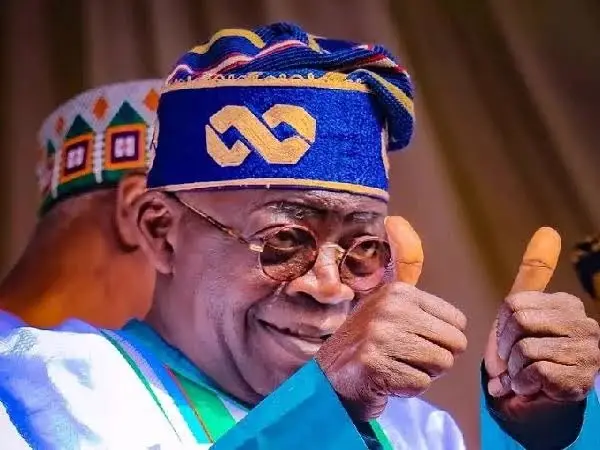
A Yoruba socio-cultural organisation, Ìgbìnmó Májékóbájé Ilé-Yorùbá, has challenged President Bola Ahmed Tinubu to explain why he is opposing the further release of United States government records concerning historical investigations involving him, insisting that Nigerians have a right to know the full background of anyone seeking to occupy the country’s highest political office.
The group’s position followed a fresh 16-page filing by Tinubu before the United States District Court for the District of Columbia, in which the President urged the court to reject transparency activist Aaron Greenspan’s bid for additional disclosure of records held by the Federal Bureau of Investigation (FBI) and Drug Enforcement Administration (DEA).
Tinubu’s lawyers – Christopher W. Carmichael, Victor P. Henderson and Oluwole O. Afolabi – argued that the requested material is protected by privacy interests and that the Freedom of Information Act (FOIA) should not be used as a means of obtaining private information about an individual from government files. They asked the court to uphold the redactions and withholdings made by the FBI and DEA.
Greenspan, who has pursued the matter through a FOIA lawsuit since 2023, is seeking records concerning Tinubu, including an FBI file, FBI Form 302 interview records relating to 1992–1993, and documents connected to a 1993 civil forfeiture proceeding involving approximately $460,000 in funds linked to Tinubu. Tinubu has denied wrongdoing.
The latest legal battle comes against the background of a significant ruling delivered in April 2025 by US District Judge Beryl Howell.
In that ruling, the court held that the FBI and DEA could not continue using so-called “Glomar” responses to refuse to confirm or deny whether records concerning Tinubu existed. The court found that the US government had already publicly acknowledged the involvement of the FBI and DEA in an investigation concerning Tinubu, meaning the agencies could no longer plausibly claim that merely acknowledging the existence of such an investigation would reveal protected information.
The 2025 ruling did not, however, establish that Tinubu was guilty of drug trafficking. Rather, it concerned the agencies’ ability to withhold information under FOIA and whether previously disclosed government information had undermined their refusal to acknowledge the existence of investigative records.
The dispute has since moved to the question of how much of the underlying material must actually be disclosed.
Recent reports indicate that the FBI submitted records to Judge Howell under seal on August 28, 2026, for private, in-camera review. The material was not thereby made public; rather, the judge is to determine which portions, if any, can lawfully be released under FOIA.
It is against this backdrop that Ìgbìnmó Májékóbájé Ilé-Yorùbá has renewed its call for transparency.
In a statement issued on Saturday and signed by its Convener, Olusola Badero, and released through its Home Director, Princess Balogun, the organisation questioned why Tinubu would seek to prevent the release of records relating to his past in the United States.
The group argued that the issue should no longer be treated simply as a matter concerning the private life of an individual because Tinubu is Nigeria’s sitting President and has expressed an interest in continuing in office.
According to the organisation, Nigerians should be able to examine the background of any politician seeking their votes and reach their own conclusions from the available evidence.
The Yoruba group said Tinubu should allow the US authorities to release whatever records can lawfully be disclosed, rather than seeking to prevent public access to them.
It questioned what it described as the President’s determination to keep the records from public scrutiny, arguing that transparency would allow Nigerians to distinguish between established facts, allegations and matters that remain unproven.
The organisation also challenged the relevance of security screening and political profiling if citizens themselves are ultimately prevented from examining information about the backgrounds of those seeking the presidency.
It maintained that the presidency is a public trust and not a private estate, stressing that Nigerians should not be denied information simply because it concerns a serving political leader.
The group said the public interest in the matter was heightened by Tinubu’s position as President and by the prospect of his seeking another term.
It argued that voters should be allowed to make political decisions with access to as much reliable information as the law permits, particularly concerning questions that have remained subjects of public debate for years.
The organisation further warned that shielding politically exposed individuals from scrutiny could create a dangerous precedent in Nigeria, where future politicians might similarly seek to invoke privacy or political power to prevent examination of their pasts.
It therefore urged Tinubu to allow the US judicial process to run its course and to permit any non-exempt records to be released so that Nigerians could independently assess their contents.
The Yoruba Union’s position, in essence, is that the question is not whether every document in a government investigative file should automatically be made public. Rather, it is whether a sitting Nigerian president should actively oppose disclosure of information that a court determines is legally subject to public access.
The organisation said Nigerians should be trusted to examine the records and distinguish between allegations and facts.
It also maintained that if the records ultimately contain no evidence of wrongdoing, their disclosure could equally provide an opportunity to settle longstanding questions surrounding Tinubu’s history in the United States.
The latest court filing, however, makes clear that Tinubu’s legal position remains that privacy protections continue to apply to the contents of investigative files even where limited information about an investigation has previously entered the public domain.
His lawyers argued that the earlier disclosure of information connected to the forfeiture proceedings did not extinguish Tinubu’s continuing privacy interest in the wider investigative files. They also contended that Greenspan’s FOIA requests are principally aimed at obtaining information about Tinubu as a private individual rather than information about the operations of the US government.
The court has yet to make a final determination on the latest request to maintain the disputed redactions and withholdings.
For Ìgbìnmó Májékóbájé Ilé-Yorùbá, however, the broader issue is already clear: anyone seeking to govern Nigeria should be prepared to face the highest level of public scrutiny.
The organisation therefore called on Tinubu to stop opposing disclosure of records that can legally be released and allow Nigerians to determine for themselves what the documents show.
It said transparency, rather than secrecy, was the better way to resolve the controversy and protect confidence in Nigeria’s democratic process.
The group maintained that Nigerians—not politicians, government officials or political organisations—should ultimately have the opportunity to assess the records of those asking for their votes.
As the US court considers the competing arguments, the Yoruba Union said the public should be allowed to see whatever information the law permits to be disclosed and judge the evidence independently.