
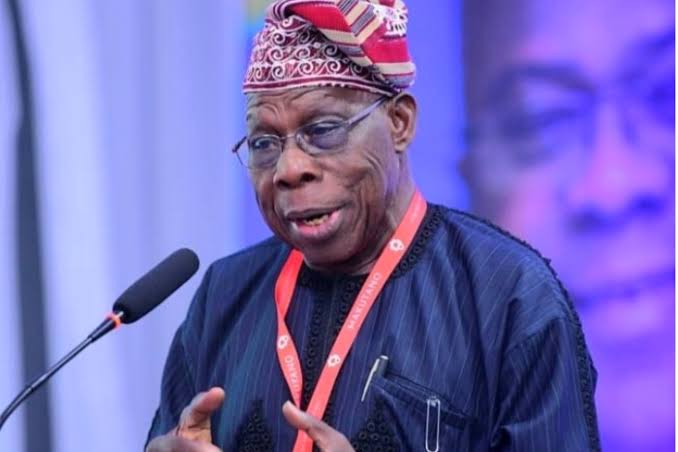
Former President Olusegun Obasanjo has criticised President Bola Tinubu’s economic reforms, arguing that the sharp depreciation of the naira and the removal of petrol subsidies have worsened poverty and eroded Nigerians’ purchasing power.
Speaking on Wednesday at the Financial Times Africa Summit 2026 in London, Obasanjo said the naira’s fall from about ₦500 to the dollar to ₦1,500 had significantly weakened the economic position of Nigerians.
He argued that the currency’s depreciation had contributed to Nigeria’s status as one of the world’s poorest countries, questioning whether the reforms had delivered meaningful benefits to citizens.
Tinubu’s administration removed the petrol subsidy in May 2023 and introduced foreign-exchange reforms the following month. The measures were designed to address market distortions, improve foreign-exchange liquidity and strengthen government revenues. However, the resulting currency adjustment and higher fuel costs placed additional pressure on households and businesses.
Economic indicators present a mixed picture
Recent data show that Nigeria’s economy has strengthened in some areas, although living costs and widespread poverty remain major concerns.
According to the World Bank’s October 2026 Nigeria Development Update, real gross domestic product grew by 4.2 per cent in the first half of 2026, compared with 3.9 per cent in the corresponding period of 2025. Growth was driven mainly by services and agriculture. The bank projects average annual growth of 4.4 per cent between 2026 and 2028, provided reforms continue and investment and job creation improve.
Inflation has also moderated. The National Bureau of Statistics reported that headline inflation fell to 14.63 per cent in September 2026, from 15.39 per cent in August. However, food inflation remained high at 19.59 per cent, underscoring the continuing strain on household budgets.
The World Bank estimates that 69.6 per cent of Nigerians lived below the lower-middle-income poverty line of $4.20 a day in 2025, while approximately 123 million people -50.8 per cent of the population – lived in extreme poverty under the measure used in its assessment.
These figures highlight the distinction between improving economic output and improvements in living standards. Economic growth does not automatically translate into higher real wages, affordable food or better access to essential services.
Cost of living and quality of life
The removal of petrol subsidies contributed to higher fuel and transport costs, while naira depreciation increased the local cost of imported goods and production inputs. These pressures affected food distribution, manufacturing and household spending.
Although slower inflation means prices are rising more slowly than before, it does not mean that prices have returned to their earlier levels. Many households continue to face high costs for food, transport, housing, healthcare and education.
The World Bank has emphasised that Nigeria needs more productive jobs, stronger real incomes and better public services to ensure that economic stabilisation translates into tangible welfare improvements. Its October 2026 assessment also identified opportunities to channel increased government revenues into infrastructure, education, healthcare and social protection.
The debate over reforms continues
Obasanjo’s comments add to the debate over whether Tinubu’s reforms have achieved an appropriate balance between macroeconomic stability and citizens’ welfare.
While the reforms have improved some fiscal and external indicators, persistent poverty and pressure on household purchasing power remain significant challenges. The central test for the government will be whether stronger growth, increased public revenue and improved economic stability can produce better jobs, more affordable essentials and measurable improvements in Nigerians’ quality of life.