
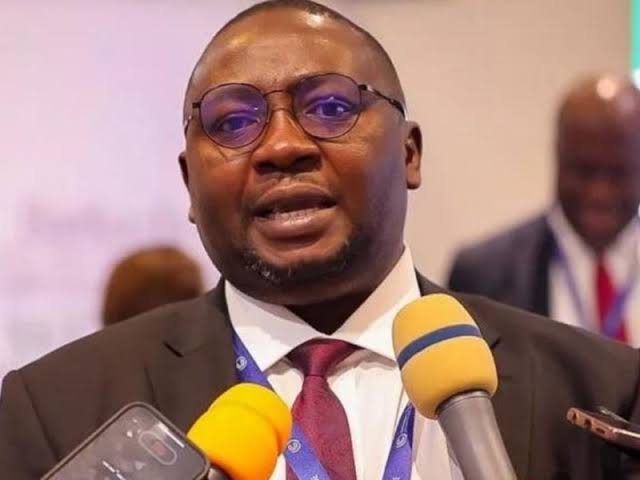
The Minister of Power, Adebayo Adelabu, has resigned his position in the cabinet of Bola Ahmed Tinubu, bringing to a close a tenure marked by ambitious reforms, modest gains in electricity supply, and persistent structural challenges in the power sector.
In a resignation letter dated April 22, 2026, Adelabu said his exit will take effect on April 30, 2026, as he prepares to pursue his long-standing governorship ambition in Oyo State. The move, he noted, is in compliance with the provisions of the Electoral Act 2022 (Nigeria), which bars serving public office holders from contesting elections.
His Special Adviser on Strategic Communications and Media Relations, Bolaji Tunji, confirmed the development on Wednesday, stating that the minister expressed gratitude to the President for the opportunity to serve.
Reform-Driven Tenure
Adelabu’s time in office coincided with one of the most consequential policy shifts in Nigeria’s electricity sector – the implementation of the Electricity Act 2023. The legislation decentralised the power market, granting states greater autonomy over electricity generation, transmission, and distribution, while opening new pathways for private investment.
Under his leadership, Nigeria recorded a gradual increase in peak power generation, which crossed the 6,000 megawatt threshold for the first time in years. This was driven largely by the integration of the Zungeru Hydroelectric Power Station and rehabilitation efforts across several thermal power plants.
Transmission capacity also saw incremental improvements through the ongoing Presidential Power Initiative, a federal government-backed programme aimed at modernising the national grid.
Distribution and Metering Improvements
In the distribution segment, the ministry intensified regulatory oversight of electricity distribution companies (DisCos), targeting inefficiencies and revenue leakages. Officials reported improvements in revenue collection and a gradual reduction in Aggregate Technical, Commercial and Collection (ATC&C) losses.
A major focus area during Adelabu’s tenure was closing Nigeria’s longstanding metering gap. Through the National Mass Metering Programme and the World Bank-supported Distribution Sector Recovery Program, the government scaled up meter deployment, although millions of consumers remain unmetered.
Financial Reforms and Investor Confidence
On the financial front, Adelabu oversaw tariff adjustments aimed at moving toward cost-reflective pricing, alongside a reported ₦4 trillion debt restructuring effort across the sector. These measures contributed to an increase in market revenues – from about ₦1 trillion in 2023 to over ₦2 trillion by 2025 – helping to restore some level of investor confidence in a historically underperforming sector.
However, these reforms were not without controversy, as tariff hikes drew criticism from consumers already grappling with inflation and inconsistent power supply.
Persistent Challenges
Despite the recorded gains, the sector continues to face deep-rooted challenges. Gas supply constraints have limited the performance of thermal plants, while vandalism of transmission infrastructure remains a recurring issue. The full commercialisation of the electricity value chain—long seen as critical to sustainability—also remains incomplete.
Industry experts note that while policy direction improved under Adelabu, execution gaps and structural inefficiencies slowed the pace of transformation.
Call for Stronger Coordination
In his exit note, Adelabu emphasised the need for stronger coordination across Nigeria’s energy ecosystem. He proposed the creation of a “Coordinating Minister for Energy” to harmonise policy across power, gas, water resources, and environmental sectors – an approach he believes is essential for addressing interlinked challenges such as gas supply for power generation and renewable energy expansion.
Political Transition
Adelabu’s resignation signals a return to partisan politics, nearly a decade after his earlier governorship bid in Oyo State. His departure adds to a growing list of political appointees repositioning ahead of the next electoral cycle.
He pledged to ensure a smooth handover process, expressing appreciation to President Tinubu for his support throughout his tenure.
As Nigeria’s power sector enters another phase of leadership transition, stakeholders say the sustainability of recent reforms – and the ability of his successor to build on them – will be critical in determining whether the country can achieve stable and reliable electricity supply in the coming years.
FAAC Disbursements Hit N2.036trn in March as Tinubu-Era Allocations Surge Past N30trn
Alleged Coup Plotters Deny Charges, Face Accelerated Trial April 27
Plateau Moves for Justice as Angwa-Rukuba Killings Suspects Face Trial
Chinese Covid patient in Calabar: No cause for panic, say authorities
Appraising Mutfwang’s Engagement with Ex-Governors Over Insecurity in Plateau