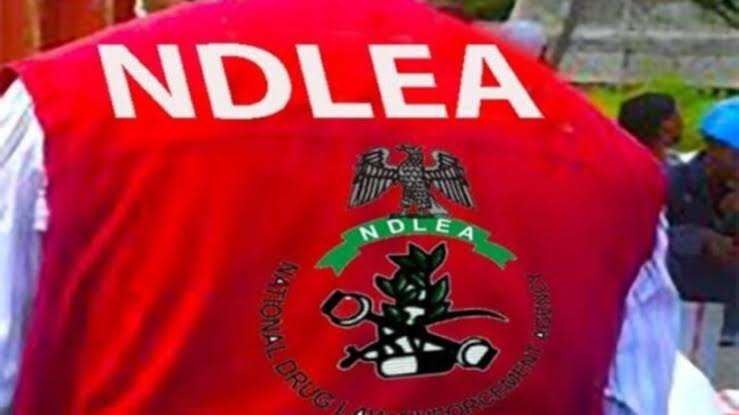
Against the backdrop of a sustained nationwide crackdown that has recently produced a steady stream of arrests, seizures, and convictions, operatives of the National Drug Law Enforcement Agency (NDLEA) have again recorded significant breakthroughs – intercepting cocaine hidden in food flasks, cannabis concealed in snack packs, and apprehending multiple suspects, including a Lagos-based fashion designer.
In a statement issued in Abuja on Sunday, the agency’s Director of Media and Advocacy, Femi Babafemi, detailed how officers at the export shed of the Murtala Muhammed International Airport (MMIA), Lagos, uncovered 12 parcels of cocaine weighing 2.8 kilogrammes. The drugs, cleverly tucked into false bottoms of food flasks, were destined for the United Kingdom—another example of the increasingly inventive concealment methods traffickers have adopted in response to tighter enforcement.
The interception led to the immediate arrest of two cargo agents, Ama Ufeim and Ogabi Akorede, while follow-up investigations traced the shipment to its alleged sender, freight forwarder Agoro Moninuola, who was subsequently apprehended.
In a related operation underscoring the agency’s vigilance at entry points, NDLEA officers at the airport’s import shed intercepted 2.90 kilogrammes of “Loud,” a potent strain of cannabis, hidden inside snack food packs. The consignment had arrived from the United States aboard a Delta Airlines flight. Initial arrests of clearing agents Animashaun Moshood Adetunji and Mercy Gabriel Oluwasegun paved the way for a broader operation that led to the capture of the consignee, 29-year-old fashion designer Saheed Adeshina Adegoke, at his residence in Ogba, Lagos.
Beyond the airports, the agency’s operations extended deep into the hinterland. Along the Kaduna–Zaria highway, operatives intercepted a cement-laden trailer concealing 847 kilogrammes of skunk—packaged in 760 blocks and 33 jumbo bags—resulting in the arrest of the driver, Umar Garba Haruna. The seizure reflects a growing pattern of traffickers using legitimate cargo as cover, a tactic NDLEA has increasingly disrupted.
The agency’s campaign has also targeted cultivation hubs. In Cross River State, a joint operation wiped out 15,000 kilogrammes of cannabis grown across six hectares, while in Edo State, officers dismantled a major cannabis camp, destroying over 2,281 kilogrammes and arresting three suspects. A subsequent raid in Ovia North East LGA yielded additional arrests and seizures, including processed cannabis and seeds.
Elsewhere, enforcement actions in Delta State led to the arrest of two suspects found with nearly 88 kilogrammes of skunk, while in Lagos, operatives intercepted shipments of tramadol capsules and phenobarbital injections along the Mile 2–Badagry corridor. Another raid in Lagos Island uncovered 95.8 kilogrammes of cannabis stored in a residential building.
These operations form part of a broader intensification of NDLEA’s activities, which, in recent months, have translated into high-profile arrests, expanded seizures, and increasing prosecutions across the country. Alongside enforcement, the agency continues to push its War Against Drug Abuse (WADA) campaign, taking preventive education to schools, religious institutions, and local communities—an effort aimed at reducing demand even as supply networks are dismantled.
In a chronicle of its war on illicit drugs in the first quarter of 2026, the agency unleashed a sweeping crackdown that left courtrooms busy and trafficking networks rattled. In just three months, the agency secured a staggering 974 convictions – an unmistakable signal that the tide may be turning against the nation’s drug underworld.
From January through March, the figures told a story of relentless pursuit: 265 convictions in January, climbing to 316 in February, and peaking at 393 in March. Behind each number lies a courtroom battle won, a network disrupted, and a message sent. Of those convicted, 899 were men and 75 women, reflecting the wide reach of the agency’s operations.
But it was the fall of 11 major drug kingpins that captured national attention. Together, they were handed a crushing 254 years behind bars – sentences that authorities say mark a new era of accountability.
At the center of the storm was Adegbite Solomon, an Italy-based businessman known in underground circles as “Obama.” His case unfolded like a crime thriller in a Lagos courtroom, ending with a cumulative 130-year prison sentence on a 15-count charge. The court did not stop there: his pharmacy licence was revoked, two outlets seized, and funds in multiple bank accounts forfeited to the Federal Government – an all-out dismantling of his empire.
Elsewhere, justice followed a familiar face. In Ibadan, 32-year-old Ridwan Animashaun, already known to authorities, was sentenced to 25 years in prison – his second conviction since 2022. His case underscored a troubling reality: the persistence of repeat offenders in the drug trade.
In Abeokuta, the scale of trafficking came into sharp focus when Rauf Asogba and Seun Olaniyi were each handed 17-year sentences for moving a massive 1,779 kilograms of cannabis. Meanwhile, in Kano and Damaturu, convictions of Jonathan Nuhu, alias “Doctor,” and Idris Yusuf added to the growing list of traffickers facing long years behind bars.
Across the country, similar scenes played out – courtrooms delivering seven-year sentences and beyond, as judges moved swiftly through dockets filled with drug-related cases.
Reacting to the wave of convictions, NDLEA Chairman Brig. Gen. Buba Marwa (Rtd) described the moment as a defining milestone.
“Nearly 1,000 convictions in three months is not just a statistic – it is a warning,” he said. “The era of impunity for drug traffickers is coming to an end.”
Marwa praised the judiciary for expediting cases and commended NDLEA operatives for what he called “courage under pressure.” He also emphasized that the fight is far from over, urging citizens to play their part by providing timely and credible information.
As the agency doubles down on arrests, prosecutions, and asset seizures, one thing is clear: the country’s anti-drug campaign has entered a new phase – fiercer, faster, and far more unforgiving.
For drug cartels operating in the shadows, the message could not be louder: the walls are closing in.