
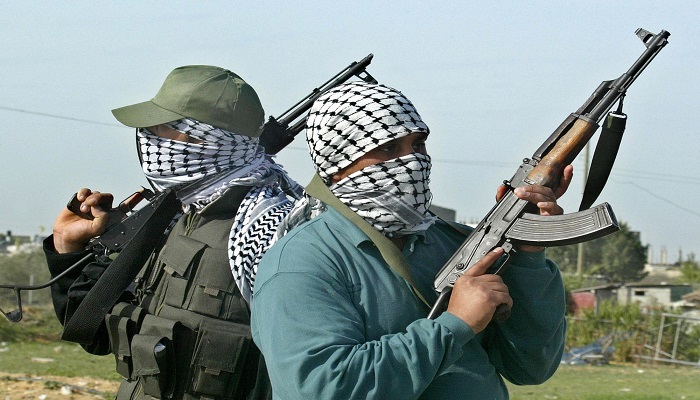
No fewer than 14 persons, including a mobile police officer, have been killed in renewed attacks on communities in Apa and Otukpo Local Government Areas of Benue State — the latest in a troubling pattern of violence that has defined much of 2026 for the agrarian state.
The fresh wave of killings, widely attributed by residents and local authorities to suspected armed herdsmen, swept through Edikwu-Ankpali, Ikobi and Adija communities in Apa LGA, as well as Upu village in neighbouring Otukpo, between Friday and Sunday.
What began as isolated strikes quickly spiralled into what locals described as coordinated assaults. Eyewitnesses said attackers first hit Ikobi and Adija on Friday night, killing three persons and leaving several others injured. By Sunday, they had returned with greater force, unleashing violence on Edikwu-Ankpali where at least 10 people – including women – were reportedly killed, with many still unaccounted for as youths comb surrounding bushes.
Official figures, however, remain fluid. Chairman of Apa LGA, Adams Ogwola, confirmed that nine bodies were recovered in Edikwu-Ankpali, with one person each killed in Ikobi and Adija. But community sources insist the toll may be higher, underscoring a familiar pattern in Benue where casualty figures often rise as search efforts continue.
In Otukpo, the violence took a grim turn when a mobile police officer was killed on Saturday while attempting to repel an attack on Upu community. The council chairman, Maxwell Ogiri, said the officer died in active duty as security forces engaged the assailants, adding that reinforcements have since been deployed.
Across the affected communities, the mood is one of grief and displacement. Entire families have fled their homes, abandoning farms at the onset of the planting season – a disruption that threatens both livelihoods and food security in a state often described as Nigeria’s “food basket.”
For many residents, the latest killings are not an isolated case but part of a relentless cycle.
Since the beginning of 2026, Otukpo and surrounding Idoma communities have witnessed repeated deadly incursions. In January alone, at least five persons — including a former state assembly candidate — were killed in an overnight attack on Otobi-Akpa, while separate incidents claimed the lives of a retired army officer and other civilians, alongside reported kidnappings.
That same month, professional groups raised alarm over what they described as “brutal and senseless” killings spreading across Idoma land, warning that communities were being pushed to the brink amid fears of displacement and possible self-defence reprisals.
The persistence of such attacks reflects a deeper, unresolved conflict in Benue and across Nigeria’s Middle Belt – one rooted in disputes over land, grazing routes, and identity, but increasingly marked by cycles of reprisal and mass casualty violence.
Reacting to the latest bloodshed, the member representing Apa/Agatu Federal Constituency, Ojotu Ojema, condemned the attacks as “barbaric and senseless,” lamenting the continued loss of lives and the steady erosion of rural stability.
“It is unacceptable that our people continue to live in fear, unable to access their homes and farms,” he said, calling for decisive security intervention and accountability.
Local government officials echoed the call, urging both federal and state authorities to move beyond reactive deployments and adopt proactive security strategies, while also providing urgent relief for displaced families.
Yet, for residents who have witnessed repeated promises amid recurring funerals, confidence remains fragile.
As of press time, a formal response from the police authorities was still being awaited — a silence that, for many in these communities, has become as familiar as the sound of gunfire in the night.
Benue State Killings (2019–2026): From Cyclical Clashes to Protracted Crisis
Overview: A Conflict That Became Permanent
Over the past seven years, violence in Benue State has shifted from seasonal farmer–herder clashes to sustained, year-round insecurity.
Between January 2019 and June 2025, at least 2,185 people were killed in 287 recorded incidents.
The conflict is no longer episodic; it has become “relentless and escalating”.
By 2024–2025, total deaths across recent years are estimated in the thousands, with some reports suggesting over 2,800 deaths within just two recent years.
This marks a transformation from localized disputes into a chronic humanitarian and security crisis.
Year-by-Year Patterns and Escalation
2019–2020: Post-2018 Aftershock

Following the mass killings of 2018, violence persisted:
Frequent low- to mid-scale raids across rural communities
Weak enforcement of the anti-open grazing law (2017)
Emergence of reprisal attacks and militia formations
2020–2022: Sustained Violence
Amnesty and other groups reported ~1,000 deaths and 300,000 displacements in this period.
Attacks spread across multiple LGAs (Guma, Logo, Agatu, Kwande)
Conflict became less seasonal and more opportunistic
2023: Massacre Year
2023 marked a major escalation with coordinated, high-casualty attacks:
Umogidi massacre – over 50 killed during a funeral
Mgban massacre – 43 killed in an IDP camp
Major shift:
Attackers increasingly targeted:
Funerals
IDP camps
Markets and religious spaces
This indicated a move toward terror-style violence against civilians, not just land disputes.
2024: Expansion and Entrenchment
Attacks spread geographically into previously safer communities
Increasing reports of:
Village burnings
Mass displacement
Food insecurity
The conflict began to significantly undermine Benue’s identity as Nigeria’s “food basket.”

2025: Peak Lethality
2025 stands out as the deadliest year in recent history:
A single attack in Yelwata (Guma LGA) killed 100–200+ people
Another report puts the toll at ~150 deaths, with prosecutions initiated in 2026
Additional coordinated attacks killed dozens across multiple communities
Other incidents:
Akpanta killings – dozens killed, entire communities destroyed
Pattern in 2025:
Larger, militarized assaults
Use of automatic weapons
Mass arson and village destruction
2026 (Early): Legal and Political Fallout
Nigerian authorities charged suspects over the Yelwata massacre, signaling:
Increased federal attention
Growing international scrutiny
However, attacks have not fully ceased.
Humanitarian Impact
Mass Displacement
By end of 2024, about 500,000 internally displaced persons (IDPs) in Benue
Continued attacks in 2025 displaced thousands more
Living Conditions
IDP camps face:
Overcrowding
Disease outbreaks (malaria, typhoid)
Gender-based violence
Limited healthcare access
Economic Devastation
Farming communities abandoned
Sharp decline in:
Crop production
Livestock activity
Severe threat to national food security
Nature and Drivers of the Violence
Core Causes
Land Competition
Farmers vs. pastoralists over grazing routes
Climate Change
Desertification pushing herders southward
Population Pressure
Increased demand for land
Weak Governance
Poor enforcement of anti-grazing laws
Ethno-Religious Tensions
Often overlaps (Fulani herders vs. largely Christian farming communities)
Evolution of Tactics
Phase Characteristics
Pre-2019 Seasonal clashes
2019–2022 Frequent raids, reprisals
2023–2025 Massacres, village destruction, terror-style attacks
Major Trends Across the 7 Years
From Seasonal to Permanent Conflict
Violence now occurs year-round, not just during grazing seasons.
Increasing Civilian Targeting
Funerals
Churches
IDP camps
Rising Death Tolls per Incident
Earlier: dozens
Now: 100+ in single attacks
Geographic Spread
More LGAs affected simultaneously.
Militarization
Use of assault rifles
Organized armed groups rather than spontaneous clashes
Government and Security Response
Measures Taken
Deployment of military and police
Anti-open grazing law (2017)
Arrests and prosecutions (notably post-2025)
Limitations
Poor enforcement
Slow response times
Lack of rural security presence
Allegations of impunity
Conclusion: A State Under Siege
Over the last seven years, Benue has undergone a fundamental transformation:
From agrarian stability → to conflict epicentre
From localized clashes → to systemic violence
From food basket → to humanitarian hotspot
The data and patterns suggest that Benue is no longer experiencing isolated killings but a protracted rural conflict with features of insurgency and mass atrocity violence.
