
Nigeria may be edging closer than ever to one of the most consequential security reforms since the return to democratic rule in 1999, as the Presidency says work on the constitutional framework for the establishment of state police has reached an advanced stage.
The Chief of Staff to President Bola Tinubu, Hon. Femi Gbajabiamila, disclosed on Thursday that extensive consultations involving the Presidency, the National Assembly, security agencies and legal experts have produced significant progress toward creating a decentralized policing structure across the federation.
Speaking after a high-level consultative meeting at the Presidential Villa in Abuja, Gbajabiamila said deliberations, which began about four months ago on the directive of President Tinubu, have moved beyond the question of whether state police should exist to the more complex issue of designing the constitutional and legal framework that will govern its operations.
“We have gained a lot of traction,” he said, expressing optimism that the necessary constitutional amendment would be unveiled shortly before enabling legislation is introduced.
The renewed push for state police comes against the backdrop of persistent insecurity across the country, including terrorism, banditry, kidnapping, communal violence and attacks on rural communities.
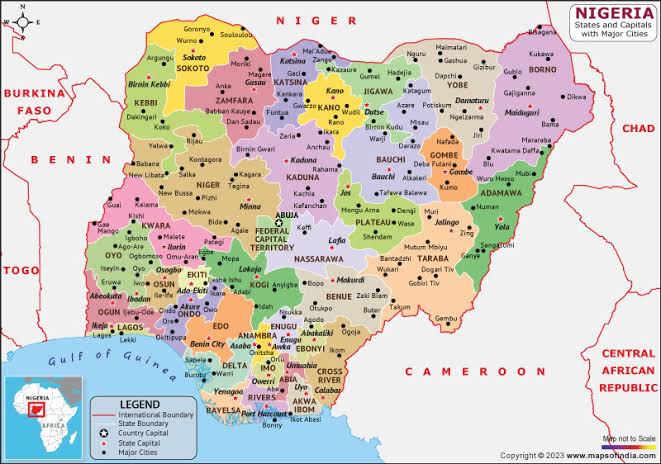
For years, security experts, governors and regional leaders have argued that Nigeria’s centrally controlled police structure is increasingly overstretched and unable to effectively respond to local threats in a nation of more than 200 million people spread across 36 states and the Federal Capital Territory.
Supporters of state policing contend that officers recruited, trained and deployed within their states would possess better knowledge of local terrain, language and community dynamics, thereby improving intelligence gathering and rapid response capabilities.
The Federal Government has repeatedly cited these advantages in defending the proposed reform, describing state police as a critical response to Nigeria’s evolving security challenges.
President Bola Tinubu has been one of the most prominent advocates of state police, dating back to his years as Governor of Lagos State and later as a leading opposition figure.
Since assuming office, Tinubu has consistently argued that effective federalism requires a decentralized security architecture capable of addressing threats at the grassroots level.
According to administration officials, the President views state policing as an essential component of broader governance and security reforms under his administration.
The latest meeting at the State House is part of a series of consultations aimed at translating that vision into a workable constitutional framework.
Despite growing momentum, the establishment of state police remains constitutionally complex.
Under Nigeria’s current constitutional arrangement, policing falls exclusively under the authority of the Federal Government through the Nigeria Police Force. Creating state police would therefore require amendments to key provisions of the 1999 Constitution.
Such amendments must secure approval by two-thirds of members of both chambers of the National Assembly and subsequently receive endorsement from at least 24 of the country’s 36 state Houses of Assembly before being transmitted to the President for assent.
This constitutional process explains why government officials have repeatedly emphasized that the reform cannot be implemented overnight.
The latest Presidency announcement follows a series of important developments over the past several months.
In March, Inspector-General of Police Tunji Disu submitted a comprehensive 75-page framework on state policing to the Senate Committee on Constitutional Review chaired by Deputy Senate President Jibrin Barau. The document reportedly outlined governance structures, operational procedures and mechanisms for coordination between federal and state police formations.
The framework was described as the Nigeria Police Force’s official contribution to ongoing constitutional discussions and was developed following extensive consultations among security professionals and policymakers.
Similarly, the Nigeria Governors’ Forum has developed its own state police framework covering funding arrangements, oversight structures, recruitment standards and technological requirements, signaling unprecedented support from state governments.
The National Assembly has also indicated strong support for the initiative.
The Senate recently announced plans to conclude constitutional amendments relating to state police before the end of 2026, with lawmakers describing the proposal as one of the most widely supported reforms currently under consideration.
Deputy Senate President Jibrin Barau, who attended Thursday’s meeting, has been at the center of legislative efforts to drive the constitutional review process.
Political observers note that the apparent alignment among the Presidency, governors, the National Assembly and security agencies has created a rare consensus around a constitutional issue that previously generated deep divisions.
Concerns Over Political Abuse
Despite broadening support, concerns remain. Opponents and critics of state police have long warned that governors could exploit state-controlled police formations to intimidate political opponents, suppress dissent or influence elections.
These fears have historically been one of the principal reasons successive administrations hesitated to embrace the proposal.
Acknowledging such concerns, proponents insist that the ongoing constitutional discussions are focused not merely on creating state police but also on designing safeguards that prevent abuse. Proposed measures reportedly include independent oversight mechanisms, clear delineation of powers between federal and state police formations, and constitutional protections against political interference.
The debate has also been influenced by the emergence of state-backed and regional security outfits in recent years.
Several states have established local security networks to complement federal policing efforts, particularly in response to growing security threats. While many of these initiatives have recorded varying degrees of success, their legal status remains limited because policing remains constitutionally a federal responsibility.
Supporters of state police argue that constitutional reform would provide a clearer legal basis for such local security operations while improving coordination with federal agencies.
The immediate focus, according to the Presidency, is finalizing the constitutional amendment package.
Once that process is completed, lawmakers are expected to draft enabling legislation specifying issues such as recruitment standards, funding arrangements, command structures, accountability mechanisms and operational coordination between state and federal police agencies.