
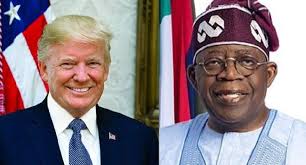
A major international counterterrorism operation has thrust Nigeria back into the center of the global fight against the Islamic State group (ISIS). On May 16, U.S. President Donald Trump announced that Abu-Bilal al-Minuki — described as the “second-in-command of ISIS globally” — had been killed in a joint U.S.–Nigerian military operation.
The announcement immediately drew worldwide attention because, if independently confirmed, it would represent one of the most significant blows to ISIS leadership since the collapse of the group’s territorial caliphate in Iraq and Syria.
According to statements posted by Trump on Friday night, American special operations personnel and the Armed Forces of Nigeria carried out what he called a “meticulously planned and very complex mission” targeting Abu-Bilal al-Minuki. Trump described him as “the most active terrorist in the world” and claimed intelligence sources had tracked his movements while he was hiding in Africa.
Trump also claimed the operation would “greatly diminish” ISIS’s global network and publicly thanked the Nigerian government for cooperating in the mission.
At the time of reporting neither the Pentagon nor U.S. Africa Command had released a full operational briefing.
Nigerian military authorities had not publicly disclosed operational details such as:
▪︎the exact location,
▪︎the type of strike,
▪︎casualty figures,
▪︎or whether airpower or ground forces were used.
Who Was Abu-Bilal al-Minuki?
Very little publicly verified biographical information exists about Abu-Bilal al-Minuki, which is common for senior ISIS figures operating under aliases.
However, U.S. sanctions documents and intelligence assessments reportedly identified him as: a senior ISIS operative based in the Sahel or West Africa; linked to the Islamic State’s General Directorate of Provinces; involved in coordinating financing and operational guidance across ISIS affiliates worldwide.
The Biden administration sanctioned him in 2023 as a global terrorist figure tied to ISIS’s African expansion.
Reports suggest he played a strategic role connecting: ISIS central leadership,
ISWAP (Islamic State West Africa Province), ISIS-Sahel elements, and possibly networks operating across Niger, Chad, Mali, and Nigeria.
If the claim that he was the “global second-in-command” is accurate, that would place him among the highest-ranking ISIS figures killed in recent years.
ISIS Shifted Toward Africa
After losing most of its territory in Iraq and Syria between 2017 and 2019, ISIS increasingly shifted attention toward Africa.
Today, some of the group’s deadliest branches operate in:Nigeria, Niger, Mali, Burkina Faso, Somalia, Mozambique,
and the Democratic Republic of Congo.
Security analysts have repeatedly warned that West Africa has become one of ISIS’s most active operational theaters.
The Nigerian Insurgency: Boko Haram vs ISWAP
Many people still use the term “Boko Haram” widely, but the jihadist movement fractured years ago.
In 2015, Boko Haram leader Abubakar Shekau pledged allegiance to ISIS. ISIS later backed a rival faction that became:
Islamic State West Africa Province (ISWAP). That split triggered violent internal conflict between:Shekau loyalists, and ISIS-aligned ISWAP commanders.
By 2021, ISWAP had become the stronger and more organized faction. Shekau died during clashes with ISWAP fighters in Sambisa Forest.
ISWAP then consolidated control over parts of northeastern Nigeria and areas around Lake Chad.
Why ISWAP Became So Dangerous
Unlike the older Boko Haram model centered around extreme brutality and isolated camps, ISWAP evolved into a more structured insurgent organization.
Watchers say ISWAP collects taxes in controlled territories, recruits systematically, conducts coordinated military assaults, uses drones and propaganda, and maintains communication with ISIS central leadership.
The group has repeatedly attacked military bases, villages, highways, humanitarian workers, and regional security forces.
The Expanding U.S.–Nigeria Security Partnership
The reported operation also reflects a major shift in U.S.–Nigeria military cooperation.
According to Reuters and other reports, the U.S. increased military engagement in Nigeria beginning in late 2025, including intelligence support, surveillance drones, troop deployments, and advisory operations.
Trump had previously criticized Nigeria for failing to sufficiently contain jihadist violence.
U.S. airstrikes were conducted against ISIS-linked fighters in Sokoto State in late 2025, and hundreds of U.S. personnel were later deployed in support capacities.
Nigerian authorities have insisted American troops are operating mainly in
training, logistics, intelligence, and technical advisory roles, rather than direct combat.
Why This Could Be a Huge Blow to ISIS
If the intelligence assessment is correct, killing al-Minuki would matter for several reasons:
▪︎ Disrupting ISIS Global Coordination
Senior ISIS leaders often serve as:
financiers, operational coordinators,
ideological overseers, and communication links between affiliates.
Removing such a figure can disrupt funding chains, recruitment, planning,
and interregional coordination.
▪︎ Weakening ISIS in Africa
Africa has become ISIS’s most important expansion zone. ISIS affiliates in West Africa and the Sahel have expanded territorial influence, exploited weak governance, and intensified attacks in recent years.
A leadership loss at this level could temporarily reduce operational cohesion.
▪︎ Symbolic Victory
Counterterrorism campaigns rely heavily on perception and momentum. The killing of a globally recognized ISIS figure allows Nigeria to project strength, the U.S. to demonstrate continued counterterror capabilities, and allied governments to signal pressure against jihadist expansion.
But Experts Warn: Leadership Losses Alone Rarely End Insurgencies
History shows terrorist organizations often survive leadership decapitation campaigns.
ISIS has repeatedly regenerated after:the deaths of Abu Bakr al-Baghdadi, regional commanders, and senior facilitators in Iraq, Syria, and Somalia.
Experta warn that: poverty, weak governance, corruption, local grievances,
porous borders, and regional instability
continue to fuel recruitment in West Africa. In other words, killing leaders weakens organizations, but rarely eliminates them entirely.
Several developments are now expected:
Intelligence Verification, independent intelligence agencies and analysts will attempt to verify al-Minuki’s identity, the scale of his role, and whether ISIS itself confirms the death.
ISIS media channels often delay acknowledgment of senior deaths.
Possible Retaliatory Attacks
ISIS affiliates sometimes respond to leadership losses with revenge attacks,
propaganda campaigns, or intensified operations.
Militaries in Nigeria, Niger, Chad,
and Cameroon are likely increasing alert levels.
The operation may strengthen arguments in Washington for deeper security involvement in West Africa, expanded drone operations, and expanded intelligence cooperation.
But it may also stir debate inside Nigeria about sovereignty, foreign military influence, and transparency around U.S. operations.
Nonetheless the reported killing of Abu-Bilal al-Minuki marks a potentially historic moment in the global fight against ISIS.
If confirmed fully, it would show how central Africa has become to ISIS strategy, how deeply intertwined Nigerian insurgencies are with global jihadist networks, and how the U.S.–Nigeria alliance is evolving into a major counterterrorism partnership.
Despite the significance of the operation, the larger insurgency across Nigeria and the Sahel remains unresolved — and experts caution that defeating ISIS in Africa will require far more than eliminating individual leaders.■