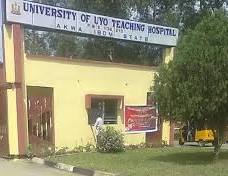
The Economic and Financial Crimes Commission has issued another clarification over the dramatic confrontation at the University of Uyo Teaching Hospital, insisting its operatives were on a “purely administrative” mission and not a raid operation as widely portrayed.
In a statement released Friday by EFCC Head of Media and Publicity, Dele Oyewale, the anti-graft agency denied allegations that hospital workers were detained or brutalised during Tuesday’s incident, which has since triggered an indefinite strike by doctors and disrupted healthcare services for hundreds of patients.
“The presence of the Commission’s operatives in the facility… was purely administrative, to facilitate the authentication of a document, rather than a tactical operation to effect arrest,” the statement read.
The EFCC further maintained that no arrests were officially made and that hospital staff who accompanied operatives to the zonal office “were not detained.”
Yet, in an acknowledgment of public outrage, the Commission announced an internal investigation into claims that some operatives used excessive force during the confrontation.
“The Commission is outraged by the allegations of brutalisation of staff,” Oyewale said, adding that any officer found to have violated the agency’s standard operating procedures “will not be spared.”
The agency described the May 12 incident as “an aberration” and warned against attempts by “fifth columnists” to exploit the controversy to weaken Nigeria’s anti-corruption fight.
On Social Media, the commission continues to be bashed for the conduct of its officers. Below is an example:
CMD Counters EFCC Narrative
But the Chief Medical Director of UUTH, Professor Ememabasi Bassey, painted a dramatically different picture during an emotional press conference in Uyo during the week.
According to Bassey, EFCC operatives stormed the hospital without prior notice, headed straight to the office of renowned cardiothoracic surgeon Professor Eyo Ekpe, and attempted to arrest him over the authentication of a medical report linked to a fraud suspect.
The CMD alleged the operatives neither presented an arrest warrant nor informed hospital management before entering the facility.
“To the best of my knowledge, before you arrest somebody, there should be a warrant,” Bassey declared. “It is me — the CEO — who should be picked up for non-compliance, not an individual carrying out an assignment.”
In a twist that deepened the controversy, Bassey disclosed that the disputed medical report under EFCC investigation had already been identified as fake.
“The letterhead used was an old one. It did not come from any official quarters of this hospital,” he said, warning that insiders within the hospital might have collaborated with outsiders in producing forged medical reports.
“A Hospital Is Sacred Ground”
The confrontation escalated after armed, hooded operatives allegedly returned to Ekpe’s office despite being shown a draft authentication report indicating the document was forged.
Hospital staff reportedly panicked, believing the armed men could be kidnappers or impostors.
Bassey said he immediately contacted Baba Azare, who initially expressed uncertainty over the identities of the armed men and dispatched police officers to the scene.
On police advice, hospital gates were temporarily shut.
By the time authorities confirmed the operatives were indeed EFCC personnel, tear gas had already been deployed and chaos had erupted across the hospital grounds.
“A hospital is a hallowed ground,” Bassey lamented. “The only place you can compare a hospital to is a place of worship.”
Witnesses claimed several workers sustained injuries during the melee, including one staff member who reportedly suffered a head wound.
Patients Stranded as Doctors Down Tools
The fallout has been severe.
Medical services at the tertiary facility — which sees between 600 and 800 patients daily — have been crippled following an indefinite strike by doctors under the Medical and Dental Consultants Association of Nigeria and the Association of Resident Doctors.
In a joint communiqué, the associations condemned the conduct of the operatives and demanded:
• Disciplinary action against those involved
• Compensation and treatment for affected staff
• A public apology from the EFCC in two national newspapers
• Repairs of damaged hospital property
Until those conditions are met, the strike will continue.
For patients arriving at the gates of UUTH on Friday, the crisis had become more than a clash between institutions — it had become a healthcare emergency.
“This place serves millions,” Bassey warned. “Now today, hundreds of patients are suffering.”
Questions Still Hanging
Even as both sides seek to calm tensions, major questions remain unanswered:
• Why did the EFCC allegedly proceed without direct engagement with hospital management?
• Who forged the medical report at the centre of the investigation?
• Was force necessary in what the EFCC itself described as an “administrative” assignment?
• And can trust between security agencies and medical institutions survive the fallout?
For now, the corridors of UUTH remain unusually quiet – except for the echo of a controversy that has shaken public confidence and ignited a national debate over power, procedure and respect for critical public institutions.