
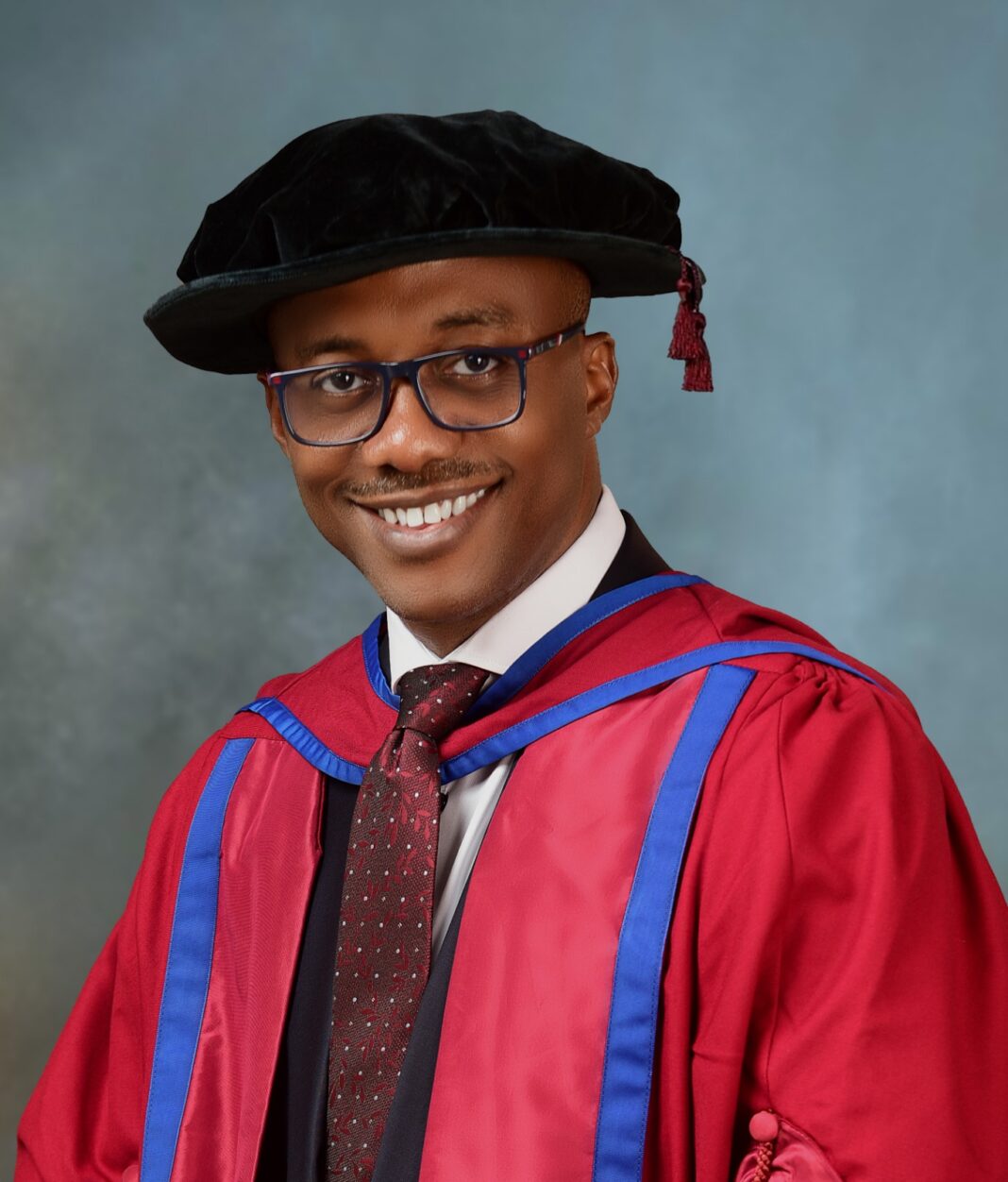
At the University of Nigeria, Professor Chima Ariel Onoka has called for a new class of professionals—“pracademics”—to bridge the persistent gap between academic research and real-world health policy, describing it as essential to achieving Universal Health Coverage (UHC) in Nigeria.
Delivering his inaugural lecture titled “Bridging the Divide: The Pracademic’s Mandate in the Quest for Universal Health Coverage,” Onoka argued that Nigeria’s health challenges are less about a lack of data and more about the political and structural barriers that prevent evidence from shaping policy.
He illustrated this disconnect using the metaphor of an hourglass, where vast amounts of research sit at the top, while the healthcare needs of over 200 million Nigerians remain unmet at the bottom. According to him, the narrow “neck” represents political and bureaucratic bottlenecks that slow the translation of evidence into action.
“UHC is not merely a medical or mathematical problem – it is fundamentally a power problem,” Onoka stated, emphasizing that entrenched political interests and systemic inefficiencies often override scientific evidence.
The professor, a specialist in public health and health systems economics, recounted his transition from clinical medicine to policy and systems reform. He cited firsthand experiences across hospitals, prisons, and rural communities, where poverty and lack of access consistently shaped health outcomes.
One pivotal moment, he revealed, occurred early in his career when he managed a life-threatening childbirth complication under inadequate conditions, exposing the fragility of the country’s healthcare system.
That experience, he said, redirected his focus toward systemic solutions rather than individual clinical care.
Onoka defined a “pracademic” as a professional who combines rigorous academic training with practical policy and implementation experience. He argued that such individuals are uniquely positioned to navigate Nigeria’s complex health governance landscape and ensure that research findings translate into actionable policies.
He also highlighted the evolving academic culture at UNN, noting the rapid increase in inaugural lectures – from 76 lectures over 38 years to 241 within just 12 years – as evidence of growing intellectual output and institutional relevance.
The lecture concluded with a call for stronger collaboration between universities, policymakers, and practitioners across sectors. Onoka stressed that achieving UHC requires a coalition capable of reshaping systems, influencing policy, and sustaining reform.