
China will implement a zero-tariff policy on goods from 53 African countries beginning May 1, 2026, in a move expected to significantly boost trade flows and deepen economic ties between both sides.
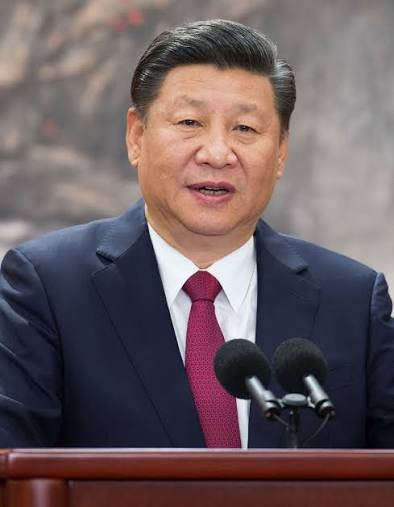
The announcement was made by Chinese President Xi Jinping in a message to the African Union summit earlier this year, marking a major milestone as China and Africa celebrate 70 years of diplomatic relations.
Under the new policy, according to Yan Yuqing, the Chinese Consul General in Lagos, tariffs will be removed on 100 percent of tariff lines for eligible African exports, effectively granting full duty-free access to China’s vast consumer market.
Chinese Foreign Minister Wang Yi described the initiative as a strategy to “subtract tariffs” in order to “add trade” and “multiply livelihoods.”
The measure forms part of China’s economic agenda under its current development cycle and aligns with commitments under the Forum on China-Africa Cooperation Beijing Action Plan (2025–2027), aimed at strengthening economic integration and shared growth.
Trade between China and Africa has expanded rapidly in recent years. Official figures show bilateral trade reached $348 billion in 2025, a 17.7 percent increase from the previous year, maintaining China’s position as Africa’s largest trading partner for 16 consecutive years.
Analysts say the zero-tariff regime could accelerate African exports—particularly agricultural and raw materials—by improving price competitiveness and easing market entry barriers. In addition to tariff removal, China has pledged complementary measures, including streamlined export “green channels,” expanded exhibition platforms, and increased support for cross-border e-commerce.
The policy also comes amid rising global trade tensions and protectionist trends. Beijing says the initiative is designed to provide stability and predictability for developing economies while reinforcing multilateral trade norms.
UN Secretary-General António Guterres has welcomed the move, urging other major economies to adopt similar measures to support developing countries.
Nigeria is expected to be among the key beneficiaries. Bilateral trade between China and Nigeria surpassed $28 billion in 2025, reflecting a sharp increase in commercial activity. With tariffs eliminated, Nigerian exports such as sesame, cashew nuts, sorghum, and dried ginger are projected to gain stronger footholds in the Chinese market.
In March, both countries also signed a framework agreement to expand cooperation in manufacturing, agriculture, and digital trade, further strengthening economic ties and setting the stage for long-term investment growth.
Chinese officials say the zero-tariff policy will help African economies move up the value chain by encouraging the export of processed and value-added goods, rather than primary commodities.
The initiative also coincides with the 55th anniversary of diplomatic relations between China and Nigeria, underscoring a deepening partnership that both sides say will be central to their future development strategies.
Observers note that while the policy presents significant opportunities, its ultimate impact will depend on African countries’ capacity to scale production, meet export standards, and improve trade logistics.
Still, the opening of China’s market on such a scale is widely seen as a transformative step—one that could reshape Africa’s trade dynamics and provide a fresh impetus for industrial and economic growth across the continent.