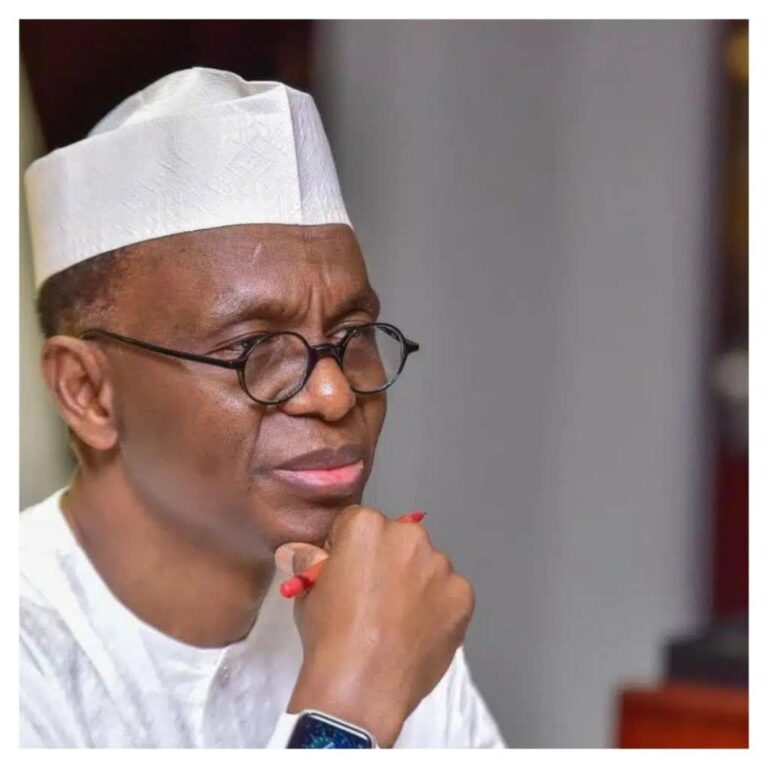
The legal troubles of former Kaduna State Governor Nasir El-Rufai deepened on Tuesday as the Independent Corrupt Practices and Other Related Offences Commission (ICPC) arraigned him before a Kaduna State High Court over alleged corruption and abuse of office.
It comes amid complaints of preferential treatment in the release of the former governor to attend his mother’s burial.
The charges – ranging from fraud and intent to commit fraud to conferring undue advantage – stem from alleged financial misconduct during his tenure as governor between 2015 and 2023. He was docked alongside a co-defendant, Amadu Sule, in what officials describe as part of investigation into contract awards and public fund management under his administration.
Tuesday’s arraignment follows earlier proceedings at the Federal High Court, where El-Rufai had been charged alongside Joel Adoga after spending 34 days in ICPC custody following his February 18, 2026 arrest.
At the earlier hearing, his legal team, led by Ubong Akpan, challenged the process, citing a petition filed before the National Judicial Council against presiding judge Rilwan Aikawa. Despite the objection, Justice Aikawa ruled that proceedings would continue, adjourning the matter to March 31 for bail applications and related motions.
Legal analysts say the multiplicity of charges across different courts could complicate El-Rufai’s defense strategy, particularly as the ICPC is expected to consolidate aspects of the case at the Federal High Court in Kaduna.
Public reaction has intensified following the ICPC’s decision to grant El-Rufai temporary release to attend his mother’s burial – despite an existing remand order. The move drew mixed responses, with some critics alleging preferential treatment, while others argued it reflected humanitarian consideration.
The arraignment came just days after the burial, which took place following her death in Egypt.
The case is unfolding against a backdrop of heightened political activity and shifting alliances ahead of Nigeria’s 2027 elections. Though El-Rufai has remained a prominent and sometimes controversial figure within national politics, his current legal challenges may affect his influence within key political circles.
Recent developments – including his withdrawal of a ₦1 billion fundamental rights suit against an Abuja magistrate – have further fueled speculation about a recalibration of his legal and political strategy.
Attention now turns to upcoming bail hearings and whether the ICPC will succeed in transferring and consolidating the charges at the Federal High Court. The outcome could set an important precedent for high-profile anti-corruption prosecutions in Nigeria.
For now, el-Rufai’s legal team is expected to intensify efforts to secure bail while contesting both the jurisdiction and substance of the charges.