
By Dr Bolaji O Akinyemi_
The Government of the day read and interpreted the optics at Kano well. I am however worried about the speculative public reading of the audio signals from Ilorin.
What was witnessed in Ilorin is pre-election engineering. And history has shown, both in Nigeria and elsewhere, that _when political outcomes are shaped long before ballots are printed, emotional outrage after the fact achieves nothing.
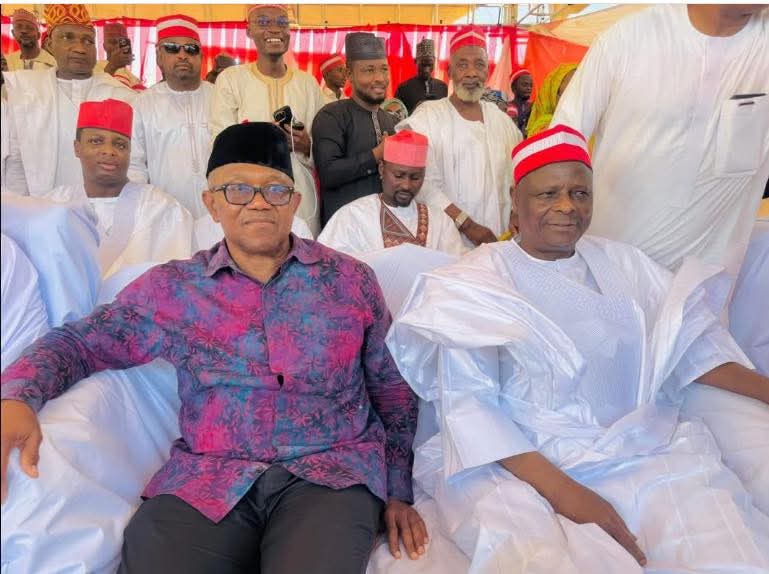
What happened in Kano — Rabiu Musa Kwankwaso hosting Peter Obi — was not just optics. It triggered a counter-signal. And the remarks attributed to Ayo Salami at the Wole Soyinka Centre for Investigative Journalism awards should not be dismissed as casual commentary. In elite political communication, nothing is casual.
So the real question is not _“Will Obi be on the ballot?”
The real question is: _What must be done to prevent a situation where candidates are removed before voters even have a say?
Here’s the hard truth: stopping “them” is not about protest slogans — it is about systemic counter-strategy.
*1. Close the Legal Trap Before It Is Sprung*
Most disqualifications in Nigeria don’t happen on election day; they happen in courtrooms months earlier.
Every potential legal vulnerability — party structure, nomination process, past statements, documentation — must be pre-audited by top constitutional lawyers.
Build a legal war room now, not after INEC releases final lists.
Anticipate pre-election suits — because that is where the real battle will be fought.
If you wait for the Supreme Court, you’ve already lost time and momentum.
2. Control the Party, Not Just the Popularity
Popularity does not guarantee ballot access. Party machinery does.
Secure airtight control or alliance within party structures. Avoid internal litigations — many candidacies in Nigeria have died from “friendly fire.”
Ensure delegates, executives, and compliance officers are aligned.
In Nigerian politics, the party is the first gatekeeper — not the voters. That was the code referred to as “No Structure” in 2023.
Don’t be guilty twice!
3. Build a Multi-Node Coalition (Not a Personality Movement)
What Kano hinted at must become something more structured.
A north–south–middle belt coalition that cannot be easily isolated.
Engagement with political blocs beyond social media enthusiasm — including traditional, religious, and grassroots networks.
Strategic alignment with figures like Kwankwaso is not symbolic — it is structural insurance.
If a candidate stands alone, they can be removed alone.
4. Preempt Narrative Warfare
By the time “Obi may not be on the ballot” becomes mainstream, it has already been seeded._
Launch a preemptive communication strategy:
Frame any disqualification attempt as anti-democratic before it happens.
Internationalize the narrative — ECOWAS, AU observers, global media.
Use data, not emotion — document patterns, precedents, and legal inconsistencies.
Narrative control determines whether an action is seen as “lawful” or “illegitimate.”
5. Institutional Pressure — Not Street Noise Alone
Outrage without structure is noise. Pressure must be targeted.
Engage:
*Judiciary watchdogs
*NBA factions
*Civil society coalitions
*Electoral reform advocates
Demand transparency in:
*INEC processes
*Judicial timelines
*Candidate screening criteria
Make it costly — reputationally and institutionally — to manipulate the process.
6. Parallel Political Pathways
Prepare for disruption.
If one platform is blocked, have:
*A backup party structure
*Coalition agreements already signed
*Avoid last-minute scrambling — that’s how systems defeat insurgent candidacies.
Politics at this level is chess, not checkers.
7. Mass Voter Readiness (Not Just Mobilisation)
People often mobilize for elections. They rarely mobilize for process protection.
Educate voters on:
*How candidates get disqualified
*Why internal party processes matter
Turn supporters into process defenders, not just voters.
Because if the candidate never makes the ballot, turnout becomes irrelevant.
Final Word:
If 2023 taught anything, it is this:
The Nigerian electoral battlefield is not election day — it is the months before it. We are months away from 2027 election.
*What we are confronted with in Salami’s statement is a familiar pattern:*
Early alliances
Elite signaling
Legal positioning
Narrative conditioning
If those who want a different outcome in 2027 do not respond with equal sophistication, then yes — they will wake up to a ballot that has already been decided for them.
And at that point, tears will not count. STRATEGY will.
Ire o!
● Dr. Akinyemi is a commentator on public policy and politics.
