
● Between nutritious food and women’s rights, agency and
development.
By Dr. Michael Ojo
“Let food be thy medicine and medicine be thy food.” – Hippocrates
The above quote is famously attributed to Hippocrates, the father of medicine. And while it is debatable if he actually said those words, one thing is certainly not up for debate: for the millions of women and girls globally who lack access to nutritious diets, there is no health, justice, and true equality without food security. This is because nutrition is the very essence of dignity, agency and development.
As the world marks International Women’s Day under the theme: Rights. Justice. Action. for All Women and Girls, an ugly reality stares us all in the face: at current rates, it will take 286 years toclose the gap in legal protections for women. These numbers are staggering and the world cannot afford to look away especially when nutrition, a major driver of human agency, is beyond the grasp of the women who feed the world.
Globally, women represent 36 percent of agrifood system workers and in Sub-Saharan Africa, that number climbs to 66 percent. Paradoxically, they rarely share equally in the gains of the very systems they power. In Sub-Saharan Africa for example, the majority of working women must rely on agriculture and food systems to earn a living. They grow crops, trade in markets, process foods, care for families and shape household diets. Yet they are more prone to food insecurity, micronutrient deficiencies, limited land rights, and constrained access to financial resources.(UNICEF, 2023)
These inequalities are directly linked to structural inequalities. According to the Food and Agriculture Organization (FAO), women farmers have less access than men to land, quality inputs, irrigation, extension services and credit. They operate mostly in least profitable segments of value chains and in informal or short-term jobs that lack basic job security. And as if that were not enough, discriminatory laws and deeply-rooted social norms often limit their ability tocontrol their earnings and assets.
The economic consequences of these disparities are far-reaching. FAO data shows that equal access to productive resources could raise women’s farm yields by 20–30 percent which is enough to cut global hunger by 12–17 percent, or up to 150 million fewer undernourished people. The cost of inaction is therefore not only borne by women but by entire economies in lost productivity, weakened resilience and intergenerational malnutrition.
As layered as these challenges are, we must remember that any efforts to advance women’s rights within food systems must take a holistic and systems-driven approach. Food insecurity is more than a gap in production. We must view it from the lens of an access gap, a finance gap, an infrastructure gap and, critically, a power gap. For example, a woman farmer may have a bumper harvest, but if she lacks secure land tenure, affordable credit, proper storage facilities, fair prices and a voice in regulatory decisions, whatever gains she has could easily be lost. For these reasons, nutrition must be treated as a fundamental part of national development and given the same attention that roads, energy and digital connectivity receive.
This system approach guides the work of Global Alliance for Improved Nutrition (GAIN).
Across a number of countries, GAIN strengthens both the supply of and demand for nutritious foods while creating the enabling environments that allow women to thrive within food systems.
Through partnerships with farmer groups, vendors and private actors, women gain technical support, better market access as well as nutrition-focused finance. For example, through the CASCADE project in Nigeria, GAIN and its consortium partner CARE International are investing directly in women’s economic power and access to nutritious foods across Bauchi, Jigawa, Kebbi and Nasarawa States. We are digitising savings groups, supporting climate-smart agriculture, and enabling thousands to produce, consume and market nutrient-rich foods. By this approach, investing in nutrition goes hand in hand with strengthening women’s agency and resilience.
Still, targeted programmes only cannot reverse decades of systemic inequalities. Deep norms around land, inheritance and decision-making take time to shift, and ignoring community dynamics invites resistance. Through CASCADE’s Social Analysis and Action processes, community dialogues and women’s leadership platforms, families and traditional leaders are being engaged to reflect on power relations and promote more equitable household and community practices. Through these initiatives, women are empowered to have a say in decisions about finance, production and nutrition. Even yet, climate shocks and price fluctuations can threaten these gains, and “gender inclusion” can become performative if it does not translate into real income or leadership roles. So while complexity is inevitable, it should be a driver for smarter, more coordinated action.
On this International Women’s Day, I call on Governments to enact and enforce gender responsive land, finance and food policies, and invest in infrastructure that connects women producers and vendors to markets. Financial institutions and impact investors need to provide patient capital for women-led nutritious food businesses. At the same time, the private sector should include women in decision-making roles across the entire value chain. Civil society and community actors must promote norms that guarantee women equal rights to resources, incomeand decisions.
True rights and justice for all women and girls must start with nutrition because every investment in a woman’s nutrition strengthens the foundation of an equitable and prosperous world.
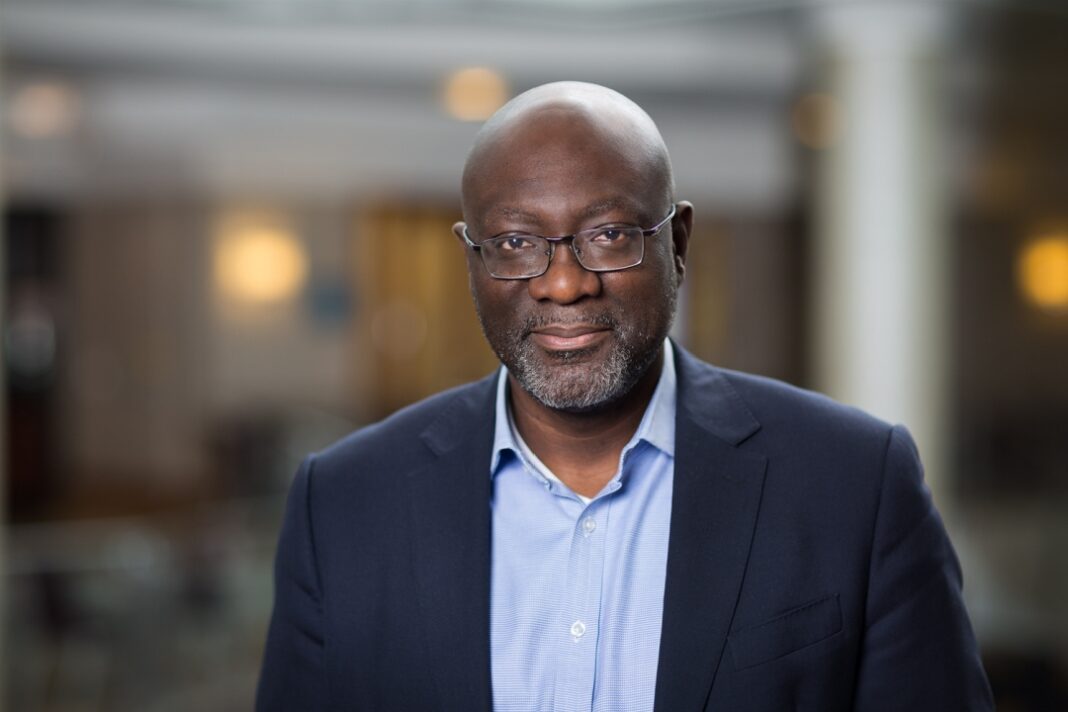
● Dr. Ojo, Country Director – Global Alliance for Improved Nutrition (GAIN), Nigeria, is a very experienced professional with extensive senior management and leadership expertise gained from a variety of assignments across London over nearly twenty years, and more recently within the international development and international trade and development sector in West Africa. Dr. Ojo joined GAIN from WaterAid, where he was the Country Director of the Nigeria programme. He started life as a Veterinary Surgeon before pursuing a career in public health, moving to sustainability and environment policy, transport, and back to public health (WASH) and nutrition. This eclectic pathway has produced a versatile and adaptable manager and leader with a focus on improvement.
He leads GAIN’s work in Nigeria focused on transforming our food systems to make healthier and sustainable food choices more affordable, available and desirable including work to scale up business investments in nutritious food value chains, reduce post harvest losses, secure better diets for children, and progress food fortification at scale.
Over the years, Dr. Michael has developed a keen interest in business-led and market-based solutions to development challenges, which was part of the attraction for joining GAIN.