
The U.S. Department of State on Monday urged Americans to leave 14 countries across the Middle East, warning of “serious safety risks” following Iranian drone and missile attacks targeting Israel and U.S.-aligned states in the Persian Gulf.
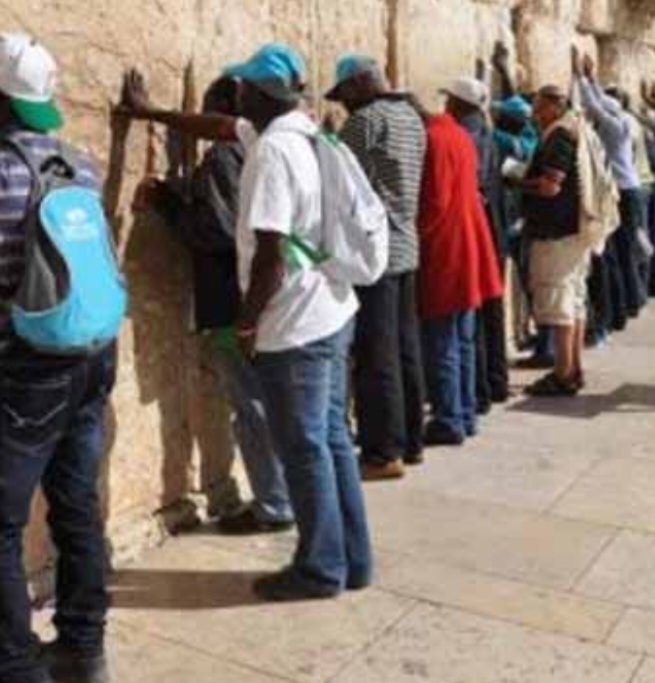
The latest advisory comes as many African Christian pilgrims — particularly from Nigeria, Kenya, Ghana and South Africa — also form a visible presence in Israel during peak pilgrimage seasons such as Easter.
Nigeria, home to one of the world’s largest Christian populations, has for years organized state-backed and privately arranged pilgrimages to Israel and Jordan. The Nigerian Christian Pilgrim Commission, a federal agency, routinely coordinates Holy Land visits for thousands of Nigerian Christians annually when security conditions permit. Many of such pilgrims are said to be in Israel now.
Israeli tourism officials have in past years highlighted growing arrivals from sub-Saharan Africa, reflecting expanding church networks and Pentecostal movements with strong ties to biblical sites in Jerusalem and Galilee.
Clergy-led delegations from African countries have continued to visit intermittently despite regional tensions, though tour operators say bookings fluctuate sharply in response to security developments.
In a rare region-wide advisory using “depart now” language, Washington advised U.S. citizens to leave Bahrain, Egypt, Iran, Iraq, Israel, the West Bank, Gaza, Jordan, Kuwait, Lebanon, Oman, Qatar, Saudi Arabia, Syria, the United Arab Emirates and Yemen. The breadth of the alert is among the widest issued since the 2003 Iraq war.
The US warning comes at a sensitive time for Israel, which — even amid conflict — remains a focal point for global religious pilgrimage, including sizable contingents from the United States, Europe, Asia and Africa.
The United States has traditionally been Israel’s single largest tourism market. According to pre-war data from Israel’s Ministry of Tourism, hundreds of thousands of Americans traveled annually, many on organized Christian pilgrimages to Jerusalem, Nazareth, Bethlehem and the Jordan River. Evangelical Christian tour groups account for a substantial share of those visits.
The State Department’s sweeping advisory now places planned church tours and faith-based travel under renewed scrutiny.
Gulf and Arab pilgrims
Following the 2020 Abraham Accords, normalization agreements between Israel and several Arab states, religious tourism between Israel and the United Arab Emirates increased significantly, aided by direct commercial flights. Muslim visitors from the UAE and other Gulf states have traveled to Jerusalem’s Al-Aqsa Mosque compound, one of Islam’s holiest sites.
Although Saudi Arabia does not maintain formal diplomatic relations with Israel, Saudi and other Gulf nationals have visited via third countries. Meanwhile, longstanding peace treaties with Egypt and Jordan have facilitated steady flows of Christian and Muslim pilgrims across shared borders.
Jordan retains custodianship of Islamic holy sites in Jerusalem through the Jordanian Waqf, underscoring its continued religious and political role in the city.
Tourism under strain
Israel’s tourism sector has struggled since the October 2023 outbreak of war with Hamas in Gaza, which sharply reduced international arrivals. Nevertheless, religious pilgrimage — often organized months in advance by churches and dioceses — has proven more resilient than leisure tourism.
The State Department advisory adds another layer of uncertainty. Hundreds of thousands of Americans reside in the countries listed, and many more transit through regional hubs such as Qatar and the United Arab Emirates, both of which host major international airports and U.S. military facilities.
With major religious observances approaching in coming months, travel planners in the United States and across Africa are reassessing itineraries amid fears of broader regional escalation.
For Israel, where faith-based tourism represents a significant economic pillar and diplomatic bridge to Christian and Muslim communities worldwide, the impact of the advisory could extend well beyond American travelers — reaching church groups from Lagos to Nairobi and beyond.