
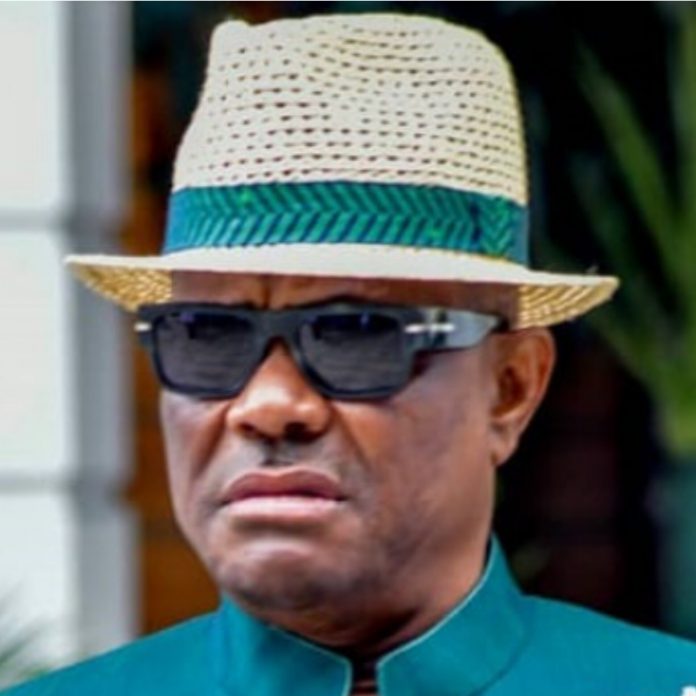
The Minister of the Federal Capital Territory, Nyesom Wike, has denied issuing a threat against Seun Okinbaloye, a presenter with Channels Television, following widespread criticism over a controversial comment he made during a media chat.
Wike had elicited outrage after reacting to remarks made by Okinbaloye on a political programme, where the journalist warned that Nigeria’s political space appeared to be shrinking. Okinbaloye expressed concern that the country could become “doomed democratically” if opposition parties were weakened ahead of the 2027 general elections, raising fears of a potential drift toward a one-party state.
Responding to the programme, Wike said: “If there were any way to break the screen, I would have shot him,” a statement that drew immediate condemnation from media stakeholders and civil society groups.
Amid the backlash, the minister clarified that his comment was purely figurative and not intended as a literal threat. He explained that the remark was an expression of frustration and emphasized that he holds Okinbaloye in high regard. According to Wike, both men had since spoken privately, and the journalist understood the intended context of the statement.
In a statement issued by his Senior Special Assistant on Public Communications and Social Media, Lere Olayinka, the minister’s office described the comment as “hyperbolic,” stressing that it was an exaggerated expression made without any intent to incite violence. The aide further noted that Wike had already clarified during the live programme that he did not mean he would physically harm the presenter.
Despite the clarification, a coalition of media freedom and civil society organisations strongly condemned the remark, describing it as inappropriate and dangerous. The coalition included groups such as the International Press Institute, Media Rights Agenda, Enough is Enough Nigeria, and YIAGA Africa, among others.
In a joint statement, the organisations demanded an immediate apology from the minister and urged him to reaffirm his commitment to press freedom and non-violence. They argued that even if intended humorously or figuratively, such language could be perceived as intimidation and contributes to a hostile environment for journalists.
The coalition warned that rhetoric suggesting violence against media practitioners undermines democratic accountability and weakens public trust in institutions. They also highlighted Nigeria’s ongoing challenges with press freedom, noting that journalists frequently face harassment, surveillance, and arbitrary arrests—especially during election periods.
Similarly, Amnesty International criticised Wike’s remarks, describing them as “reckless, unlawful and unacceptable.” The organisation warned that statements of this nature risk normalising hostility and potential violence against journalists.
“Violence against journalists is a grave threat to democracy,” Amnesty International said, calling on the minister to withdraw his statement and issue a public apology. The group also urged Nigerian authorities to ensure that such rhetoric is not tolerated from public officials.
The incident has further reignited concerns about the safety of journalists and the broader state of press freedom in Nigeria, with stakeholders calling on political leaders to engage the media constructively—even in the face of criticism—and to avoid inflammatory language that could endanger democratic norms.