
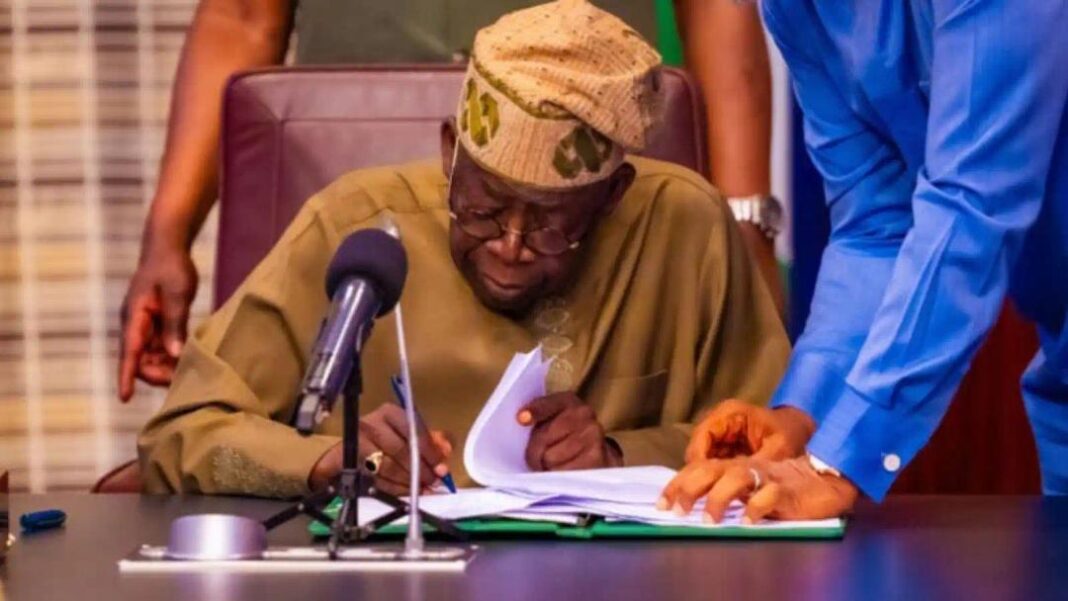
The Senate on Tuesday approved a $6 billion external borrowing request by President Bola Tinubu, fast-tracking a decision that has triggered fresh debate among economists, opposition figures, and policy analysts over the country’s rising debt profile.
The approval came within hours of Senate President Godswill Akpabio reading the President’s request during plenary, with lawmakers adopting a report presented by the Senate Committee on Local and Foreign Debts chaired by Aliyu Wamakko.
The borrowing package is split into two major facilities:
• $5 billion Total Return Swap (TRS) with First Abu Dhabi Bank, backed by naira-denominated securities.
• $1 billion export credit facility arranged by Citibank and guaranteed by UK Export Finance.
According to the Presidency, the funds will support infrastructure development, including the rehabilitation of the Lagos Port Complex and Tin Can Island Port, alongside other fiscal and debt management needs.
Government’s Justification
Officials argue that the loans are essential to close Nigeria’s infrastructure gap and improve trade efficiency.
Economic advisers within the administration say modernising ports alone could significantly boost customs revenue, reduce cargo delays, and improve Nigeria’s competitiveness in West Africa.
They also emphasise that the export-backed loan carries relatively favourable terms, including a 14-year repayment period and lower financing costs compared to commercial borrowing.
A senior government official familiar with the plan said the financing aligns with Tinubu’s reform agenda, which includes revenue expansion and infrastructure-led growth.
However, the approval has reignited concerns over Nigeria’s debt sustainability.
Data from institutions such as the International Monetary Fund and the World Bank have repeatedly warned that while Nigeria’s debt-to-GDP ratio remains moderate, its debt servicing-to-revenue ratio is among the highest globally.
Local economists caution that:
• Increased borrowing could worsen fiscal pressure if revenue growth lags
• Exchange rate volatility may raise repayment costs for external loans
• Poor project execution could limit the expected economic returns
Financial analyst Bismarck Rewane has previously stressed that borrowing is not inherently problematic – but must be tied to productive investments with measurable returns.
Opposition politicians and advocacy groups have criticised the speed of the Senate’s approval.
Some lawmakers outside the ruling bloc argue that:
• The National Assembly did not allow sufficient debate
• Details of the loan conditions and utilisation plans require deeper scrutiny
• Nigeria risks entering a cycle of borrowing to service existing debt
Civil society organisations, including transparency advocates, are calling for full disclosure of loan agreements and strict monitoring of how funds are spent.
Despite concerns, parts of the business community have welcomed the focus on port rehabilitation.
Maritime operators say inefficiencies at Lagos ports cost the economy billions annually due to:
• Congestion and long cargo dwell times
• High logistics and demurrage costs
• Aging infrastructure
They argue that upgrading the ports could significantly improve supply chains and reduce import costs – benefits that may eventually ease inflationary pressures.
With Senate approval secured, attention is shifting to implementation and oversight. The Senate Committee on Local and Foreign Debts is expected to monitor disbursement and ensure compliance with agreed terms.
Many believe the real test will be whether the borrowed funds translate into tangible economic gains.