
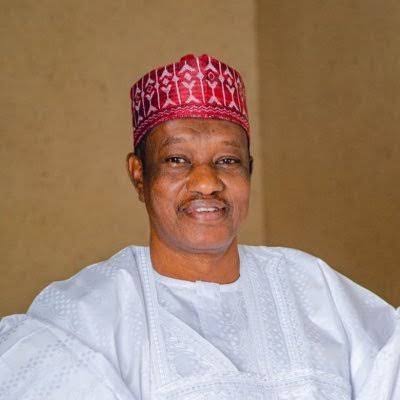
A fresh wave of political uncertainty has engulfed Kano State following the resignation of Deputy Governor Aminu Abdussalam Gwarzo, a development that underscores deepening fractures within the state’s political architecture and raises new questions about the stability of the administration of Abba Kabir Yusuf.
Sudden Exit Amid Mounting Pressure
Gwarzo’s resignation, confirmed on Friday by his spokesperson, comes after days of heightened tension between the deputy governor and the Kano State House of Assembly. Although no official reason was immediately provided, multiple reports indicate that the move followed impeachment proceedings and allegations of misconduct initiated by lawmakers.
The Assembly had reportedly accused the deputy governor of abuse of office, breach of public trust, and financial impropriety, while also advancing disciplinary processes widely interpreted as a prelude to removal from office.
In a statement attributed to political allies, the resignation was said to be a step taken “in the interest of stability,” allowing governance to proceed without disruption, even as the embattled deputy governor denied wrongdoing.
The resignation is the clearest signal yet of a widening crisis within Kano’s executive arm, reflecting a breakdown in relations between major political actors.
Observers note that tensions had been building for weeks, with the legislature asserting oversight authority and the deputy governor seeking legal protection, including an unsuccessful attempt to halt impeachment proceedings in court.
The episode exposes a fragile power balance between the executive and legislature, reminiscent of previous political crises in states where impeachment threats have been used as leverage in intra-elite struggles.
At the heart of the crisis lies political realignment in Kano State, triggered by Governor Yusuf’s recent defection from the New Nigeria Peoples Party (NNPP) to the All Progressives Congress (APC).
The defection has reshaped loyalties within government, creating factional tensions among political appointees and elected officials. The deputy governor’s position, it was learnt, may have become untenable within the new alignment, especially if he was perceived as belonging to a different faction or power bloc.
The administration has since embarked on structural changes, including dismissals and reshuffles of key officials, in what insiders describe as an effort to consolidate authority and align governance with the governor’s new political direction.
The crisis is unfolding against the backdrop of preparations for the 2027 general elections, which are already reshaping political behaviour in Kano.
Earlier this week, the governor directed all political appointees seeking elective office to resign by the end of March 2026, citing compliance with electoral laws and the need for administrative neutrality.
This directive has intensified competition within the ruling structure, as ambitious politicians reposition themselves, sometimes at the expense of internal cohesion.
Kano’s current turmoil is not without precedent. The state has a long history of elite rivalry, party switching, and institutional confrontation, often tied to its status as one of Nigeria’s most politically influential states.
Governor Yusuf himself has navigated legal and political turbulence since his election in 2023, including a prolonged court battle that ultimately affirmed his mandate.
Additionally, Kano has recently witnessed other contentious developments – such as disputes over traditional leadership and emirate authority – further highlighting the interconnected nature of political power struggles in the state.
Gwarzo’s resignation triggers a constitutional process requiring the governor to nominate a replacement, subject to approval by the State Assembly.
However, beyond procedural implications, the development raises other concerns:
• Governance continuity: Leadership instability may slow policy implementation.
• Legislative assertiveness: The Assembly’s role signals a more confrontational posture.
• Party cohesion: Ongoing defections and realignments risk fragmenting the ruling coalition.
• Electoral positioning: The crisis may shape alliances ahead of 2027.