
By Jacob Edi
In the battle for survival, nothing else matters except survival. This grim reality is most evident in the cold-blooded dynamics of international politics, wherein survival is not a moral aspiration but a strategic necessity.
Nations do not exist in a vacuum of ideals but in a power architecture of competing fears, ambitions, and calculations. At the highest level of this quest for dominance and control, sits nuclear deterrence, a doctrine both terrifying and stabilizing, even as primitive in its logic yet sophisticated in execution. It is the paradox of our age: peace maintained not by goodwill, but by the certainty of catastrophic retaliation.
Balance of terror it is called.
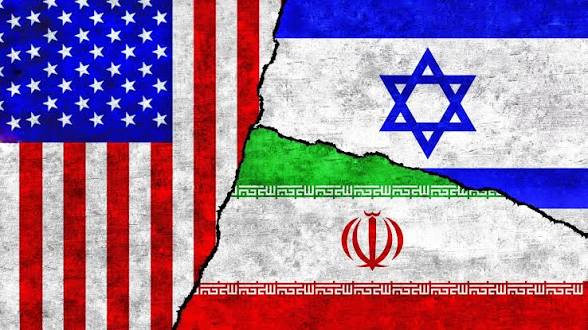
Nowhere is this paradox more tightly wound than in the triangular tension involving Iran, Israel, and the United States. It is a conundrum defined not merely by weapons, but by perception, mistrust, and the uneasy power calculus.
At its core, nuclear deterrence rests on a simple proposition: if the cost of aggression is annihilation, rational actors will abstain from war. This is the logic that governed the uneasy standoff of the Cold War, where two superpowers avoided direct confrontation not because they trusted each other, but because they feared the consequences of miscalculation. Deterrence, therefore, is less about weapons and more about credibility, the believable threat that one will respond decisively if pushed beyond a certain threshold.
Terror should be balanced or at least, that is the intention.
Israel operates within this framework, though it rarely admits it openly. Its long-standing policy of nuclear ambiguity is itself a strategic instrument. By neither confirming nor denying its nuclear capability, Israel preserves deterrence while avoiding the diplomatic fallout of a formal declaration.
Yet the message is unmistakable… existential threats will not be tolerated.
For a state born out of historical trauma and sustained by a permanent sense of siege and an inevitable need for self-defence, deterrence is not theoretical. It is existential.
Iran, on the other hand, approaches the nuclear question from a different psychological and strategic standpoint. For Tehran, the pursuit of nuclear capability, whether framed as civilian necessity or strategic insurance, is deeply intertwined with regime survival. Decades of sanctions, covert operations, and geopolitical isolation have forged a doctrine of resistance anchored on self-reliance. In that doctrine, nuclear capability is not merely a weapon; it is leverage, insulation, and, ultimately, a bargaining chip against coercion.
The ongoing war in the Middle East should have cleared any doubts about the driving force of the authorities in Tehran.
The United States enters this equation as both guarantor and disruptor. Some sort of superiority complex…As Israel’s principal ally, Washington is committed to maintaining Israel’s qualitative military edge. Simultaneously, it seeks to prevent nuclear proliferation, particularly in volatile regions like the Middle East. This dual objective creates a structural contradiction; restraining Tehran without triggering the escalation one seeks to avoid and, how to reassure allies without provoking adversaries into refusing to shift grounds.
The Iranian, Israeli, and American positions thus form a strategic triangle, each corner reinforcing and destabilising the others. Israel views a nuclear-capable Iran as an existential threat, not only because of potential use, but because of the strategic latitude it would afford Tehran. A nuclear Iran could recalibrate regional alliances, embolden proxy warfare, and alter the balance of power in ways that Israel finds intolerable.
Iran, conversely, perceives Israel’s undeclared arsenal and America’s forward military posture as existential pressures. From Tehran’s vantage point, the absence of a credible deterrent leaves it exposed to regime-change designs or preemptive strikes. In that calculus, nuclear capability becomes an equaliser, a means of ensuring that any aggression carries unacceptable consequences.
The United States, navigating between these poles, faces a dilemma that is as much philosophical as it is strategic.
How can Donald Trump’s America uphold non-proliferation norms while managing alliances and preventing regional conflagration?
Yet its actions, whether through sanctions, military deployments, or some dramatic diplomacy, are interpreted through lenses of suspicion, often deepening the very insecurities they aim to resolve.
It is at this juncture that the wider strategic and structural framework comes into view.
Like I had argued in an earlier intervention, Iran, much like Ukraine in its stubborn resistance to Russia, has proven far harder to subdue than many anticipated. The expectation of a swift capitulation has repeatedly collided with the reality of resilience. But to misunderstand this resilience as an invitation to total war is to misread the deeper strategic script. The objective, particularly from the vantage points of Washington and Tel Aviv, is not necessarily Iran’s destruction; it is its containment.
This is where the architecture of new alliances becomes critical. Through the Abraham Accords and a quiet but deliberate reconfiguration of regional partnerships, the United States and Israel are engineering a new balance of power in the Middle East, willy-nilly. Arab states once defined by overt hostility toward Israel are now recalibrating, driven by converging security interests and a shared apprehension of Iranian influence. The battlefield, in this sense, is shifting from direct confrontation to strategic encirclement.
Containment, not conquest, is the operative doctrine.
For Washington, this recalibration serves a broader geopolitical purpose. The Middle East, while still vital, is no longer the singular centre point of global strategy. It has shifted towards greater power competition, particularly with China. By stabilising the Middle East through regional alliances and burden-sharing, the United States seeks a strategy for this larger contest. This strategy is simple… redistribute attention, not to abandon the site.
Yet, embedded within this shift is a more unsettling revelation: the declining efficacy of the post-World War II institutional order. Bodies such as the United Nations, once conceived as arbiters of global stability, now appear increasingly peripheral and manifestly incompetent in the management of major conflicts. Their resolutions lack enforcement teeth; their moral authority is frequently undermined by the geopolitical interests of the very powers that constitute them.
What we are witnessing is not merely a regional realignment, but the slow erosion of an old order.
The frameworks that emerged from the ashes of World War II were designed for a different era, one defined by clear blocs and relatively stable hierarchies. Today’s world is more fluid, more fragmented, and, in many respects, more transactional where norms are increasingly subordinate to interests.
In such an environment, nuclear deterrence regains prominence, as a tool of stabilization.
What makes the Iranian–Israeli–American conundrum particularly volatile is the difference in perceptions. Deterrence assumes rational actors with identifiable thresholds. But in a region layered with ideology, history, and domestic political pressures, rationality is often filtered through subjective narratives.
And this is quite dangerous. Inadvertently, conflicts may occur due to misinterpretation of perceptions.
Sincere mistakes one may argue.
Israel’s strategic doctrine tolerates preemption against existential threats. If Tehran nears a nuclear threshold, the pressure to act becomes irresistible and any strike could trigger Iran’s retaliation, proxy wars across the region, and near-inevitable U.S. involvement. Iran,
In turn, will rely on a decentralized, diverse deterrence network, which will therefore make the arithmetic of confrontation very complex.
For Washington, the challenge is balancing aggression and restraint. It is caught in a vortex…to continue attacks on Iran can escalate the war and not to continue can bruise the ego of Donald Trump, then the US.
All facts considered therefore, diplomacy remains the slimmest lifeline for the triumvirate.
These actors must get to a point where success is measured by the level of destruction avoided and closeness to world peace rather than conquest so the world may have some balance no matter how fragile.
● Edi, a public commentator, lives in Abuja and can be reached at jacobedijacob@gmail.com