
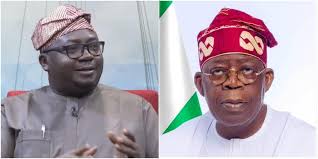
In a country where electricity supply has become as unpredictable as the weather, the Federal Government’s latest assurance that relief is just “two weeks away” has been met with a mix of cautious hope and deep skepticism.
On Tuesday in Abuja, Minister of Power, Adebayo Adelabu apologised to Nigerians for what he described as a “temporary” deterioration in electricity supply, blaming the crisis on disruptions in gas supply to thermal plants. But beneath the official assurances lies a more troubling reality: Nigeria’s power sector has lurched from one emergency to another for years, with repeated national grid collapses, chronic underperformance, and mounting public frustration.
A Familiar Promise
Adelabu’s message followed a well-worn script. Gas shortages, he explained, had crippled generation capacity, with about 75 percent of Nigeria’s power plants dependent on gas-fired turbines. Repairs to critical pipelines – particularly those linked to Seplat – along with improved compliance by gas suppliers, would restore stability.
“Within two weeks we should start seeing improvements,” he said.
The minister also pointed to ambitious targets: 6,000 megawatts of generation before the end of 2026, backed by over $3 billion in private sector investments and a new policy framework designed to align stakeholders.
Yet for many Nigerians, these projections echo previous timelines that have come and gone with little lasting change.
Years of Instability
Nigeria’s electricity grid has suffered persistent instability over the past decade, but the situation has worsened noticeably in recent years. Since 2022, the national grid has experienced multiple partial and total collapses annually – sometimes plunging the entire country into darkness within minutes.
Industry data and operator reports show a pattern: sudden drops in generation, transmission faults, or frequency imbalances triggering cascading failures across the grid. In 2024 and 2025 alone, system collapses were recorded numerous times, disrupting homes, hospitals, factories, and financial systems.
Each collapse typically follows a similar chain reaction:
●A shortfall in gas supply or generation
Overload or fault in transmission infrastructure
●Grid instability leading to automatic shutdowns
The result is a fragile system where even minor disruptions can trigger nationwide blackouts.
Gas Dependency: A Structural Weakness
At the heart of the crisis is Nigeria’s heavy reliance on gas-fired power. While the country holds some of the world’s largest natural gas reserves, supply to domestic power plants remains inconsistent.
Pipeline vandalism, pricing disputes, and delayed payments to gas suppliers have all contributed to chronic shortages. When gas flow drops, turbines go idle—instantly reducing available power and destabilizing the grid.
Hydropower, which accounts for roughly a quarter of generation, offers some buffer but is itself vulnerable to seasonal variations, especially during dry periods when water levels fall.
The consequences of unreliable power extend far beyond inconvenience.
Small businesses – barbershops, welders, cold-room operators – report spending a significant portion of their income on diesel and petrol generators. Large manufacturers face rising production costs, often passing them on to consumers.
Hospitals and schools struggle to maintain basic operations. In major cities like Abuja and Lagos, entire neighborhoods can go days with little or no grid supply, relying instead on private power sources.
For many households, electricity has become a luxury rather than a basic service.
A Political Test
The power crisis is not just an economic issue – it is fast becoming a defining political challenge for the administration of Bola Ahmed Tinubu.
In a striking moment during earlier public remarks, Tinubu acknowledged the centrality of electricity to his presidency, stating that Nigerians should not vote for him for a second term if he fails to deliver improved power supply.
That statement has since become a benchmark against which the government’s performance is being judged.
Reform vs Reality
Officials insist progress is being made. Adelabu pointed to increased private investment, improved sector coordination, and what he described as strong performance in 2025.
A new integrated electricity policy, he said, now clearly defines the roles and responsibilities of government, sub-national actors, and private stakeholders.
But analysts argue that policy frameworks alone cannot fix deeply entrenched structural problems. Transmission infrastructure remains weak, distribution companies struggle with revenue collection, and generation capacity often exceeds what the grid can actually deliver.
For Nigeria to achieve stable electricity, experts say several issues must be addressed simultaneously:
●Reliable gas supply and payment mechanisms
●Modernization of aging transmission infrastructure
●Improved grid management and redundancy systems
●Financial viability across the power value chain
Until then, promises of short-term improvements may continue to ring hollow.
As the minister’s two-week timeline begins, millions of Nigerians wait – again – hoping that this time, the lights will stay on.