
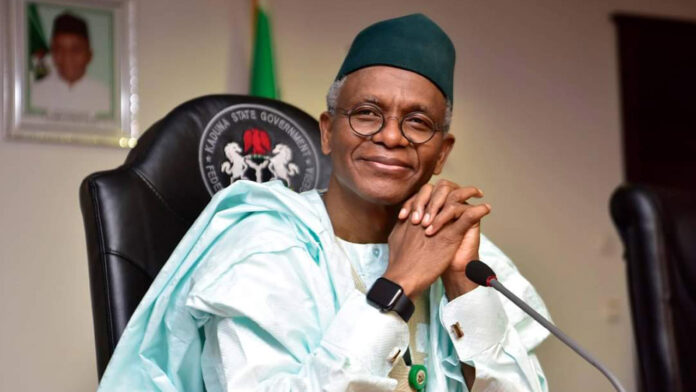
The Department of State Services (DSS) has reopened investigations into the 2019 disappearance of government critic Abubakar Idris, popularly known as Dadiyata, alongside other unresolved cases of missing persons allegedly linked to former Kaduna State Governor, Nasir El-Rufai.
A senior security source disclosed that the seizure of El-Rufai’s passport by DSS operatives at the Nnamdi Azikiwe International Airport last Thursday was aimed at preventing his departure to Egypt following a brief visit to Nigeria.
According to the source, El-Rufai had planned to visit the Economic and Financial Crimes Commission (EFCC) on Monday and the Independent Corrupt Practices and Other Related Crimes Commission (ICPC) on Tuesday before returning to Cairo. “Seizing his passport has effectively halted those plans,” the source said, adding that the former governor was aware of an ongoing DSS probe into his alleged connection with Dadiyata’s abduction.
Dadiyata, a lecturer in the Department of English and Linguistics at the Federal University Dutsinma, Katsina State, was abducted by gunmen from his Kaduna residence on August 1, 2019. His whereabouts remain unknown. The case attracted widespread local and international attention, with rights groups, including Amnesty International, demanding accountability.
The security source revealed that the renewed investigation followed months of discreet intelligence work, with leads allegedly suggesting that El-Rufai, who governed Kaduna State between 2015 and 2023, masterminded the abduction — an allegation the former governor has denied.
Speaking on ARISE Television last Friday, El-Rufai said he became aware of an alleged confession by a police officer who claimed he was part of a team dispatched from Kano to abduct Dadiyata.
“Three years after he was abducted, a policeman who was posted from Kano to Ekiti State confessed to someone that they were sent from Kano to abduct Dadiyata. That is all I know,” he stated.
El-Rufai maintained that he was unaware of Dadiyata’s existence prior to the incident and suggested that the missing lecturer was affiliated with the Kwankwasiyya political movement, implying political rivalries in Kano State may have been a factor. He pointed to former Kano governor, Abdullahi Ganduje, as a possible interested party, asserting that the matter had no connection with the Kaduna State Government.
However, the DSS source described El-Rufai’s account as implausible, questioning why such critical information, if known, was not relayed to appropriate authorities. The source also cited provisions of the Criminal Code Act and the Penal Code applicable in Kaduna State, which criminalize the concealment or destruction of evidence.
The investigation is also expected to examine past social media posts by El-Rufai’s sons, Bello and Bashir, which security officials say contradict the former governor’s claim that he had no prior knowledge of Dadiyata.
In a December 23, 2019 post on X (formerly Twitter), Bashir El-Rufai criticized individuals “trending hashtags asking #WhereisDadiyata.”
Months later, Bello El-Rufai, now a member of the House of Representatives, posted a cryptic message referencing actions taken “to protect the name,” drawing further scrutiny from investigators.
Security sources confirmed that both sons may be invited for questioning.
Officials further disclosed that the DSS has been collaborating with the EFCC and ICPC for over a year, particularly following a June 2024 resolution by the Kaduna State House of Assembly requesting federal anti-corruption agencies to probe alleged financial improprieties during El-Rufai’s tenure.
An ICPC source revealed that investigations into financial transactions linked to a Kaduna-based firm, TMDK Group, led to the arrest of its chairman, Ahmadu Sule, with DSS support after he allegedly failed to honour invitations and attempted to leave the country. The source claimed significant state funds were traced to the company without proper justification.
Another security official stated that El-Rufai’s return to Nigeria after extended consultations with his legal team marked a turning point in the coordinated investigations.
“Human rights lawyer Deji Adeyanju was correct in observing that the DSS was primarily interested in restricting his travel, not effecting an arrest,” the official said. “We act on evidence, not sentiment.”
The reopening of the Dadiyata case has reignited public debate. Among those calling for a thorough investigation are Omoyele Sowore, Ambassador-designate Reno Omokri, former Kaduna senator Shehu Sani, and legal scholar Chidi Odinkalu.
Ganduje has dismissed El-Rufai’s allegations as “reckless and unfounded,” insisting the incident occurred entirely within Kaduna State and should be addressed there.
Shehu Sani, in a statement posted on his X handle, maintained that Dadiyata was widely known in Kaduna as a vocal critic of the state government and not of Kano authorities. He further questioned why the Kaduna State Government under El-Rufai did not issue an official statement or visit the family following the abduction.
As investigations intensify, security agencies insist the matter will be handled strictly on the basis of evidence and due process, amid mounting public pressure for clarity over one of Nigeria’s most high-profile unresolved disappearance cases.