
By Debbie Agada
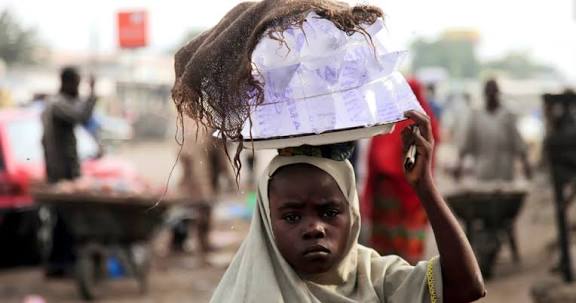
The sun had barely risen over a cocoa farm in southwestern Nigeria when twelve-year-old Amina bent to tie her scarf. The morning air was cool, but the day ahead would be long. Around her, other children moved quietly through the fields – some her age, some younger – hands already stained with soil before most of the world had finished breakfast.
Amina is one of nearly 25 million Nigerian children caught in child labour. Across Africa, about 92 million children – 21.6 per cent of all children on the continent – are engaged in work that steals their childhoods. And globally, the number stands at 138 million children, nearly 8 per cent of the world’s young people. Of these, 54 million are trapped in hazardous work, labour that endangers their health, safety and future.
At the 6th Global Conference on the Elimination of Child Labour, hosted in Morocco, International Labour Organization Director-General Gilbert Houngbo called that figure “simply unacceptable.” Behind every statistic, he reminded delegates, is a child like Amina.
Africa at the Centre of the Crisis
While the world has made progress – reducing child labour by more than half since 2000 and cutting more than 22 million cases since 2020 – Sub-Saharan Africa remains the epicentre of the crisis. The region has the highest prevalence globally, even though it achieved a 10 per cent reduction in recent years. By comparison, Asia and the Pacific reduced child labour by 43 per cent, and Latin America and the Caribbean by 11 per cent.
The global community failed to meet the 2025 deadline under Sustainable Development Goal Target 8.7, which called for ending child labour entirely. To meet the new 2030 ambition, progress must move 11 times faster.
In Africa, the roots run deep. Poverty, inequality, conflict, weak social protection systems and limited access to quality education force families into impossible choices. In Nigeria – the continent’s most populous nation – millions of children are out of school. Many work in agriculture, informal mining, street trading, domestic service and small-scale enterprises, often invisible to enforcement systems.
Agriculture alone accounts for 61 per cent of child labour globally, followed by services (27 per cent) and industry (13 per cent). In rural Nigeria, that reality is visible in cocoa farms, rice fields and livestock settlements. Across parts of West and Central Africa, children descend into informal mines searching for gold or cobalt – minerals that power global industries.
The Cost Beyond Numbers
Houngbo warned that child labour is not only a moral failure – it is an economic one. When children work instead of learn, countries sacrifice productivity, growth and social cohesion. For girls in particular, the cost is devastating. Though global data show boys are slightly more represented in child labour overall, when unpaid household labour is included, girls often carry a heavier burden. Early work frequently leads to early marriage, limited education and lifelong economic vulnerability.
At the same conference, UN Deputy Secretary-General Amina Mohammed emphasized that ending child labour must be woven into development strategies. Poverty, inequality and the absence of decent work are structural drivers. The Doha Political Declaration, she recalled, reaffirmed global commitment to tackling these root causes.
“Child labour must be illegal everywhere,” she stressed. Laws must not only exist; they must be enforced. Businesses must examine their supply chains and eliminate exploitation. Accountability must reach both local actors and multinational corporations.
Nigeria’s Turning Point
Nigeria’s challenge is immense—but so is its potential. With Africa projected to have the world’s youngest population by 2050, the continent’s future prosperity depends on what happens now.
Prevention, Houngbo argued, is the decisive battleground. It begins with education. By 2050, the world will need 80 million additional primary school places. For Nigeria, that means investing heavily in free, mandatory, quality schooling – especially in rural areas where child labour is most entrenched. It also means decent wages and working conditions for teachers.
Beyond classrooms, the solutions extend into communities:
• Rural development and infrastructure, so families are not isolated from markets and services.
• School feeding programmes, which reduce hunger and incentivize attendance.
• Social protection systems, so economic shocks do not push children into labour.
• Formalisation of small farms and enterprises, ensuring adults earn fair, living incomes.
• Safe and healthy working environments, grounded in fundamental labour rights.
In Nigeria’s northern states, where insecurity and poverty intersect, the urgency is even sharper. In the south, agricultural supply chains must be scrutinized. Across the country, bridging the gap between policy and enforcement remains critical.
A Continent’s Choice
Africa’s story is not only one of crisis but of resilience. Despite fears that COVID-19 would reverse decades of progress, child labour did not surge globally. Instead, reductions resumed. This proves that progress is possible when governments, civil society, international organizations and communities act together.
Multilateral cooperation, Houngbo said, is not abstract—it is practical necessity. Challenges that cross borders require solutions that do the same.
Back on the cocoa farm, Amina dreams quietly of becoming a teacher. If she had access to consistent schooling, if her parents earned enough to support the family without her income, her mornings might begin with books instead of baskets.
Nigeria stands at a crossroads. So does Africa.
With 92 million African children still in labour, the continent carries the heaviest burden- but it also holds the greatest opportunity for transformation. Ending child labour here would not only change statistics; it would redefine the future of an entire generation.
The world has missed one deadline. It cannot afford to miss another. Because behind the number – 138 million – are children waiting for the chance to simply be children.