
By Cheta Nwanze
Alu gba afọ, ọbụrụ omenani.” – Igbo proverb.
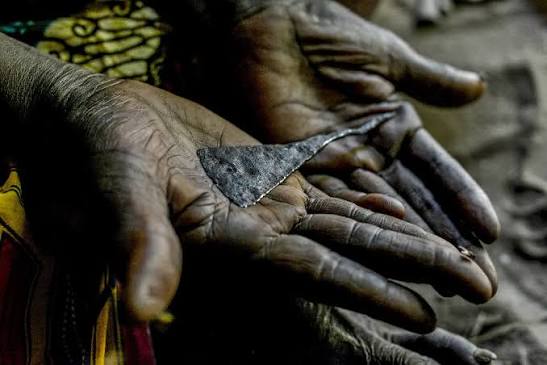
I am Igbo, and in the not-so-distant past, my people killed twins at birth. Multiple births were seen as an abomination, a curse to be drowned in pots or left to die in the evil forest. This practice, which was quite widespread in what is today’s Southeast and South-South Nigeria, and Southwest Cameroon, was first banned by the Obong of Calabar in 1856, a good 20 years before Mary Slessor arrived. When Obong Eyo first pronounced that killing twins should be stopped in his domain, the practice was defended with the same fervent, unthinking certainty that some now defend other harmful customs.
Ultimately, as British power expanded in the region, the practice came to an end. The fact that I, a twin, exist today is proof that a culture can, and must, confront and discard its most poisonous elements. This knowledge has given me a lifelong, healthy scepticism towards anyone who wields the shield of “culture” to justify brutality. This is not an academic point; it is my inheritance. It framed my entire reaction to a recent, revealing LBC radio segment on Female Genital Mutilation (FGM), a discussion that became a litmus test for honesty in our modern debates.
The segment, hosted by Sheila Fogarty on 17 December 2025, was triggered by a controversial British Medical Journal essay suggesting UK FGM laws stigmatise communities. Fogarty, rightly, called this “arrant nonsense.” Her guest was the formidable Nimco Ali, an FGM survivor and activist, who framed the practice with blistering clarity: this is not a cultural ceremony, it is violence. It is a tool of social control, designed to curb female sexuality and confine women to prescribed roles. To sanitise it with academic language, Ali argued, is a betrayal of truth and of survivors.
Then came the callers, and the real conversation began. I have taken the liberty of uploading the entire discussion for posterity. Teresa, clearly a Nigerian who underwent the practice as a baby, phoned in. She insisted it was “circumcision, not mutilation,” a necessary custom for respectability and marriage in her culture, and comparable to male circumcision. She argued that Europeans should simply respect it. Hearing her, I was reminded of the elders who once justified my own potential murder. It is the sound of tradition fossilised into dogma, where the ‘why’ has been lost, leaving only the immutable ‘how.’
The Igbo proverb that I started this piece with translates as, “When an abomination lasts for more than a year, it becomes culture.” I suspect that the practice of killing twins in my ancient culture came about to prevent a destructive civil war, such as the Edo Kingdom experienced between Esigie and Arhuaran. In much the same way, I suspect that female genital mutilation, clearly a means to prevent women from experiencing sexual pleasure, started as a means of preventing women from cheating on their husbands, who in ancient times would go off to the farms, or hunting, or to war, and would be gone for months on end. These were misguided solutions to what was a problem, and as the practices went on, they became culture, and as with such things, no one could say where or why it started. It was just, “that is how we do it here.”
But here is where the real, nuanced, human story diverges from the simplistic narrative. Teresa was not the final word; she was the catalyst. Immediately after her, five other African callers phoned in. Every single one was staunchly opposed to her position. They spoke from within the culture, describing the lifelong physical and psychological trauma, the intense social pressure that masquerades as consent, and the growing internal movement to end this. Fogarty herself highlighted that Nigeria has passed laws against FGM. This critical chorus of African opposition, this living, breathing evidence of cultural evolution, was for me the heart of the programme. It proved that the most potent resistance to FGM is not a Western import, but a homegrown human rights struggle, led for decades by African women who took the issue to the UN. To oppose FGM is to stand with them.
Yet, if you encountered this debate on social media, you would have seen none of this complexity. A tweet by an account named “Basil the Great” went viral, featuring a clipped snippet of Teresa’s call. Its caption screamed: “A migrant in the UK demands we respect her customs and wants an NHS Nurse to commit FGM on her daughter… WHY ARE WE IMPORTING THESE PEOPLE?”
This is not journalism; it is alchemy of the most malicious kind. It is the deliberate transformation of a multifaceted debate into a propaganda pellet. Basil the Great performed a surgical erasure. He removed Nimco Ali’s testimony. He deleted the five opposing African voices. He silenced Fogarty’s note about Nigerian law. He isolated Teresa’s view and weaponised it, presenting it not as one perspective in a heated intra-community debate, but as the definitive representation of “the migrant” and “the African.”
This is the unoriginal playbook of the racist far right. It is a strategy of cynical cherry-picking: find the most regressive soundbite from a minority community, amplify it as the sole truth, and use it to tarnish an entire group. It is a form of intellectual dishonesty that does two profound and simultaneous harms to immigrants. First, it tells the host society a lie: “See, these people are monolithic, backward, and incapable of integration.” This justifies prejudice and exclusionary policies. Second, and with breathtaking hypocrisy, it inflicts a deeper wound on the immigrant community itself. It marginalises and silences the vast majority within that community, the reformers, the survivors-turned-campaigners, the parents fighting to protect their daughters, who are battling the very practice the far right claims to despise. It steals their agency, distorts their story, and makes their internal progress infinitely harder.
They use our genuine struggles as a cudgel to beat us with, while actively ignoring those of us swinging the heaviest blows against those same struggles. This creates a double marginalisation: the immigrant is trapped between a hostile society that sees only a caricature and a distorted version of their own culture that they are actively trying to reform.
The journey from the evil forest where twins were abandoned to the world I inhabit was paved by courageous Igbo people who said, “This tradition is killing our future.” The journey to end FGM is being paved by equally courageous Africans, like Nimco Ali and those five callers, who are saying the same. The “Basil the Greats” of this world have no interest in that journey. They are not campaigners against harm; they are arsonists of social cohesion. They do not highlight an issue to solve it; they exploit a fragment to fuel hatred. Recognising this tactic is the first step in disarming it. We must listen to the full conversation, not the malicious clip, and we must always, always side with those within a culture who are fighting to move it forward, not with those outside it who seek only to paint it in the darkest of hues. Our shared future depends on it.

● Nwanze is a partner at SBM Intelligence.