
By Jonathan Ishaku
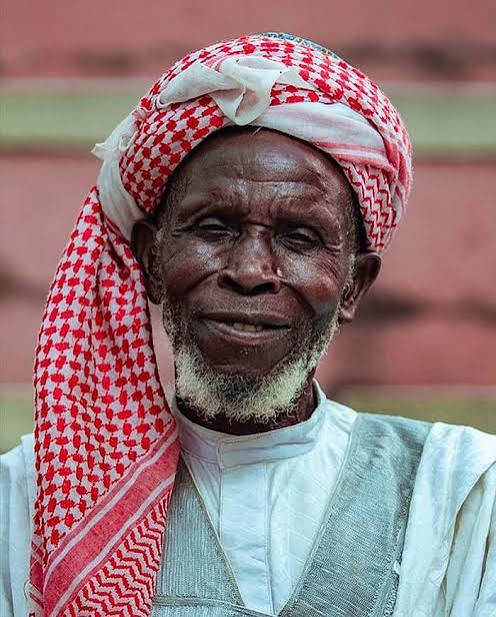
When the Nigerian government publicly mourned the death of Imam Abubakar Abdullahi in January 2026, it did so with language that was humane, dignified, and deserved. The Chief Imam of Nghar village in Plateau State had died at the age of 92, and he was remembered for an act of rare courage: in 2018, during violent attacks in Barkin Ladi Local Government Area, he sheltered more than 200 Christians—some accounts place the number at over 260—inside his mosque, saving them from armed assailants.
President Bola Ahmed Tinubu described the late cleric as a man who chose conscience over division and humanity over hatred. International tributes echoed the sentiment. Imam Abdullahi had earlier received the International Religious Freedom Award from the United States Department of State, Nigeria’s national honour of Member of the Order of the Niger, and multiple media accolades.
Yet beneath this solemn commemoration lies a contradiction Nigeria has yet to confront. In the same week that the Federal Government was commiserating over the death of the Imam honoured for averting a Christian genocide eight years earlier, it transpired that it had expended a humongous $9m to counter the Christian genocide story behind US designation as a Country of Particular Concern!
The federal government cannot simultaneously honour Imam Abdullahi and deny the reality that made his heroism necessary.
A Hero Whose Meaning Depends on Context
Imam Abdullahi did not become globally known for theological scholarship or political leadership. His prominence arose from a single, stark fact: a specific civilian population—Christians—was under lethal attack, and he, as a Muslim cleric, was not part of the target group.
This distinction is central.
If the violence that swept Plateau State in 2018 was indiscriminate, random, or merely communal unrest, there would have been no reason for Christians to flee into a mosque for sanctuary. There would have been no reason for attackers to spare the mosque while churches were destroyed. And there would have been no reason for a Muslim imam to become a shield for people marked for death precisely because they did not share the attackers’ religious identity.
Strip away the reality of targeted violence, and Imam Abdullahi’s act loses its meaning. His courage only makes sense because there was something—and someone—to be protected from.
In that sense, attempts to deny the targeted nature of anti-Christian violence in parts of Nigeria do not merely erase victims; they also hollow out the moral legacy of one of the country’s most celebrated figures of interfaith solidarity.
What International Law Actually Recognizes
Nigeria’s official counter-narrative often rests on conflation: equating organized campaigns of violence with spontaneous riots, reprisals, or breakdowns of law and order. International law does not make this mistake.
International humanitarian law and counter-terrorism frameworks focus on organized non-state armed groups—actors that display structure, continuity, and sustained hostility toward civilian populations. Nigeria unfortunately hosts several such groups, including Boko Haram, ISWAP, Ansaru, and armed formations often described collectively as Fulani herdsmen terrorists.
These groups operate across time, territory, and command chains. They meet the threshold that international law and diplomacy take seriously.
Random violence committed during periods of unrest, regardless of who commits it, remains a domestic criminal matter. It is not equivalent to organized terror campaigns driven by identity and sustained capacity.
This distinction is not semantic. It is foundational.
The $9 Million Problem
The contradiction becomes sharper in light of reports that the Nigerian government spent approximately $9 million engaging a U.S.-based public relations firm to counter claims—advanced by the U.S. government—that Christians face systematic targeting in Nigeria, a designation that contributed to Nigeria’s inclusion as a Country of Particular Concern on religious freedom grounds.
At the same time the state was funding a campaign to deny the existence of such targeting, it was also celebrating a Muslim cleric whose international recognition stemmed entirely from saving Christians from extermination.
This is not merely a public relations misstep. It is a moral incoherence.
You cannot credibly deny a crime while building national prestige around a man whose fame rests on resisting that very crime.
If Nigeria wished to demonstrate seriousness—to its citizens and to the international community—the millions spent on denial would have been better invested in rehabilitation: rebuilding destroyed communities, supporting survivors, compensating widows and orphans, and restoring livelihoods shattered by violence.
Denial does not heal trauma. Rehabilitation does.
Truth does not weaken a nation’s sovereignty. It strengthens its legitimacy.
Imam Abubakar Abdullahi’s life remains a powerful testament to moral courage across religious divides. But his death has also exposed the fragility of an official narrative that insists targeted religious violence does not exist while drawing moral capital from those who stood against it.
A state cannot mourn a hero born of atrocity while paying to deny the atrocity itself.
History—and the victims—will not accept that contradiction, no matter how sophisticated the lobbying.
● Mr. Ishaku is journalist, essayist and writer. He can be reached on bishilee2017@gmail.com”*