
Something extraordinary – and telling – is happening in Nigeria’s justice sector. Within 48 hours, two voices from very different moral universes spoke to the same wound. One was blunt, institutional, and incendiary. The other was prayerful, moral, and deeply alarmed. Together, they tell a story Nigeria can no longer afford to ignore.
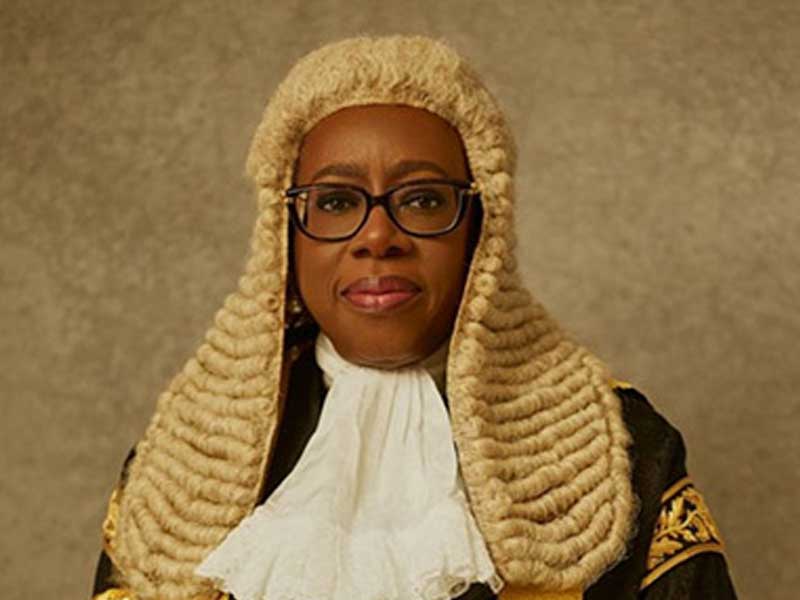
When the President of the Nigerian Bar Association, Mazi Afam Osigwe, SAN, declared that judges and lawyers are among the most corrupt Nigerians, he shattered a long-standing culture of polite denial. His words were not careless rhetoric; they were a public admission from the very heart of the legal establishment that the system meant to guard justice has itself been captured by injustice. Courtrooms, he said, are now perceived as marketplaces where judgments are auctioned to the highest bidder. That is not merely corruption – it is institutional rot.

Barely two days later, a Christian group gathered quietly in Abuja – not to rebut Osigwe, but to mourn what his words confirmed. Calling the judiciary the “conscience of the nation,” they issued a solemn appeal for moral and institutional renewal. Where Osigwe used the language of democratic emergency, they used the language of moral collapse. Yet both diagnoses point to the same reality: Nigeria’s judiciary is bleeding credibility, and with it, the republic itself.
A nation’s justice system is not just another arm of government. It is the final refuge of the weak, the last line between power and abuse, the space where the rule of law either lives or dies. When that space becomes compromised, society does not merely suffer injustice—it normalizes it. Citizens stop believing in redress. The powerful act with impunity. The poor withdraw into despair. Democracy becomes hollow ritual.
The data Osigwe cited only gives numbers to what Nigerians already know by experience. Hundreds of billions of naira lost to bribery. A global corruption ranking that stubbornly refuses to improve. Politically sensitive cases where outcomes appear pre-determined not by law, but by influence. These are not abstract statistics; they translate into stolen mandates, prolonged detentions, weaponized injunctions, and justice delayed until it becomes justice denied.
Perhaps most damning is the global vote of no confidence in Nigeria’s courts. From Niger Delta communities seeking justice abroad, to the P&ID arbitration scandal that embarrassed the country on the world stage, the message is clear: when Nigerians can, they flee local courts. That alone should terrify policymakers. A country whose justice system is not trusted by its own people cannot command respect internationally, nor attract sustainable investment.
Yet corruption does not thrive in silence alone – it thrives in complicity. This is where the Christian group’s intervention matters. Their statement goes beyond condemnation to something more uncomfortable: responsibility. They spoke of silenced courageous voices, of judges and lawyers who paid the price for resisting entrenched interests. They challenged the Bar, legal educators, and professional gatekeepers who, through lowered standards or political maneuvering, help replenish a broken system with poorly formed actors.
Most striking is their insistence on witnesses—principled individuals within the system who will uphold justice without fear or inducement. This is crucial. Institutions do not reform themselves automatically; people reform them, often at great personal cost. Nigeria does not lack good judges or honest lawyers. What it lacks is sufficient protection for them, and sufficient intolerance for those who betray the robe and the wig.
Osigwe’s reform proposals – merit-based appointments, automated case assignment, judicial academies, limits on concentrated power – are not radical. They are standard safeguards in serious democracies. The tragedy is that such reforms still sound aspirational in 2026 Nigeria. Even more tragic is that moral renewal must now be advocated from pulpits because professional self-regulation has failed.
There is also an uncomfortable irony here. The NBA President publicly condemns corruption, yet the Bar itself has often been accused – fairly or not – of selective outrage, internal politics, and ethical inconsistency. The Christian group’s warning is therefore timely: the NBA must not become another arena for ambition divorced from principle. Moral authority, once lost, cannot be reclaimed by speeches alone.
Judicial reform in Nigeria must therefore be two-handed. One hand must be institutional – laws, procedures, technology, accountability mechanisms. The other must be moral – values, courage, and an uncompromising commitment to truth. Remove one hand, and the effort collapses.
Nigeria now stands at a crossroads. It can dismiss these warnings as yet another cycle of outrage, or it can recognize them as a rare moment of convergence – when insiders and moral outsiders are saying the same thing at the same time. When the conscience of the nation cries out, ignoring it is not neutrality; it is consent.
A judiciary that is blind to wealth, power, ethnicity, and influence is not a luxury. It is the oxygen of national stability. Without it, prayers will multiply, speeches will grow louder, but injustice will continue to win quietly.
And when justice finally loses public belief, no constitution, no election, and no sermon will be enough to save the nation.