
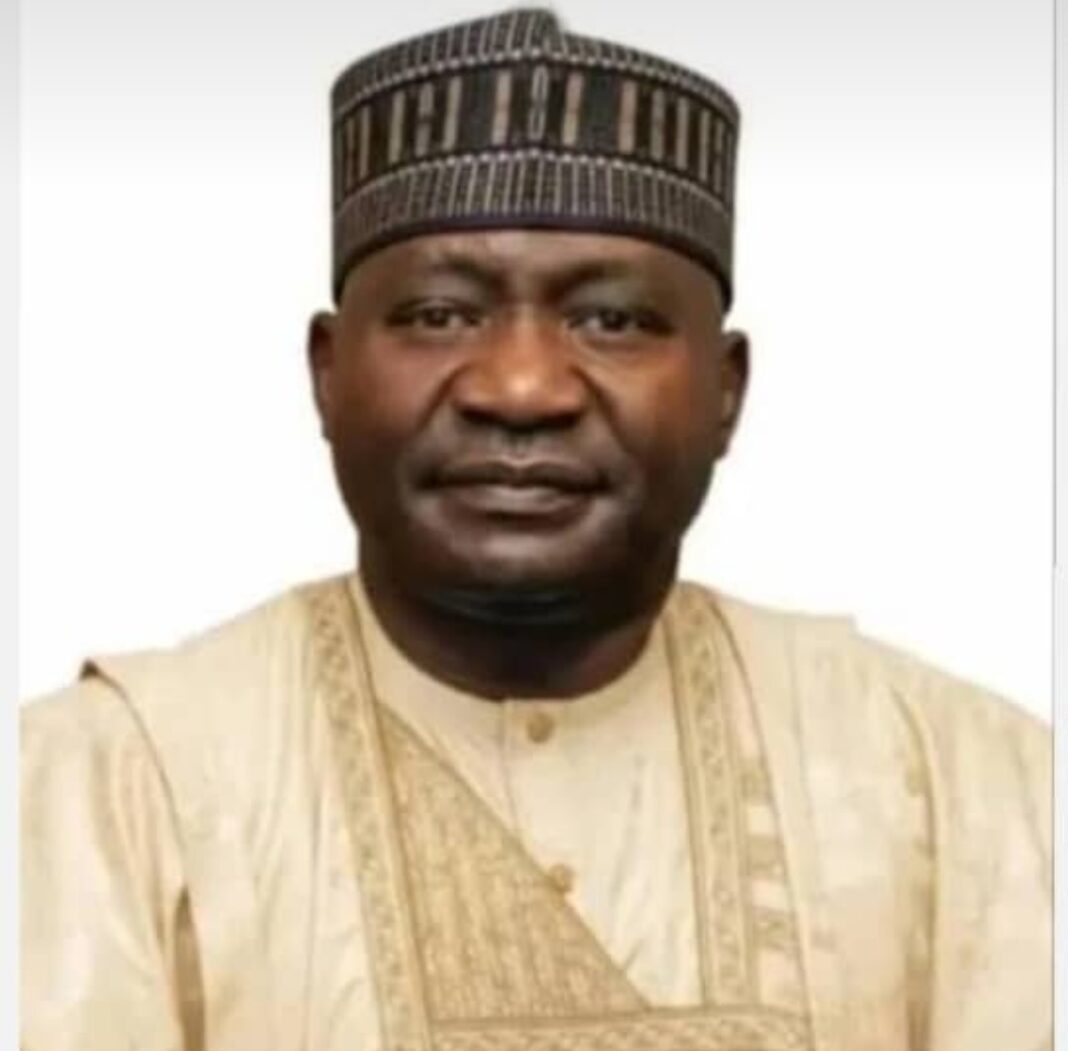
By Sabastine Abu
In a significant departure from previous approaches, Nigeria’s Minister of Defence, General Christopher Musa (rtd), is spearheading a comprehensive, multi-dimensional strategy aimed at finally curbing the nation’s protracted insecurity, with early signs indicating the country is “gradually winning the war”.
In the conference rooms of Nigeria’s Ministry of Defence, a map of the nation tells a story of relentless pressure—pockets of terrorist insurgency in the northeast, bandit strongholds in the northwest, separatist tensions in the southeast, and kidnap-for-ransom gangs crisscrossing the middle belt. For over a decade, this map has symbolized a seemingly intractable crisis. But a new commander, speaking with the calm certainty of a veteran soldier, now points to it not as a diagram of despair, but as a battlefield undergoing a profound, methodical transformation.
General Christopher Musa (rtd), Nigeria’s Minister of Defence, is presiding over what senior security analysts are calling the most comprehensive reboot of national security strategy in a generation. Dubbed the “Musa Doctrine” by some within the corridors of power, his approach moves beyond kinetic bombardments to a fused strategy of smart warfare, community trust, and industrial sovereignty. Early results, though fragile, are sparking cautious optimism: reported major incident declines in several former hotspots and a palpable shift in morale among frontline troops.
The minister’s approach, articulated through recent addresses and policy initiatives, rests on three pillars: enhancing military capability through training and international partnerships, investing in indigenous defence innovation, and critically, fostering a “whole-of-society” approach that calls on citizens to actively deny safe havens to criminals.
Minister Musa has consistently framed Nigeria’s security challenges as a complex form of modern “asymmetric warfare,” where the enemy operates within the population, making conventional military tactics insufficient.
Asymmetric warfare which is a core challenge indicate situations when the enemy is within civilian populations and not a conventional foreign army.
Such situations are usually complicated with community concealment or shielding of criminals, including bandits and terrorists where they live.
The challenges remain daunting, with criminal networks becoming adaptable using sophisticated funding streams where socio-economic drivers of insecurity like poverty and youth unemployment persist. Yet, for the first time in years, a coherent, multi-pronged national strategy appears to be in motion.
Security expert Dr. Chidi Nwafor observes, “General Musa is attempting something historically difficult: to synchronize the military’s hardware with the software of social trust and economic hope. He’s not just chasing militants; he’s trying to dismantle the very ecosystem that breeds them.”
This kind of situation would obviously require public cooperation as the military action alone cannot defeat this threat; intelligence from citizens under circumstance is critical.
“The enemy is within, and that makes it more dangerous,” Musa stated at a recent public forum. “You cannot see it on someone’s face. It could be someone you think is your friend… That is why people must not give criminals any safe haven”. His direct appeal to Nigerians is to “report any form of criminal activity… assuring that security agencies would respond decisively”.
While championing community involvement, General Musa is simultaneously overseeing a significant upgrade of the Armed Forces’ traditional capabilities. He has emphasized that “effective training remains a cornerstone of operational excellence”, with a focus on special forces to enhance agility and mission effectiveness.
A key development in this regard is the arrival of a small team of United States military personnel in Nigeria. Minister Musa and U.S. officials have clarified that this team is strictly in a non-combat, advisory role, providing specialized training and intelligence support to Nigerian forces. This partnership, described as a response to Nigeria’s request, aims to strengthen “operational readiness and enhancing their ability to confront armed groups”.
Beyond international collaboration, the Federal Government is making “sustained investment in indigenous defence capabilities”. Musa has highlighted progress in locally manufactured military platforms and technologies, positioning the defence sector as a potential driver of industrial growth and national development.
Recognizing the unique security dynamics in different regions, the Defense Ministry has adopted targeted strategies. A high-level meeting was recently held with the Presidential aide on Community Engagement for the South-East to develop community-driven, non-kinetic security strategies for the region.
The meeting resolved to establish joint working teams to coordinate regional security summits, creating a direct channel for communities to voice concerns and contribute to solutions. This initiative underscores the minister’s belief that “sustainable peace can only be achieved through trust-based engagement between communities and security institutions”.
Acknowledging that national security depends on the welfare and morale of service personnel, General Musa has reiterated the government’s commitment to the well-being of the military and their families. He has honoured “the brave men and women who paid the supreme price,” vowing that “their sacrifice will never be forgotten”.
This focus on morale extends to veterans, with the minister advocating for their integration into governance as part of national development and assuring efforts are being made to ensure they “are well catered for”.
Understanding that a demoralized force is a defeated force, General Musa has become a relentless advocate for the welfare of active-duty personnel and veterans alike. He regularly visits frontline troops, not for staged photo-ops, but for blunt conversations. He has championed improved allowances, accelerated housing schemes, and a more dignified post-service transition for veterans.
“We ask everything of our soldier. In return, we must give our everything to ensure he is valued, cared for, and honored,” he said at a memorial for fallen heroes. This focus on morale is viewed as a strategic imperative, directly linked to operational effectiveness and reducing corruption born of desperation.
General Christopher Musa stepped into his role with a renewed hope from Nigerians who celebrated his ascension as he made the solemn constitutional oath to “preserve, protect and defend Nigerians”. He inherited a nation confronting what analysts describe as “its most complex mix of threats since the return to democracy”.
The public recognition General Musa has received, including being named “Man of the Year 2025” by OurNigeria News Magazine for his commitment to security, reflects the high expectations placed upon him.
While challenges like the recent Kajuru mass adoption and the Kiyeama persist, Minister Musa projects cautious optimism. “We are getting there. It is improving by the day”. His strategy represents a foundational shift, aiming to fuse a more capable and technologically empowered military that is fully engaged with very vigilant citizenry, in pursuit of a singular goal: a Nigeria where all citizens “will soon be able to sleep peacefully without fear”.
● Abu, PhD, mni, is Deputy President, Nigeria Guild of Editors.