
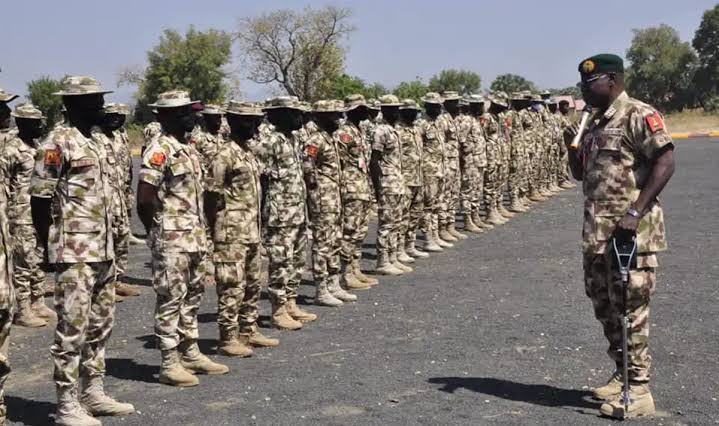
Kwara State Governor AbdulRahman AbdulRazaq has arrived embattled Kaiama Local Government Area with 1,000 soldiers deployed on the orders of President Bola Tinubu to secure the border area of the north-central state.
Abdulrazaq was in Kaiama on Wednesday as part of a new security initiative dubbed “Operation Savannah Shield,” which involves the deployment of about 1,000 military personnel to the axis affected by the mindless massacre of 75 residents of Woro community. The operation is designed to anticipate terrorist movements, disrupt their operations, and prevent further attacks.
According to American university professor and public affairs analyst Farooq Kperogi, the governor’s intervention followed growing public concern over the incident.
“I spoke directly with Governor AbdulRazaq shortly after I shared an update on the attack,” Kperogi said. “He informed me that he was already on the ground in Kaiama with a significant military contingent as part of Operation Savannah Shield.”
Kperogi said the governor’s Chief Press Secretary, Mal. Rafiu Ajakaye, reached out to him shortly after his initial post, leading to the conversation with the governor.
During the visit, the governor was accompanied by Brigadier General Nicholas Rume, Commander of the 22 Armored Brigade at Sobi Barracks, Ilorin. General Rume assured that the situation was under control, though he confirmed a rising death toll.
“He told me that the military has verified 75 deaths so far,” Kperogi said, “but cautioned that the number could increase, as earlier figures had already risen from 65 to 75.”
In a further development, Kperogi disclosed that the village head of Woro, Alhaji Salihu Umar, who had initially been unaccounted for, has been found alive.
Kperogi praised the governor’s swift response and personal presence at the scene of the tragedy, describing it as a critical show of leadership.
“I appreciate the governor’s quick intervention and his physical presence at the theater of this mass massacre,” he said. “My hope is that Operation Savannah Shield will succeed in ensuring that such a tragedy does not happen again. Prevention is always better than reaction.”
Security operations are ongoing in the area as authorities continue efforts to stabilize the region and prevent further violence.
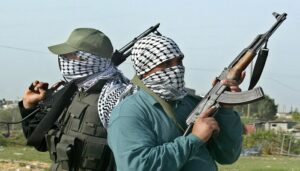
The country was plunged into fresh mourning this week as coordinated terror attacks across Kwara, Katsina and Benue states left more than 130 people dead within 48 hours, exposing once again the fragility of security across vast rural stretches of the country.
The deadliest assault occurred in Woro, a remote farming community in Kaiama Local Government Area of Kwara State, where heavily armed terrorists stormed the village on Tuesday evening and unleashed hours of bloodshed that residents described as “unimaginable.”
By Wednesday night, at least 75 bodies had been buried, with scores still missing and more corpses being recovered from surrounding bushes. Local leaders and residents estimate the death toll could reach 100 or more, as entire families were wiped out, homes razed, and survivors forced to flee.
Woro, located near the Kainji National Park axis bordering Niger State, was attacked by gunmen believed to be linked to ISWAP and the Mamuda terror faction, long active in the forested Borgu corridor.
Residents said the assailants arrived in large numbers on motorcycles around 5pm, many dressed in military-style uniforms. They reportedly gathered first at a secondary school before launching a coordinated assault that lasted until about 4am, operating for hours without resistance.
“They burnt houses, shops, vehicles—everything,” said Dr. Abdul Woro, a survivor. “They killed the men and took away women and children.”
The village head, Alhaji Salihu Bio Umar, lost two sons in the attack. His palace was burned, his vehicle seized and used to transport abducted villagers, and his last wife kidnapped.
“Some were burnt completely beyond recognition,” Umar said. “About 100 people are missing or dead. Bodies are still in the bush.”
Local authorities said the attack was a reprisal after community leaders refused a letter from the terrorists seeking to “preach” an extremist ideology. Two chief imams who rejected the group’s beliefs were among those killed.
Explosives planted by the attackers also claimed lives. A commercial truck ran into a landmine on an access road and was burned beyond recognition.
The Emir of Kaiama, Alhaji Muazu Omar, confirmed the scale of the tragedy, noting that soldiers previously stationed in the area had withdrawn after deadly ambushes.
“They operated freely for hours,” he said.
In response, President Bola Ahmed Tinubu ordered the immediate deployment of a Nigerian Army battalion to Kaiama and approved the launch of Operation Savannah Shield, a new military command aimed at crushing terrorist networks across the Kwara–Niger–Kogi axis.
Condemning the assault, the president described the attackers as “cowardly and beastly” and praised the villagers for rejecting violent extremism.
“They were killed for choosing an Islam of peace over terror,” Tinubu said, urging federal and state agencies to provide urgent relief and ensure the perpetrators “do not go scot-free.”
Governor AbdulRahman AbdulRazaq, who travelled to Kaiama with senior military commanders, said the attack was a desperate backlash against recent military successes under Operation Forest Flush, which had dismantled several terrorist camps in the Kainji axis.
Military sources said intelligence indicated some bandits were aided by collaborators within nearby communities who provided early warnings of troop movements.
In Katsina State, at least 20 people were killed when bandits attacked Doma A and Doma B communities in Faskari Local Government Area after a fragile community-led peace deal collapsed.
Residents said the violence followed the killing of a repentant bandit by youths, who seized his rifle and failed to return it despite warnings that retaliation was imminent.
“We begged the authorities,” a resident said. “Nothing was done.”
Police confirmed 13 deaths, while locals insist the toll was higher. Victims were buried in nearby Tafoki village.
The killings triggered outrage in the Senate, where lawmakers urged President Tinubu to fulfill his pledge to establish a military barracks in the Funtua zone and warned against negotiating with bandits.
“These attacks threaten food security and national stability,” said Senator Dandutse Mohammed.
In Benue State, gunmen attacked the Abande market in Kwande Local Government Area, killing at least 17 people, including a mobile police officer, according to residents. Police confirmed six deaths.
Witnesses said traders were shot at close range, shops looted, and the market set ablaze. Women were reportedly raped, and several residents remain missing.
The area lies close to the Nigeria–Cameroon border, where communities have endured years of attacks with minimal security presence.
Governor Hyacinth Alia condemned the assault, calling it “an affront to our shared humanity,” and ordered intensified military operations.
As grief spread across communities, political leaders and civil society voices demanded urgent action.
Former Senate President Bukola Saraki warned that insecurity in Kwara had overwhelmed state capacity and required direct presidential intervention.
Opposition parties called for humanitarian aid for displaced families and justice for victims.
For survivors in Woro, however, words offer little comfort.
“Our village is empty,” said a resident. “Only ashes and graves remain.”