
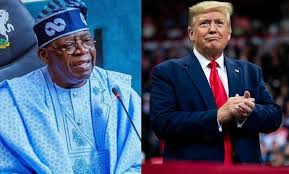
The United States has officially confirmed the deployment of a small military team to Nigeria in a move that reflects deepening security cooperation between Washington and Abuja against rising terrorist threats.
According to General Dagvin R.M. Anderson, commander of the United States Africa Command (AFRICOM), the United States and Nigerian governments agreed late last year on the need for closer collaboration to confront insurgencies and other violent extremism across Nigeria. The deployment follows a series of high-level discussions between US and Nigerian officials, including a meeting between Anderson and President Bola Ahmed Tinubu in Rome in late 2025.
Gen. Anderson described the deployed contingent as a small team with “unique capabilities” provided by the United States, but he did not disclose its full size, specific roles, or how long the personnel will remain in Nigeria. Nigerian Defence Minister Christopher Musa also confirmed the presence of US personnel, without offering further details.
This announcement marks the first official US confirmation of forces operating on Nigerian soil since US airstrikes in December 2025 targeted Islamic State-linked militants in northwest Nigeria — an operation that the Trump administration said was conducted at the request of Nigerian authorities and reflected mutual security cooperation.
The deployment is widely understood to be focused on intelligence sharing, reconnaissance support, and advisory assistance to Nigerian forces engaged in long-running battles against extremist groups, particularly Boko Haram and the Islamic State West Africa Province (ISWAP).
US military and diplomatic activity in Nigeria is not new. AFRICOM has routinely supported Nigerian military operations through training, equipment deliveries, and intelligence cooperation in recent years, part of a strategy to counter violent extremist organizations across West Africa.
The country has struggled with a complex insurgency for more than 17 years, particularly in the northeast, where Boko Haram and ISWAP remain active. These groups have repeatedly attacked military convoys, civilian communities, and aid workers, resulting in tens of thousands of deaths and deepening insecurity.
In addition to jihadist threats in the northeast, banditry, kidnappings, and communal violence in the northwest and middle belt regions have strained security forces, prompting greater international engagement. Recent violence — such as simultaneous attacks on churches and mass kidnappings — has underscored the country’s multifaceted crisis and contributed to calls for enhanced cooperation with foreign partners.
The Trump administration had previously criticized Nigeria’s handling of religious and ethnic violence, notably accusing the government of failing to protect Christians from Islamist militants. The Federal Government has rejected claims of systematic religious persecution, stressing that its counter-terrorism operations target extremists who harm both Christian and Muslim civilians.
The recent deployment of US military advisers and intelligence assets underscores a more direct phase of counter-terrorism cooperation between the two governments, even as the country asserts its sovereignty and leadership in shaping internal security responses.