
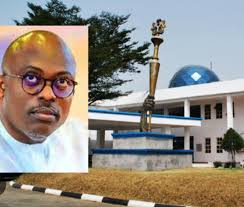
The Rivers State House of Assembly has taken a decisive step to intensify impeachment proceedings against Governor Siminalayi Fubara and his Deputy, Professor Ngozi Odu, urging the state’s Chief Judge to set up a judicial panel to probe alleged constitutional breaches and acts of gross misconduct.
On Friday, 25 out of 27 lawmakers voted to forward the allegations to the judiciary under Section 188 of the 1999 Constitution (as amended), signalling that the legislature is prepared to move beyond political theatre into a full-scale legal challenge.
The Assembly’s list of grievances mirrors frustrations earlier highlighted in impeachment notices and motions: failure to present the 2026 Appropriation Bill, refusal to table a Medium-Term Expenditure Framework, extra-budgetary spending without legislative approval, improper withholding of statutory allocations, and obstructing the legislature’s constitutional functions.
In December, lawmakers publicly accused Fubara of unilateral spending and awarding contracts to political allies without assembly backing — a charge that speaks to deeper fissures over fiscal transparency and executive overreach.
These disputes have effectively stalled the state’s budget process — the Assembly has declared it will not allow the governor to present the 2026 budget or mid-term framework pending resolution of the impeachment probe.
The stand-off has real consequences for governance: public services, salaries and legislative operations are at risk as political conflict supersedes routine administration.
Although officially a constitutional process, the impeachment battle cannot be disentangled from personal and factional rivalries. The flashpoint dates back to a falling out between Fubara and his political godfather, the Minister of the FCT, Nyesom Wike — a relationship once believed to secure Fubara’s ascendancy but now central to state instability.
The Assembly is dominated by lawmakers perceived as loyal to Wike, and their persistence in advancing impeachment efforts has fuelled accusations that the process is politically motivated rather than strictly constitutional.
The All Progressives Congress (APC) South-South faction has publicly accused the Assembly of retaliating against Fubara for resisting demands to approve “fictitious” projects in the 2026 budget, framing the dispute as an attempt to punish fiscal integrity.
President Bola Tinubu has repeatedly stepped in to broker peace, notably after previous flare-ups that once prompted federal mediation — but such efforts have so far failed to break the impasse.
Not all lawmakers are united behind the drive to impeach. Reports confirm internal dissent, with some legislators urging restraint and reconsideration of the political costs — an indication that the crisis is straining even among the Wike bloc.
With the Assembly’s resolution moving to the judiciary, the state faces a series of high-stakes constitutional tests:
Chief Judge’s panel — If established, this seven-member panel will examine each allegation and determine whether there is sufficient cause to sustain impeachment articles.
Litigations are expected over procedures and timelines as both camps seek advantage in state and federal courts.
The prolonged crisis carries real danger of administrative paralysis in Nigeria’s oil-rich state, affecting public finance and services.
For now, Rivers remains in political limbo — an emblem of how personal rivalries and institutional contestations can spill over into governance breakdowns, with citizens and civil society increasingly anxious about the future of democratic accountability in the state.