
Why Don’t Nigerians Openly Pray Against Corrupt Judges and Politicians?
By Frank Tietie
I have just finished reading Prof. Chidi Odinkalu’s latest article in his continuing quest to sanitise a Nigerian judiciary that is generally perceived by the public to be corrupt and offers justice for sale. I was particularly fascinated by the title of the piece, “Mr Justice Steppin’ Razor,” being an allusion that instantly calls to mind the unusual refrain, “I am dangerous, said I am dangerous,” from Stepping Razor, the classic hit by Peter Tosh.
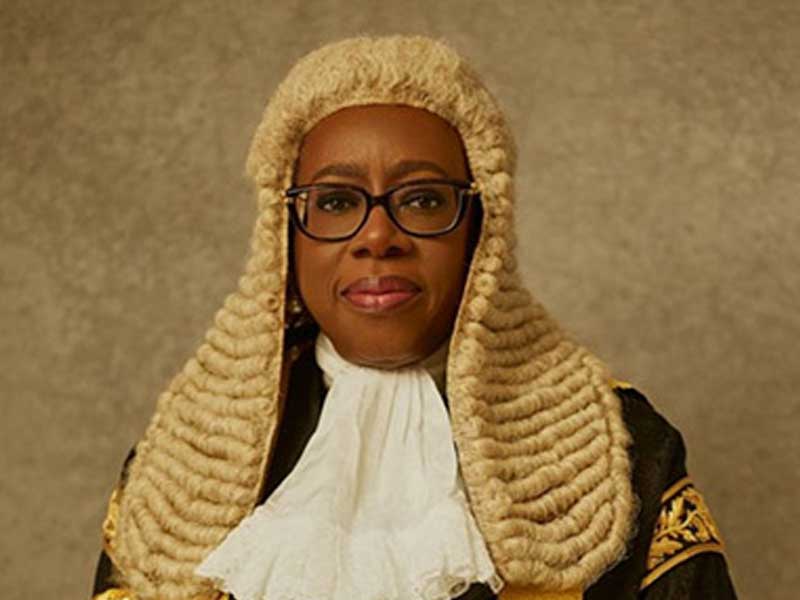
According to the learned Professor, the two justices, Flora Azinge and Polycarp Nwite, who warned lawyers and members of the public to desist from approaching them with bribes to influence cases in their courts, if sincere, ought to have applied any of the remedies available to them. These, according to the learned Professor, include: reporting the matter to the police or the Attorney-General for investigation and prosecution; punishing the offender summarily for criminal contempt; referring lawyers or other regulated professionals for disciplinary proceedings; or using the judicial bully pulpit to name and shame by inviting the perpetrator to admit the facts in open court and then reprimanding them.
One recommendation that, in my view, did not quite fit neatly into the Professor’s framework is that a judge also has the power to immediately arrest an ambitious bribe-giver, whether the approach to give the bribe is made in chambers, at home, or in the hotel rooms where such exchanges are often attempted.
Meanwhile, there is another dimension to corruption in governance in Nigeria, particularly within the judiciary and public service, that deserves attention in the lives of every Nigerian who is a person of faith. Religious leaders and their followers rarely frame corruption as the principal “devil” behind many of the problems they pray against.
As a casual observer and fan of the Mountain of Fire and Miracles Ministries and its leader, Daniel Olukoya, who popularised the “fall down and die” imprecations against enemies of prosperity, one wonders why we seldom hear prayers directed squarely at public corruption. Imagine prayers such as: “Any judge in Nigeria who collects money to twist or pervert justice, fall down and die,” or “Any politician or public servant who embezzles funds meant for hospitals, schools, and good roads, fall down and die.”
Such prayers, however, should probably not be extended to lawyers who aid and abet corruption and criminality; if the Almighty were to answer such prayers literally, there might well be no legal profession left in Nigeria, and such lawyers who would die from such answered prayers would hardly make it to heaven. Therefore, such prayers against lawyers should be omitted and abandoned in good faith.
More seriously, Nigerians do not often pray against corruption and corrupt officials because it is difficult to pray against ourselves and those who are like us. Deeply ingrained among us is a perception that views government and access to public office as an opportunity for self-enrichment at the expense of the public good. To many people of faith, what is called “corruption” is, disturbingly, perceived as the answer to their prayers.
A corrupt judge is worse than a thousand lethal terrorists. Terrorists may strike, yet a society can still mobilise to address their menace. A corrupt judge, however, slowly destroys the foundations of society, leaving little hope of recovery after the collapse. When people lose faith in the judiciary and resort to self-help, anarchy sets in, and social disorder reigns.
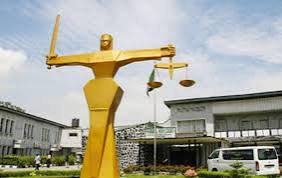
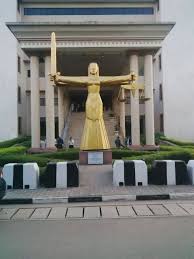
Judges are often described as next to God on earth because of the immense powers they wield. Such powers must be exercised with utmost devotion to truth and a conscience governed by the fear of God.
Although the appointment of judges is a political process, it does not render a judge a politician, nor does it grant them the license to dispense justice with political, religious, or monetary interests in mind. The stability of a society like Nigeria rests mainly on the ability of judges to dispense justice without fear or favour, according to the law, and entirely free from corruption.
It’s time, Nigerians, especially people of faith, to declare zero tolerance for corruption in public service, especially in the judiciary. Continuously glossing over the overwhelming impact of corruption in Nigeria amounts to a costly hypocrisy.
… Media corruption and the undue focus on Rivers politics
The Nigerian media is facing a credibility crisis, one that is deepening by the day and threatening its historic role as the conscience of society. Nowhere is this more evident than in the excessive and often distorted coverage of the impeachment crisis in Rivers State. What should have been reported as a serious constitutional and political development has instead become a marketplace of narratives, where cash inducements, sponsored “media chats,” and paid-for sympathies are increasingly shaping what Nigerians read, hear, and watch.
Ordinarily, the politics of Rivers State, no matter how dramatic, should not dominate the national media space to the extent it has in the last week and continues to do so currently. Yet the sheer volume and tone of reporting suggest that editorial judgment has been overtaken by pecuniary interests. The result is not merely an imbalance; it is outright corruption.
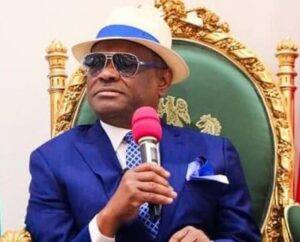
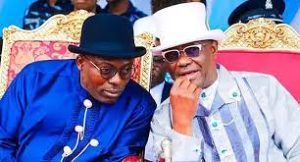
At the centre of this media saturation is Nyesom Wike, the Minister of the Federal Capital Territory, who, under the guise of “media chats,” invites media houses and their most recognisable personalities, funds the logistics, and sets the agenda. Even where coverage appears critical or neutral, the subliminal messaging unmistakably makes him (Wike) the dominant political figure, deliberately making him worthy of constant national attention. In such circumstances, the delicate balance between objectivity and profit motive collapses. The media may insist it is merely doing its job, but the public sees something else: a paid amplification of power.
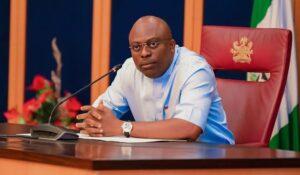
On the other hand, the pendulum swings, and suddenly stories begin to tilt in favour of Siminalayi Fubara, the Governor of Rivers State, often with an emotional appeal crafted to win public sympathy for him during the impeachment process. The speed and coordination of these counter-narratives raise legitimate questions about whether editorial reassessments are driven by new facts or new flows of money. When inducements directly or indirectly influence the tone and emphasis of news reporting and interactive engagements during news bulletins, authenticity is compromised. What remains is propaganda dressed as journalism.
This pattern is not new in Nigeria, as I have often cited the example of corrupt judges who accept bribes in the secrecy of their chambers, sometimes in the presence of only one Senior Advocate of Nigeria or a trusted friend. What such judges forget is that the money they receive is not conjured from thin air, but it is pooled by political party bigwigs who understand precisely what it is meant to buy. Once the judge delivers the desired outcome, the power of the bribe is confirmed. It did not take long for the Nigerian judiciary to acquire a reputation for corruption in the public eye, as those who gave the bribes were also the ones who advertised them.
The media is now walking the same dangerous path. When editors, producers, and media managers collect cash to swing stories and news production, they may enjoy short-term gains, but the long-term consequence is reputational ruin. Ironically, it is often the same politicians who pay for favourable coverage that later turn around to publicly denounce the media as corrupt. By then, the damage is done, and the public trust has been eroded.
As Nigeria approaches the 2027 general elections, the implications are grave. A media landscape widely perceived as corruptly influenced by politicians becomes a weapon against democracy. Citizens can no longer distinguish fact from paid fiction. Electoral choices are distorted, accountability is weakened, and cynicism replaces civic engagement. In such an environment, elections risk becoming contests not of ideas or competence, but of who can better bankroll the media narrative.
There is also a troubling practice that must be confronted head-on. It is about guests who secretly pay or sponsor their own appearances on political and news programmes, disguising these transactions as professional editorial decisions. This undermines the very foundation of broadcast ethics. The decision to invite a guest should be driven solely by the importance and currency of the issue, the quality of the personality, and by the independent judgment of producers and not by envelopes passed under tables or “logistics” quietly settled.
The situation becomes more tragic when media houses, aware of these corrupt tendencies, attempt to incentivise professionalism by offering highly competitive salaries to their staff, especially top managers, in an effort to discourage corruption. However, many unscrupulous media staff are still unable to resist the enticing inducements from these desperate political actors and their PR contractors. Media staff under such influence quickly discard their loyalty to their media owners for short-term monetary gains, while still expecting salaries from the same media owners at the end of the month. This typifies how a once major, trending African television station broadcasting from Nigeria was brought down and now operates as a shadow of its former days of dominance. That particular media owner of blessed memory was aware of and witnessed how his staff were earning money through media malpractice and resolved not to pay them salaries anymore for many months, claiming the station’s ID cards were sufficient meal tickets for them. What a sad development!
If the Nigerian media is to reclaim its credibility, it must draw a firm line. Sponsored content must be clearly labelled. Media chats funded by politicians should be treated with caution, in the context of transparency. Above all, newsrooms and their managers must rediscover the courage to say no to money that compromises judgment and access granted to undeserving guests to appear because of money, which often comes at the price of integrity. The business of mainstream media is highly capital intensive and extremely expensive, therefore media owners expect a high degree of professionalism and loyalty from their staff to maintain a higher return on their investment and prevent revenue leakage.
Rivers State politics will pass, as all political crises do, but if the media continues down this road of compromise and corruption, the loss of credibility may be permanent. A corrupt media, like a corrupt judiciary, can neither serve the public interest nor promote a stable democracy. It can only serve power or money and, in doing so, betray the very society it exists to inform.
● Tietie, a lawyer & Executive Director
Citizens Advocacy for Social & Economic Rights (CASER), lives in Abuja.