Nigeria’s turbulent political landscape was jolted this week by two sharply contrasting dramas unfolding in neighbouring Plateau and Bauchi states—one defined by defection and realignment, the other by defiance and open confrontation with federal power.
In Jos, Plateau State Governor Caleb Mutfwang pulled the curtain down on his long association with the opposition Peoples Democratic Party (PDP), citing uncertainty, internal crises and the need for “clarity of direction” in governance. In Bauchi, Governor Bala Abdulkadir Mohammed struck an unyielding tone, vowing that no amount of intimidation, persecution or prosecution would force him out of the PDP or into the ruling All Progressives Congress (APC).
Together, the two developments expose the widening fault lines within Nigeria’s opposition politics—and the intense pressures reshaping alignments ahead of the 2027 general election.
Mutfwang’s Leap Across the Aisle
Governor Mutfwang’s decision came in a formal resignation letter dated December 29, 2025, addressed to the PDP Ward Chairman of Ampang West Ward in Mangu Local Government Area. In measured but telling language, the Plateau governor announced his exit from the party with immediate effect.
“I sincerely appreciate the PDP for providing me the political platform to participate in the democratic process,” Mutfwang wrote, thanking party leaders, members and supporters for the trust reposed in him over the years.
Yet beneath the gratitude lay a clear verdict on the state of the party. Citing “the realities of the moment,” Mutfwang said his commitment to purposeful leadership, effective service delivery and clarity of direction had compelled him to seek an alternative political platform.
Though the letter avoided explicit accusations, party insiders point to prolonged leadership tussles, factionalism and national-level uncertainty that have left the PDP weakened and internally fractured. On the Plateau, those tensions appear to have reached a breaking point.
By Friday, January 2, 2026, the governor’s next move will become official. Mutfwang is set to formally join the All Progressives Congress, a development already described by allies as a strategic realignment taken “in the overriding interest of Plateau State.”
Supporters argue that aligning the state with the ruling party at the centre will ease cooperation with the Federal Government and accelerate the delivery of development projects. The formal registration and presentation of his APC membership card will take place at Victoria Gowon Hall, Government House, Rayfield, before he proceeds to the party’s state secretariat in Jos to meet party leaders.
The defection is expected to dramatically redraw Plateau’s political map and energise the APC ahead of 2027, even as it deepens the sense of crisis within the PDP.
Bala Mohammed Draws a Line
Across the border in Bauchi, however, Governor Bala Mohammed is choosing a different path—one of resistance rather than retreat.
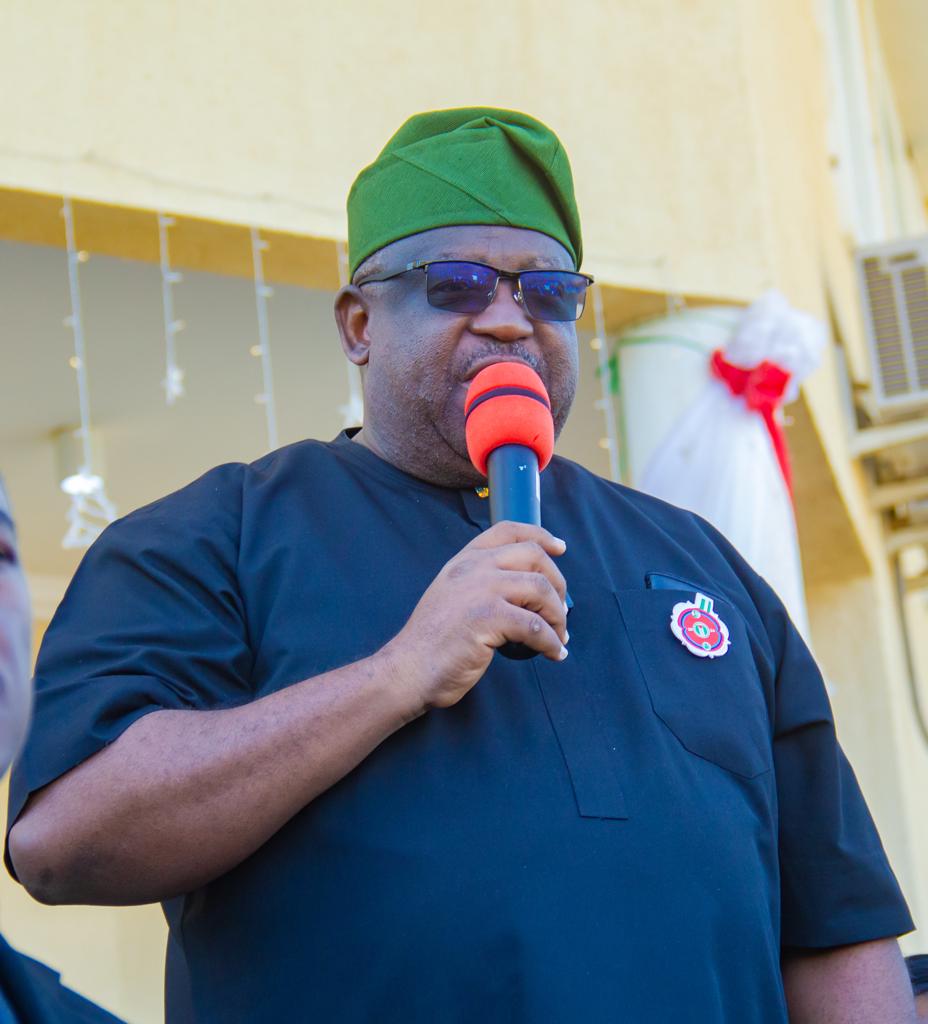
Speaking on January 1, 2026, at the Executive Chambers of the Government House in Bauchi while receiving an Award of Excellence as a Safety Ambassador from the Safety Institute of Nigeria, Mohammed delivered a fiery, emotionally charged address.
“No amount of intimidation, persecution or prosecution will make me leave the PDP for the APC,” he declared. “I will not join the APC.”
Visibly angered by what he described as the unjust treatment of his Finance Commissioner by the Economic and Financial Crimes Commission (EFCC), the Bauchi governor alleged that state institutions were being weaponised against opposition figures.
In one of the most striking moments of his speech, Mohammed rejected allegations linking him to terrorism. “I’m not a terrorist. I have nothing to do with terrorism,” he said, describing his mention in a court motion—despite his constitutional immunity—as shocking and politically motivated.
Mohammed accused the APC-led Federal Government of intolerance and warned against the use of courts and anti-corruption agencies to “persecute and prosecute Nigerians that are not within their own party.”
“If they don’t stop, we are going to declare war,” he said, quickly adding that his long silence had been in the interest of peace and stability, not fear. “I am not a coward.”
He also criticised the implementation of the new tax law, arguing that it would further impoverish subnational governments, and lamented what he called federal neglect of states despite heavy resource control at the centre.
Yet amid the anger, the Bauchi governor struck a note of pride in his state’s relative peace. He credited inclusive governance and tolerance across party lines—APC, PDP and NNPP alike—for Bauchi’s security and stability.
But amidst it all, the EFCC has told the public to ignore Bala Mohammed. In a statement, it said:
“The Economic and Financial Crimes Commission, EFCC, views with great displeasure the claims of Bauchi State Governor, His Excellency, Bala Mohammed about the Commission being used by political opponents, particularly the Minister of the Federal Capital Territory, Nyesom Wike, to persecute him and his aides.
“These claims are as wild as they are far- fetched. The EFCC is an independent agency created to fight economic and financial crimes. The Commission is non- partisan and discharges its mandate without affection or ill will. The attempt to portray it as a pliable agency that panders to the demands of certain political interests is therefore mischievous and condemnable.
“It is derogatory for Mohammed to ascribe the Commission’s activities in Bauchi State to the Influence of Mr. Wike. It is important to state that no political office holder is in a position to influence the investigative activities of the Commission. If Bala Mohammed wants to be honest, he would have revealed to Nigerians that he was standing trial for money laundering at the time he won election as governor of Bauchi State. Only the constitutional Immunity from prosecution, which his current office attracts, has put that case in abeyance. Who also influenced the Commission to investigate him in 2016 and charge him to court?
“In the instant case, the facts against some officials of Bauchi State government are already placed before the court. Members of the public can access the charges and decide for themselves whether the case is borne out of vendetta or is a product of painstaking investigation by the EFCC. They will also understand why Bala Mohammed as the approving authority in Bauchi State is mentioned in the charge.
“Crying wolf over issues of terrorism financing is like clutching at straws. The Commission did not invent the law, and where there are offences punishable by extant laws, EFCC will be failing in its responsibility to do otherwise.
“Public accountability should be the priority of politicians of all persuasions. It is the height of hypocrisy for opposition politicians to be quick to scream persecution each time an opposition figure is called to account but are mute when a member of the ruling party faces the same ordeal.
“Recently the Commission arraigned a ranking member of the ruling party in court for alleged corruption, and not a whimper of persecution was heard from any of the political divide.
“Governor Mohammed should face the governance of Bauchi State and allow the EFCC focus more on cleaning the financial space of the nation, in line with its assigned mandate.”
Two Governors, Two Choices
The contrast could hardly be starker.
In Plateau, a governor confronted by opposition disarray has chosen realignment, betting that proximity to federal power will deliver stability and development. In Bauchi, a governor under pressure has chosen confrontation, insisting that principle, party loyalty and democratic pluralism are worth the cost.
Together, the twin stories reflect a broader national struggle—between survival and resistance, pragmatism and protest—playing out as Nigeria inches toward another decisive election cycle.
As one governor crosses over and another digs in, the message from the North is unmistakable: the battle for the country’s political soul is far from settled.