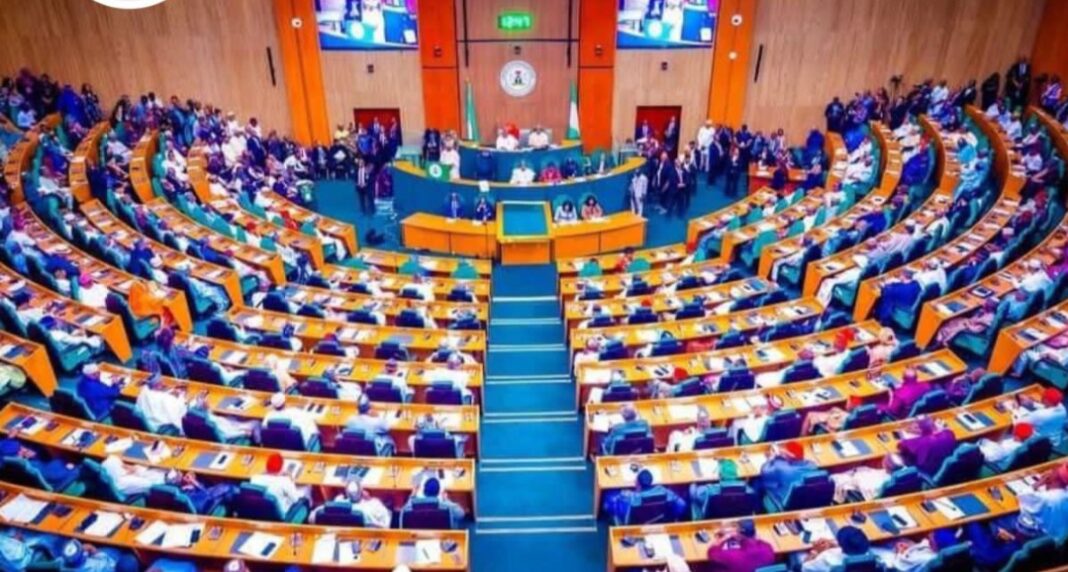
Facing public distrust and concern over how it may have connived with the Executive Arm of government to put further pressure on the populace, the National Assembly has ordered the re-gazetting of four major tax reform laws.
To save face, however, the federal lawmakers insist the move is purely administrative and aimed at safeguarding the integrity of the legislative record.
But the latest controversy over what many have tagged forgery, has got analysts asking how many of such alleged forgeries took place in the past.
In a statement issued on Friday, the House of Representatives spokesperson, Akin Rotimi, said the leadership of both chambers had directed the Clerk to the National Assembly, to re-gazette the Acts and issue Certified True Copies (CTCs) of the versions “duly passed by both chambers of the National Assembly.”
The decision followed growing public commentary surrounding the passage, presidential assent, and subsequent publication in the Federal Government’s Official Gazette of the Nigeria Tax Act, 2025; Nigeria Tax Administration Act, 2025; Joint Revenue Board of Nigeria (Establishment) Act, 2025; and the Nigeria Revenue Service (Establishment) Act, 2025.
According to the National Assembly, the concerns raised relate to the harmonisation of bills passed by the Senate and the House of Representatives, the documentation transmitted for presidential assent, and the versions of the laws eventually published in the Gazette.
Rotimi said the legislature was addressing the matter strictly within its constitutional and statutory powers. He disclosed that the House had constituted a seven-member ad hoc committee last week after the issue was raised on the floor through a Point of Order on privileges.
The committee, working alongside other relevant committees and the management of the National Assembly, is conducting an institutional review to establish the sequence of events and identify any lapses, irregularities, or possible external interferences in the legislative and administrative handling of the Acts. The review, he said, is being carried out in line with the Constitution, the Acts Authentication Act, the Standing Orders of both chambers, and established parliamentary practice.
As part of the process, the leadership of the National Assembly, under Senate President Godswill Akpabio and Speaker of the House Abbas Tajudeen, approved the re-gazetting of the laws to remove any ambiguity and ensure that the published versions accurately reflect the decisions of parliament.
The Assembly stressed that the review does not amount to an admission of wrongdoing or a defect in the exercise of legislative authority by either chamber. It also clarified that the action was taken without prejudice to the powers or functions of other arms or agencies of government and would not affect any rights, obligations, or legal processes arising under the law.
In a related statement signed by the Director of Information, Bullah Audu Bi-Allah, the National Assembly bureaucracy confirmed that an internal review process had been initiated to ensure clarity, accuracy, and integrity of the legislative record. The Clerk to the National Assembly has been directed to facilitate the publication of the Acts in the Official Gazette and make certified true copies available to stakeholders and the public upon request.
Reaffirming its commitment to constitutionalism, separation of powers, due process, and the rule of law, the National Assembly said any procedural or administrative improvements identified would be addressed in accordance with established parliamentary conventions.
The four laws are central to the government’s tax reform agenda. The Nigeria Tax Act, 2025, seeks to streamline tax compliance, broaden the tax base, and boost revenue, while the Nigeria Tax Administration Act, 2025, provides a uniform framework for tax collection and administration. The Joint Revenue Board of Nigeria (Establishment) Act, 2025, establishes a body to harmonise tax policies and coordinate tax administration across tiers of government, and the Nigeria Revenue Service (Establishment) Act, 2025, rebrands the Federal Inland Revenue Service to enhance efficiency and revenue generation.
The National Assembly urged the public to exercise restraint and allow its institutional processes to run their course, assuring Nigerians of transparency, accountability, and fidelity to its constitutional responsibilities. Further details, it said, would be provided as the review progresses.