
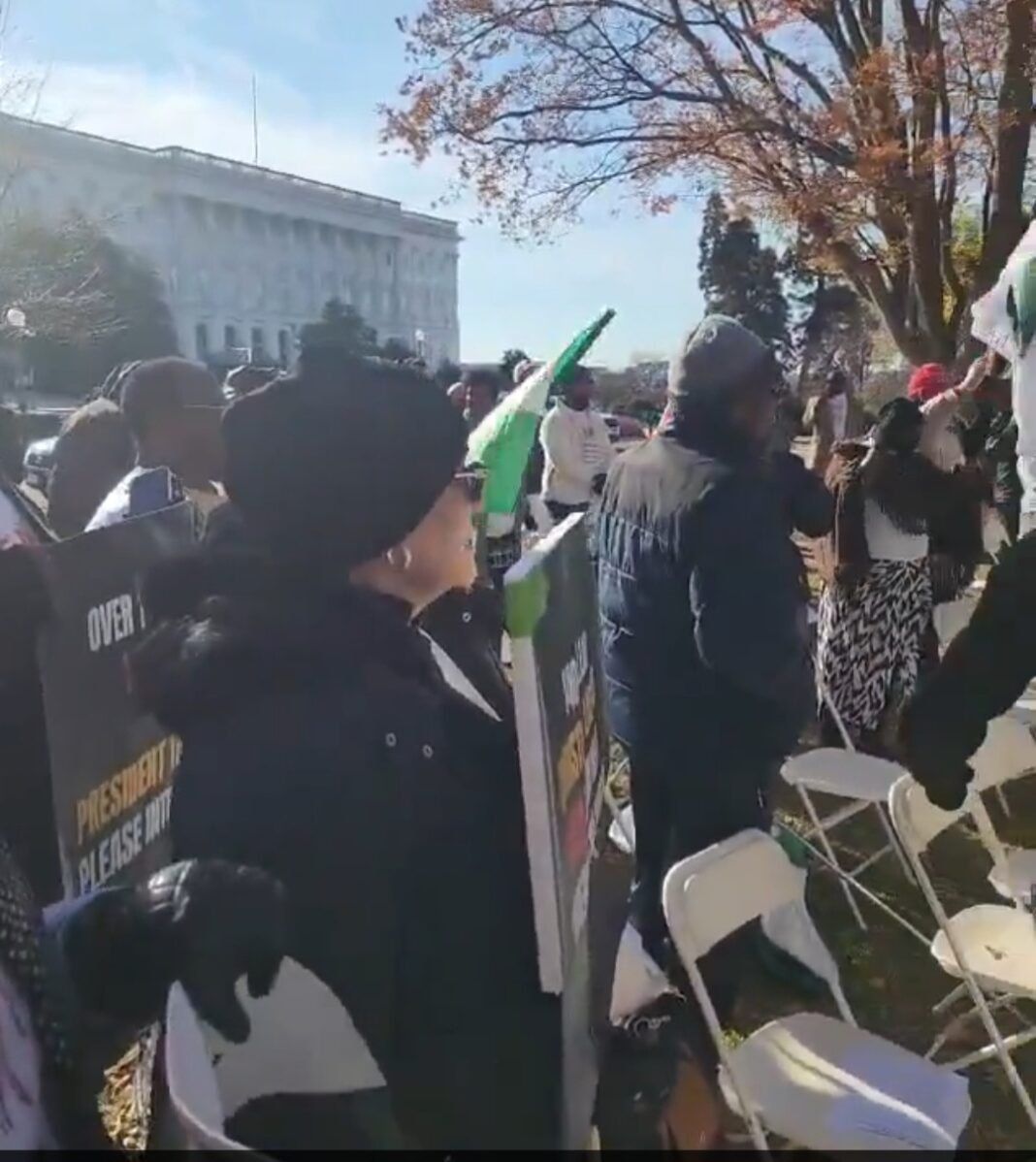
Hundreds of Nigerian immigrants and supporters rallied outside the U.S. Capitol this week, calling on the United States to take concrete action over what they described as a wave of “Christian genocide” in Nigeria. The protest — organised by Save Nigeria Group USA — drew people from across the United States, Canada, other African countries, and Americans who have lived or travelled in Nigeria.
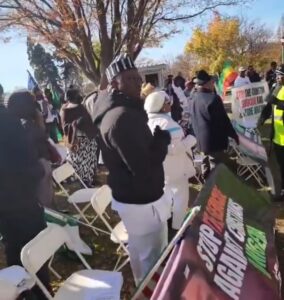
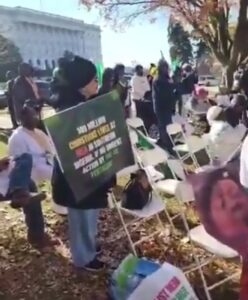
Amid crisp winter weather, the demonstrators carried placards, prayed, and observed moments of silence to honour victims. The organisers said more than 52,000 Nigerians have been killed in the ongoing sectarian violence, while around 11 million others remain displaced in IDP camps.
Addressing the crowd, Save Nigeria Group USA President Stephen Osemwegie denounced what he called a coordinated campaign of religious and ethnic violence — arguing that attacks against Christian communities in parts of Nigeria are not random acts of banditry or conflict, but systematic “religious and ethnic cleansing.” He singled out states including Plateau, Benue, Kaduna, Taraba, Southern Kaduna, Borno, and parts of the Southeast.
Osemwegie called on the U.S. government and Congress to act without delay — urging enforcement of visa bans, asset freezes, sanctions, and criminal referrals for any individuals or officials found complicit in violence, terror sponsorship, or exploitation of displaced communities.
He said: “Blood money must not continue flowing through American banks or global markets.”
At the rally, supporters also demanded the release of Sunday Jackson, a Nigerian farmer sentenced to death for killing a Fulani herdsman — an act his supporters say was self-defense. They argued the case is emblematic of broader systemic injustice: “Protect defenders — not terrorists,” they chanted.
In a move directly tied to the protestors’ demands, the United States Department of State announced on December 3, 2025 that it will begin restricting visas for Nigerians — and their family members — deemed responsible for mass killings or violence targeting Christians. The policy falls under Section 212(a)(3)(C) of the Immigration and Nationality Act.
Secretary of State Marco Rubio said the step is part of a broader U.S. strategy to hold perpetrators accountable and respond to what the U.S. government describes as “egregious anti-Christian violence.”
The protest and the subsequent U.S. visa measures come amid mounting international scrutiny over religious violence in Nigeria. Supporters of the Save Nigeria Group and similar diaspora-led organisations see the U.S. actions as long-overdue steps toward justice and protection for vulnerable communities.
But not everyone agrees. Back in Nigeria, a coalition of northern groups known as the Coalition of Northern Groups (CNG) dismissed the characterisation of “Christian genocide” as a false and dangerous narrative. Speaking at a press briefing in Abuja, the CNG argued the violence is part of a broader security crisis affecting people of all religions, and condemned what they described as attempts to exploit the tragedy for political ends.
Indeed, the House of Representatives of Nigeria recently condemned a U.S. bill — the Nigeria Religious Freedom Accountability Act of 2025 — that seeks to hold Nigerian officials accountable for alleged mass murder of Christians. The House rejected the implication of state-sponsored religious genocide and warned against what it called a damaging narrative that could harm Nigeria’s international image.
At the end of the rally, a delegation from Save Nigeria Group USA reportedly met with U.S. diplomats for a two-hour closed-door session — part of a broader series of engagements this week involving Congressional committees, State Department representatives, and advocacy efforts spotlighting Nigeria’s security crisis.
Meanwhile, human rights lawyer Emmanuel Ogebe — a participant at the protest — says he will meet with Representative Riley Moore next week to advocate further for the case of Sunday Jackson and broader accountability on behalf of persecuted communities.
The demonstration at the U.S. Capitol — and swift policy response from Washington — signals a new phase of diaspora-led activism and Western engagement on Nigeria’s religious-violence crisis. But with competing narratives, contested facts, and deep national divisions, what follows could shape Nigeria’s future: whether toward greater international accountability or deeper internal polarisation.