
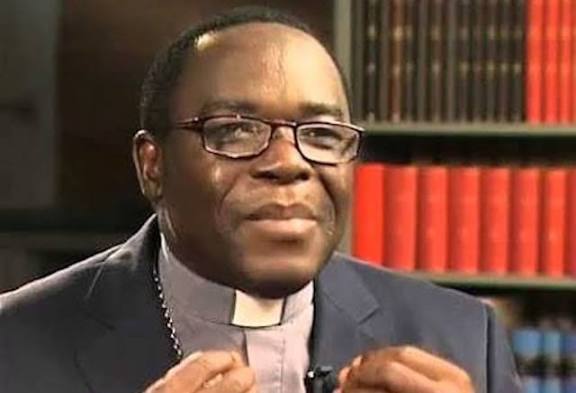
Catholic Bishop of Sokoto Diocese and Convener of the National Peace Committee (NPC), Most Rev. Matthew Hassan Kukah, has once again dismissed claims that Christians in Nigeria are facing genocide, insisting that such assertions lack evidence and distort the complex realities of the country’s insecurity.
But his position remarkably differs from those of his Catholic colleagues, Bishop and priests alike, in the North-Central zone of the country. Kukah is based in the north-western State of Sokoto where he oversees parishes mainly in that zone.
Speaking at the 46th Supreme Convention of the Knights of St. Mulumba (KSM) in Kaduna, Bishop Kukah delivered a sharply worded critique of narratives suggesting systematic extermination of Christians. He stressed that while violence across Nigeria is real and devastating, mislabeling the situation as “genocide” is both inaccurate and dangerous.
“Genocide Is About Intent, Not Numbers”
The bishop challenged widespread claims of widespread anti-Christian atrocities, stating that many figures in circulation — such as reports that 1,200 churches are burned annually — are not backed by any credible or verifiable data.
“They are saying that 1,200 churches are burnt in Nigeria every year, and I ask myself — in which Nigeria? Nobody approached the Catholic Church to get accurate data. The figures being circulated cleverly avoid the Catholic Church because they know Catholics do not indulge in hearsay.”
Yet his comments continue to spark debate, especially among Christian groups, even within Catholic circles where archbishops have spoken out against Christians killings with Bishop of Makurdi Diocese, Wilfred Anagbe, labelling them as genocide.
In June, he renewed urgent warnings over escalating violence in Benue State, describing the continued attacks on communities in his diocese as “genocide.”
In a recent interview with ACI Africa, Bishop Anagbe said that since 2018, at least 17 parishes in the Catholic Diocese of Makurdi have been forced to shut down due to repeated attacks attributed to armed herders. The most recent closures, he said, occurred between May 27 and June 4.
“Some parishes span up to 20 kilometers, with many outstations and zones,” he explained. “When we talk about 17 parishes being shut, it means an entire community has been displaced and taken over. They cannot go back.”
Describing the violence as part of a broader pattern, Bishop Anagbe alleged that the attacks form a “systematic campaign” of territorial takeover and religious persecution targeting Christian communities in the region. Benue State, located in Nigeria’s Middle Belt, has a predominantly Christian population and has witnessed years of deadly clashes between farmers and armed groups identified in many reports as herders.
“No nation watches her citizens slaughtered like animals and says there is nothing to be done. It’s genocide,” the bishop told ACI Africa.
He further claimed that the attacks, once sporadic, have become “a steady occurrence,” asserting they amount to “a jihadist war—an attempt to occupy and conquer territory.”
Bishop Anagbe also accused government authorities of complicity, alleging that officials “aid, support, and abet” perpetrators of the violence. “Who are these people? Are they spirits? They are not. The government knows what to do,” he said.
Earlier this year, Bishop Anagbe testified before the U.S. House Foreign Affairs Subcommittee on Africa, where he detailed what he described as a coordinated effort to “reduce and eventually eliminate the Christian identity” in parts of Northern and Central Nigeria. His remarks drew strong criticism from some Muslim leaders, who dismissed his claims as “unsubstantiated.”
On June 1, the Nigeria Catholic Diocesan Priests’ Association (NCDPA) in Makurdi Diocese issued its own statement condemning the ongoing attacks. The group described the violence as a “systematic persecution of Christians” and said it was deliberately intended to destabilise Bishop Anagbe and the diocese.
Kukah, in his comments in Kaduna, explained that the term genocide is often misinterpreted:
“Genocide is not determined by the number of people killed. You can kill 10 million people and it still won’t amount to genocide. The critical determinant is intent — whether the aim is to eliminate a group of people.”
He urged Nigerians to adopt a more analytical approach to national discourse, warning against emotional or politically motivated exaggerations.
Challenging the Persecution Narrative
In one of his most controversial assertions, Kukah questioned the claims that Christians are systematically persecuted in Nigeria.
“If you are a Christian in Nigeria and you say you are persecuted, my question is: how? At least 80% of educated Nigerians are Christians, and up to 85% of the Nigerian economy is controlled by Christians. With such figures, how can anyone say Christians are being persecuted?”
While many have suggested that Kukah fundamentally altered his position after President Bola Tinubu came into power two years ago, he was identified as one of the shrill voices against Christian killings under late former President, Muhammadu Buhari.
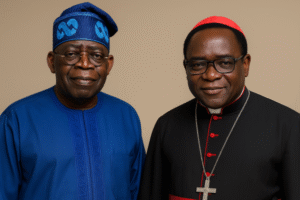
He maintained that many tragic cases involving Christian victims are often misclassified as religiously motivated, even when they stem from criminality, banditry, or communal conflict.
On martyrdom, he offered a stern caution:
“Because someone is killed in a church, does that automatically make them a martyr? Whether you are killed while stealing someone’s yam or attacked by bandits, does that qualify as martyrdom? We must think more deeply.”
Under Fire for Opposing International “Country of Particular Concern” Label
Bishop Kukah has come under intense criticism in recent months after urging the international community not to designate Nigeria as a “Country of Particular Concern” (CPC) — a label reserved for nations implicated in severe violations of religious freedom.
Kukah argued that such a designation would inflame religious tensions, empower extremist elements, and complicate cooperation between religious institutions and government.
“Such a label would heighten tensions, breed suspicion, and allow criminals to exploit the situation.”
Critics — both within and outside the Christian community — have accused him of downplaying the suffering of Christian victims.
Emphasis on Unity and Internal Reform
Bishop Kukah told members of the Knights of St. Mulumba that internal disunity among Christians contributes to vulnerabilities in the face of insecurity.
“The main problem is that Christians succumb to bullies. The day we decide to stand together — believing that an injury to one is an injury to all — these things will stop.”
He reiterated that sensationalism harms the Church and undermines efforts at peacebuilding and inter-faith cooperation.
Backed by Research
Defending his long-held position, Kukah revealed that he had presented an extensive academic study at the Vatican:
“What I presented at the Vatican was a 1,270-page study on genocide in Nigeria and elsewhere. My argument is that it is not accurate to claim there is genocide or martyrdom in Nigeria.”
A Controversial but Influential Voice
Bishop Kukah’s latest statements add to a long-standing pattern of challenging religiously charged narratives surrounding Nigeria’s insecurity. His voice carries significant weight due to his leadership role in the National Peace Committee, which has been instrumental in mediating tensions during national elections and crises.
As the country continues to grapple with widespread insecurity, Bishop Kukah’s intervention underscores a broader struggle over how violence is interpreted — and who gets to define it. His insistence on precision, data, and context suggests a call for both national introspection and responsible advocacy.