
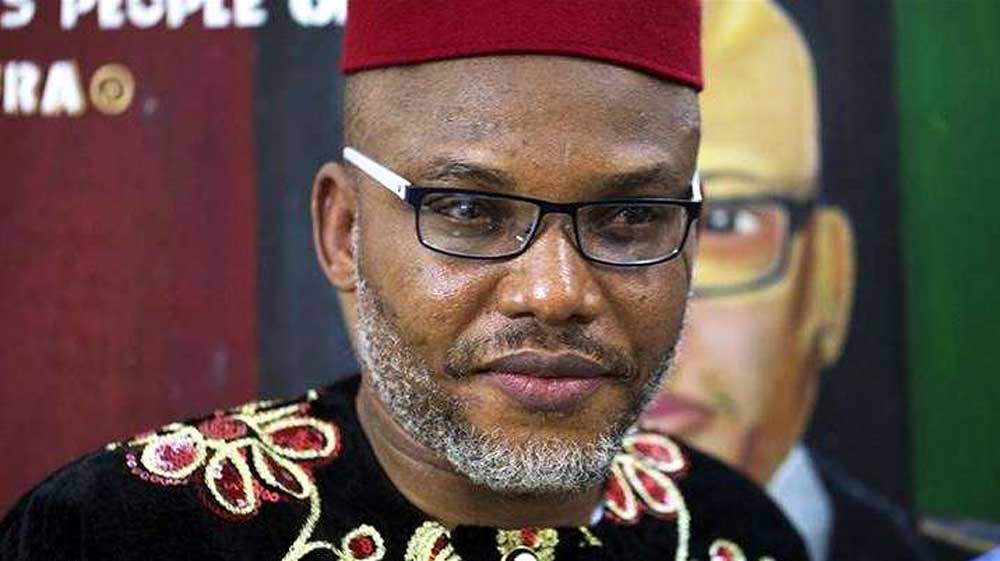
Nnamdi Kanu, leader of the proscribed Indigenous People of Biafra (IPOB), has been moved from the Department of State Services (DSS) detention centre in Abuja to a correctional facility in Sokoto State—just hours after his legal team initiated an appeal against the life sentence delivered on Thursday, November 20.
His lawyer, Aloy Ejimakor, who confirmed both the appeal and the transfer in a statement on Friday, November 21, said the relocation occurred during a night operation that neither the family nor the defence team was informed about. Ejimakor explained that the team had arrived at the DSS headquarters for a scheduled visit when officials told them Kanu had already been moved to what they described as “a secure and protected location” in Sokoto.
Reacting to the development, Ejimakor warned that the sudden relocation—coming immediately after the notice of appeal was filed—posed serious logistical and legal challenges.
“Breaking: MAZI NNAMDI KANU has just been moved from DSS Abuja to the correctional facility (prison) in Sokoto; so far away from his lawyers, family, loved ones and wellwishers,” he wrote.
He questioned the rationale behind sending Kanu to a distant prison at a time when intensive legal preparation is required for the appeal, calling on President Bola Tinubu to intervene.
“While urging #Ndigbo to remain calm, I must question the wisdom of sending MNK to Sokoto prison. When Obafemi Awolowo was convicted in 1963, he was sent to the East, a neutral zone in his feud with the North. Pres. Tinubu can still halt this drift,” Ejimakor stated.
There has been no official confirmation of the transfer from the relevant authorities.
Kanu was sentenced to life imprisonment after being convicted on seven terrorism-related charges, with the court ruling that his broadcasts and directives to IPOB supporters resulted in violent attacks on security agents and civilians. Although prosecutors had sought the death penalty, the court opted for life imprisonment.
Kanu, who holds both Nigerian and British citizenship, was first arrested in 2015, granted bail in 2017, and fled the country shortly afterward. The appeal filed by his lawyer seeks to challenge both the conviction and the sentence.