
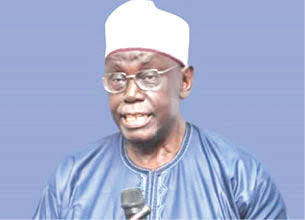
By Everyday.ng
When news broke on Monday, November 17, 2025, of the passing of Chief Dan Agbese, journalism and the country lost more than a journalist. It lost a conscience. It lost one of the rare figures whose presence helped shape the moral and intellectual tone of journalism in the country for over half a century. He was 81.
In a statement released by Okibe Agbese on behalf of the family, the Agbese dynasty of the Ikpilogwu clan, Agila district of Ado Local Government Area of Benue State, announced that their husband, father, grandfather, brother, uncle, and mentor—Chief Dan Agbese, the Awan’Otun of Agila—had “transited to eternal glory” in the early hours of Monday. Burial arrangements, the family said, would be announced in due course.
His passing closes a monumental chapter in Nigeria’s media evolution—one marked by courage, curiosity, and a deep moral conviction that journalism must matter, must serve, and must stand on the side of truth.
A Childhood Rooted in Humble Beginnings
Born on May 12, 1944, in Agila, Dan-Msugh Agbese emerged from humble rural roots. His early life in the rustic surroundings of Benue State gave him what he would later describe as “a grounding in the realities of ordinary people”—a grounding that would shape his journalism for decades. His columns often returned to the paradoxes of Nigerian life: the brilliance of the people, the failures of leadership, the stubborn resilience of the nation.
He grew up in a communal setting, where storytelling was as essential as farming. It was here he first learned the power of language—first in the oral tradition, later through books. He would become a teacher, then a librarian—steps that exposed him to the transformative power of the written word before he ventured into journalism.
A Distinguished Academic Path
Dan Agbese pursued intellectual excellence with uncommon seriousness.
He studied Mass Communication at the University of Lagos, graduating among a cohort that would later define the future of Nigerian media. His quest for professional refinement led him to the Columbia University Graduate School of Journalism in New York, a world away from Agila, where he earned a Master of Science degree. While there, he won the Pitman Prize, marking him as one of the brightest young journalists of his generation.
These academic experiences furnished him with a style characterised by clarity, brevity, and biting wit—a style that would later earn him the affectionate newsroom moniker “Dan the Butcher,” for his surgical precision with the editor’s pen.
Steady Rise Through the Newsroom Ranks
Chief Agbese returned to Nigeria at a time when journalism was entering an era of assertiveness and national significance. He served in several key positions:
• Editor, The Nigeria Standard
• Editor, New Nigerian
• General Manager, Radio Benue, Makurdi
These roles placed him at the center of some of Nigeria’s most critical political moments. His stewardship in each organisation demonstrated a consistent creed: journalism must illuminate, not entertain; it must interrogate, not appease.
The Birth of Newswatch and the Reimagining of Nigerian Journalism
In 1984, a bold vision brought Dan Agbese together with three other media titans: Dele Giwa, Ray Ekpu, and Yakubu Mohammed. They co-founded Newswatch, a weekly news magazine that redefined investigative journalism in Nigeria. For the first time, Nigerian journalists stood toe-to-toe with political power, probing the inner workings of the military, exposing corruption, and treating governance with the scrutiny it demanded.
It was Newswatch that pushed Nigerian journalism into the modern age—graphic layouts, in-depth features, long-form investigations, and narrative journalism that blended fact with literary elegance.
Under Agbese’s editorial leadership, Newswatch became a national institution. Its exposés unsettled governments, illuminated crises, and educated a generation of readers. And despite persecution, censorship, and the assassination of co-founder Dele Giwa in 1986, the magazine endured.
Chief Agbese would eventually become Editor-in-Chief, a post he held until April 2010. In that time, he helped sustain Newswatch as a touchstone of credibility, even as Nigeria’s political landscape lurched through coups, transitions, and democratic experiments.
Courage in the Face of Repression
Journalism in Nigeria—especially in the 1980s and 1990s—was not for the faint-hearted. The Newswatch team was frequently targeted for its fearless reporting. Under the Abacha regime, Agbese and his colleagues were arrested and charged with sedition.
Through these ordeals, Agbese never wavered. His belief was simple:
Democracy without a free press is a building without a foundation.
He rejected self-censorship, insisting that journalism had a duty to confront abuse of power. In a profession often tempted by compromise, he stood firm, becoming a symbol of principled resistance.
A Prolific Author and Teacher of Journalists
Beyond newsrooms, Dan Agbese’s intellectual footprint was vast. He authored several influential books, many of which have become reference texts for students, columnists, and scholars. Among them:
• The Columnist’s Companion: The Art and Craft of Column Writing
• The Reporter’s Companion
• Style: A Guide to Good Writing
• Nigeria Their Nigeria
• Fellow Nigerians: Turning Points in the Political History of Nigeria
• Ibrahim Babangida: The Military, Politics and Power in Nigeria
These works capture the discipline, philosophy, and craftsmanship that defined his career. He wrote not to impress but to express—insisting always that clarity was the noblest virtue in communication.
Agbese also produced hundreds of newspaper columns, many of which dissected politics, interrogated institutions, and used satire to expose the contradictions of public life. His columns were eagerly read in Daily Trust, The Guardian, and other outlets that valued his voice.
Mentor, Consultant, and Intellectual Partner
Even after leaving Newswatch, Chief Agbese remained active in the media ecosystem. He co-ran a media consultancy with friends and colleagues Ray Ekpu, Yakubu Mohammed, and Soji Akinrinade—a collective of some of the most respected names in African journalism.
He trained young reporters, advised media houses, and continued to write with the sharpness of a much younger man. He was a fixture in discussions on press freedom, public ethics, governance, and the role of the media in African democracies.
Colleagues regarded him as:
• A disciplinarian in matters of language
• A father figure to younger journalists
• A philosopher who understood Nigeria’s complexities
• A patriot who loved his country enough to critique it honestly
A Life of Honours, Titles, and National Recognition
Over the decades, Chief Agbese received numerous awards and recognitions from academic institutions, media bodies, and civil society organizations. He was widely praised for:
• His contributions to press freedom
• His excellence in editorial leadership
• His intellectual influence on journalism practice
• His role in shaping generations of reporters
In 2019, on his 75th birthday, President Muhammadu Buhari publicly celebrated him, describing him as one of the nation’s most respected journalists and thinkers.
His traditional title, Awan’Otun of Agila, reflected the esteem he commanded at home, even as his ideas and writings commanded influence across Nigeria.
The Man Behind the Words
Though widely regarded as a public intellectual, those who knew Chief Agbese describe a man of gentleness, humility, and humor. He was patient with young people, generous with advice, and deeply attached to his family.
He is survived by:
• His wife, Chief Rose Agbese
• Their six children
• Seven grandchildren
His home, colleagues say, was a place of warmth, music, books, and spirited debate.
An Enduring Legacy
Chief Dan Agbese leaves behind a legacy that transcends pages of newspapers and covers of magazines. His influence is evident in:
• Every young reporter who learned to value accuracy
• Every editor who battled powerful forces for the sake of the truth
• Every columnist who combined wit with wisdom
• Every media house that insists on integrity despite pressure
He was a journalist’s journalist—one who believed that society needed watchdogs, not cheerleaders; seekers of truth, not servants of power.
His pen shaped public discourse. His courage fortified a profession. His mentorship built a generation. His writings will remain a compass for many more to come.
Nigeria Bids Farewell
As the country mourns, tributes are pouring in from media veterans, government officials, academics, and ordinary readers who saw in him a voice that spoke truth to power and made sense of an often-confusing nation.
In his final years, he continued to write with the clarity and depth that had defined his youth. Even after decades of public service, his pen never lost its sharpness, and his mind never lost its curiosity.
Chief Dan Agbese now joins the pantheon of legendary Nigerian journalists. His passing is not just the death of a man, but the dimming of a light that illuminated the path for countless others.
May his legacy endure; may his words continue to teach; and may his memory remain a blessing to Nigeria and to the world of journalism.