
By Yemi Oyeyemi, Abuja
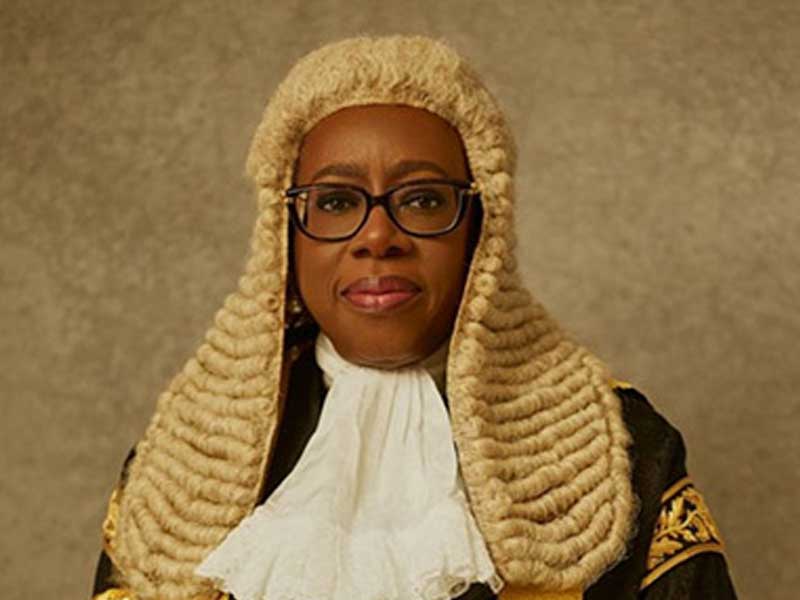
As Federal High Court judges look forward to their Christmas break, the Chief Justice of Nigeria, Justice Kudirat Kekere-Ekun has sent a clear message: the judiciary’s reputation is fragile, and errant behaviour by judges will no longer be tolerated. The vacation comes amid a wider push for accountability, discipline, and renewed public trust in Nigeria’s judicial institutions.
As if responding to the recent drama of courts of co-ordinate jurisdiction allegedly flip-flopping and issuing conflicting rulings over the Peoples Democratic Party (PDP) national convention, which held at the weekend, the nation’s number judge frowned at conflicting decisions of courts.
Two judges in Abuja issued orders stopping the convention but others in Ibadan gave the go-ahead for it to hold.
Over the last few years, more especially in the last three, the judiciary has come under heavy bashing from the public with many preferring to mock that the Judiciary is the LOST hope of the common man, rather his LAST hope.
Justice Kekere-Ekun’s position comes as Judges of Nigeria’s Federal High Court are set to begin their 2025 Christmas vacation on Friday, December 19, with court sittings resuming across all Judicial Divisions on Wednesday, January 7, 2026, the Court has announced.
In a formal statement issued Monday, Mrs Catherine Oby Christopher, Director of Information for the Federal High Court, noted that the schedule is set in line with Order 46, Rule 4(c) of the Federal High Court (Civil Procedure) Rules, 2019 (as amended). The statement also detailed the roster of vacation judges, including:
In Abuja: Justices Emeka Nwite and Mohammed S. Liman
In Lagos: Justices Akintayo Aluko and Isaac D. Dipeolu
In Port Harcourt: Justices P.M. Ayua and A.T. Mohammed
In Enugu: Justice Folasade Ogunbanjo
During the vacation period, the core judicial divisions—Abuja, Lagos, and Port Harcourt—will remain operational. However, only urgent matters will be entertained. These include enforcement of fundamental rights, vessel arrests or releases, and other issues of national importance.
In closing his message, the Chief Judge of the Federal High Court, Hon. Justice John Terhemba Tsoho, extended warm Christmas and New Year wishes to his fellow judges.
CJN’s Stark Reminder: Judges Must Guard the Judiciary’s Reputation
Against this backdrop of routine court closure, it is worth recalling recent, forceful admonitions from the Chief Justice of Nigeria regarding the conduct and public perception of judicial officers.
The CJN expressed concern over “persistent allegations of inefficiency, delayed justice, and bias” within the judiciary — challenges she says undermine public confidence.
In a public address, she warned that “there will be consequences for any act of indiscretion that could bring the judiciary to disrepute.”
She insisted that obedience to court orders is non-negotiable, calling on judicial officers and litigants alike to respect the finality and authority of court decisions.
Accountability for Errant Judges
Under her leadership, the National Judicial Council (NJC) has been urged to crack down on judges who deliver misleading or conflicting judgments — particularly orders from coordinate courts that undermine the coherence of the justice system.
The CJN has described such conduct as an “embarrassment” to the nation’s jurisprudence, pledging that punitive measures will be taken against judges whose professional behavior damages the integrity of the judiciary.
She also urged judges to sever ties with any activity that could “smear your hands and bring you into disrepute,” calling for a commitment to honesty, transparency, and ethical conduct.
A Call for Performance, Not Complacency
Addressing concerns of judicial laziness, Justice Kekere-Ekun warned that judges who fail to deliver a requisite number of judgments or otherwise demonstrate indolence may face disciplinary action from the NJC.The Nation Newspaper
She emphasised that the public’s trust in the judiciary depends not just on fairness, but on the perception of fairness. “It is not enough to be impartial; we must also be seen to be impartial,” she said.