A deep contradiction has emerged between the Islamic State’s latest propaganda claims and the position of Nigeria’s leading Islamic authority, the Nigerian Supreme Council for Islamic Affairs (NSCIA), exposing a growing struggle over the interpretation of religious violence in Africa.
In its weekly bulletin An Naba, the Islamic State (ISIS) openly claimed responsibility for a series of attacks against Christian communities across Africa, describing the assaults as part of a religious duty. The group’s declaration came in direct response to President Donald Trump’s recent warning that the United States might consider military intervention in Nigeria and other parts of Africa to protect persecuted Christians.
“Any threats from the American tyrant to intervene militarily in Nigeria will not deter us,” An Naba stated, calling Trump’s warnings part of a “Crusader” campaign. The publication, first reported by Spanish newspaper La Razón, framed its actions as resistance against Western influence and vowed to expand operations in Nigeria, Mozambique, and the Congo.
Security analysts say the bulletin represents one of ISIS’s clearest admissions of orchestrating targeted anti-Christian violence in Africa. Experts view the statement as an attempt to provoke the U.S. and galvanize ISIS affiliates in West Africa amid declining morale and leadership losses.
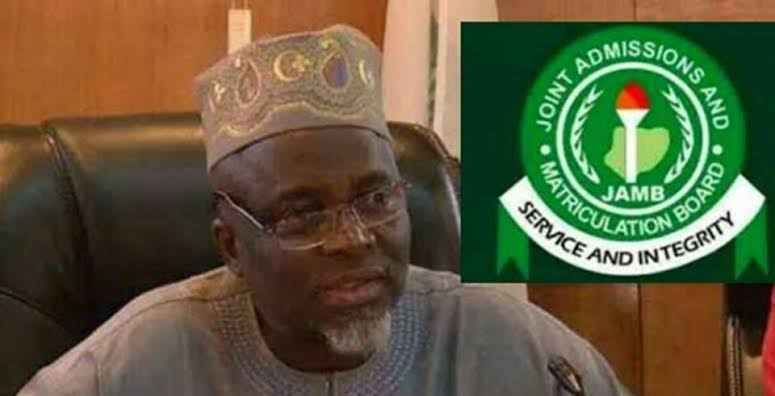
However, the Nigerian Supreme Council for Islamic Affairs (NSCIA) has sharply rejected claims that Nigeria is witnessing a “Christian genocide.” In a lengthy press briefing in Abuja on Sunday, the Council’s Secretary General, who is also the Registrar of the Joint Admissions and Matriculation Board (JAMB), Prof. Ishaq Oloyede, condemned both foreign and domestic narratives framing Nigeria’s security crisis as a religious war.
“For the avoidance of doubt, what Nigeria faces is a complex and tragic perennial security crisis that brings immeasurable pain to all its citizens, regardless of faith or ethnic persuasion,” Oloyede said. “There is no ‘Christian genocide’ in Nigeria.”
The NSCIA argued that extremist groups like Boko Haram and the Islamic State West Africa Province (ISWAP)—both of which claim to act in the name of Islam—are in fact khawarij, or “deviants,” who kill indiscriminately, targeting Muslims and Christians alike. Citing Amnesty International’s findings, the Council emphasised that “the jihadist groups kill both Muslims and Christians. They demolish mosques and churches. They don’t differentiate.”
A Clash of Narratives
The juxtaposition of ISIS’s declaration and NSCIA’s rebuttal illustrates a stark divide between militant ideology and mainstream Islamic leadership in Nigeria. While ISIS seeks to project its violence as religiously motivated and divinely sanctioned, the NSCIA insists that the crisis is rooted in non-religious factors such as poverty, environmental degradation, and governance failures.
Oloyede repeated the narrative that has often drawn the ire of Christians of the Middle-Belt extraction, who have borne the brunt of what they describe as targeted killings: “The overwhelming driver of violence in Nigeria is not anti-Christian persecution,” Oloyede asserted. “It is criminality, banditry, and ecological conflict driven by climate change and economic desperation.”
The NSCIA also accused foreign politicians and lobbyists—particularly in the United States—of weaponising Nigeria’s insecurity for political and electoral gain. The Council criticised President Trump’s labeling of Nigeria as a “disgraced country” and the U.S. decision to re-designate Nigeria as a “Country of Particular Concern” for religious freedom violations.
Analysts warn that the dueling narratives could complicate international responses to Nigeria’s security crisis. On one hand, ISIS’s explicit framing of attacks as anti-Christian could fuel calls in Washington for direct intervention. On the other, the NSCIA’s firm denial of a religious genocide challenges the premise of such involvement and raises concerns about sovereignty and foreign manipulation.
“This is more than just a war of words—it’s a struggle over legitimacy and narrative,” said Dr. Fatima Bako, a political scientist at Ahmadu Bello University. “ISIS wants to define this as a global religious war. The NSCIA wants to reclaim the story as a domestic crisis of governance and inequality.”
The release of An Naba also comes amid worsening violence in parts of northern Nigeria, where attacks by ISWAP and bandit groups have displaced thousands. While ISIS claims these operations as part of a wider anti-Christian campaign, local reports show that both Muslim and Christian communities have suffered massive losses.
For many Nigerians, the debate is less about religion and more about survival. “People are dying, no matter their faith,” said a resident of Plateau State, one of the regions most affected by communal violence. “We just want the killings to stop.”
The contradiction between ISIS’s rhetoric and the NSCIA’s position underscores a broader ideological battle for Africa’s religious narrative. While extremists frame their violence as holy war, Nigeria’s leading Islamic body insists the conflict is not between Islam and Christianity—but between law and lawlessness, truth and propaganda.
As ISIS escalates its messaging and the U.S. weighs its options, Nigeria stands at a crossroads—caught between the threat of extremism and the dangers of external politicization of its internal strife.