
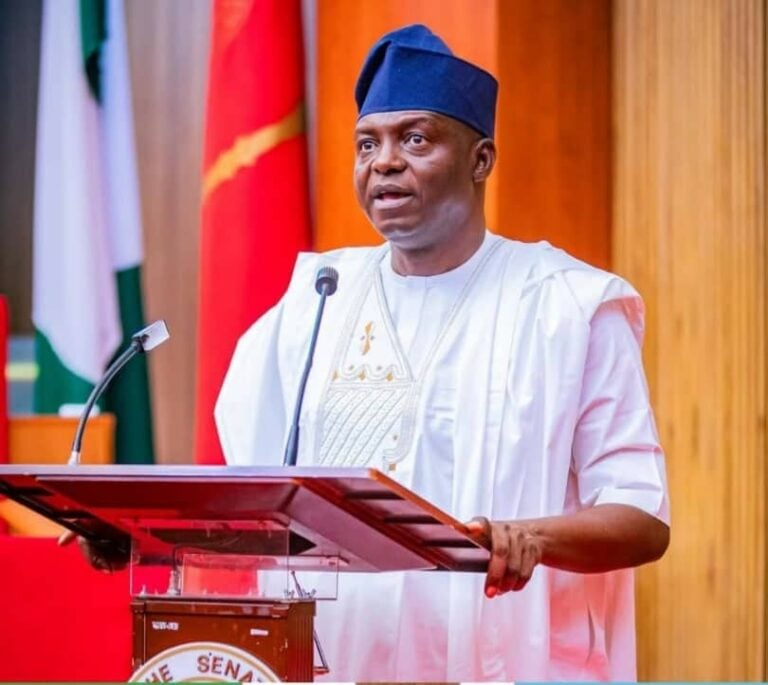
A veteran member of the ruling All Progressives Congress (APC), Mr Osita Okechukwu, is urging citizens and “progressive patriots” to heed the call of his party’s national chairman, Nentawe Yilwatda, and start holding state governors and local government chairmen accountable for the nation’s reform agenda.
Okechukwu argues that with the removal of fuel subsidy, the sub-national levels of government — states and LGAs — are now the biggest beneficiaries of freed-up resources, and thus must step up. He cites figures from bodies such as the Nigeria Extractive Industries Transparency Initiative (NEITI) and the International Monetary Fund (IMF): between 2010 and 2023, fuel subsidy expenditures ranged from ₦667 billion in 2010 to as high as ₦4.39 trillion in 2022, and ₦3.6 trillion in 2023.
In his words: “In my own recalibration of events the subnationals – State and LGAs are the greatest beneficiaries of Removal of Fuel Subsidy.”
The essence of his case: with the former subsidy bill lifted, more funds from the monthly distributions via the Federation Accounts Allocation Committee (FAAC) should be visible in roads, schools, health facilities and security at the grassroots. Yet, Okechukwu laments, many citizens continue to face “multidimensional poverty, local insecurity and state infrastructure deficits.”
He also cautions against the familiar rallying point that only the federal government is responsible: “A change in mindset is needed, where the blame games are wont to be heaped only on the Federal Government, as if the Federal Revenue is only in the hand of Mr President.”
He praises President Bola Ahmed Tinubu for taking bold steps in energy reform and in boosting security funding, and reasons that this commitment must now be mirrored by governors. Okechukwu makes an explicit appeal to APC governors — who form the majority at the sub-national level — to see Yilwatda’s charge as a “challenge to rededicate themselves to development.”
The context: a day earlier, at the launch of the book “Vicious Red Circle”, Yilwatda told attendees that no governor in Nigeria today receives less than three to four times the monthly allocation states were getting just two years ago — with the latest sharing figure cited at about ₦2.2 trillion per month, compared to around ₦400 billion previously. He said: “They can do more for their people. … Talk to your governors. Talk to your local government chairmen. Let them do more.”
For many observers, the message is clear: the era of “the federal government will solve it all” may be over; now the spotlight falls on governors and local chairs to turn resources into visible improvements.
As Okechukwu suggests: this is a timely moment to demand from sub-national leaders that they match the rhetoric of “renewal” with tangible outcomes.
Civil Society Speaks: Transparency, Accountability, and the Risk of a Missed Opportunity
The voices of civil society organisations (CSOs) add extra urgency to the message of accountability.
• The Socio‑Economic Rights and Accountability Project (SERAP) has publicly called on all 36 state governors and the FCT minister to disclose how they have spent the billions in savings from the subsidy removal. The organisation issued FOI requests demanding details of projects financed, implementation status, completion reports, even inviting the Economic and Financial Crimes Commission (EFCC) and the Independent Corrupt Practices and Other Related Offences Commission (ICPC) to step in if necessary.
• In addition, the Patriotism Awareness Forum (PAF) commended Nigerians for their patience and resilience following the subsidy removal but stressed that governments must now follow with aggressive citizen education and engagement so that saved funds translate into real services and infrastructure.
• Another civil society umbrella, the Nigeria Civil Society Forum, accused governors of “paying lip service” to the policy of subsidy removal by failing to deliver on economic relief and structural improvements at the state level.
Moreover, a 2024 policy brief from the Leaders of Africa think-tank laid out concrete recommendations: transparency in distribution of subsidy savings, strengthening of local government capacity (especially at the grassroots), and deepening citizen participation in monitoring how these resources are spent.
The combined message from these civil society voices is: Yes, the policy of subsidy removal may be economically defensible — but no, it will not help ordinary Nigerians unless the funds now flowing down to states and local governments are spent visibly, accountably, and equitably.
The implication of the comments by the APC National Chairman and Okechukwu is that when the federal government ended the subsidy regime, it unlocked vast fiscal space for all levels of government — but that only matters if those resources are put to good use at the state and local level.
• Citizens are becoming increasingly disillusioned as they continue to see higher allocations at state level but unchanged poverty, poor roads, bad schools and continued insecurity. CSOs insist this very scenario is already unfolding.
• For the APC—and for the broader governance narrative in Nigeria—this is a credibility moment. The rhetoric of “renewal” and “reform” will only hold up if there are visible dividends on the ground.
• For citizens, the takeaway is clear: if your governor or local chairman is sitting on increased FAAC allocations, now is the time to ask tough questions — and demand answers.