
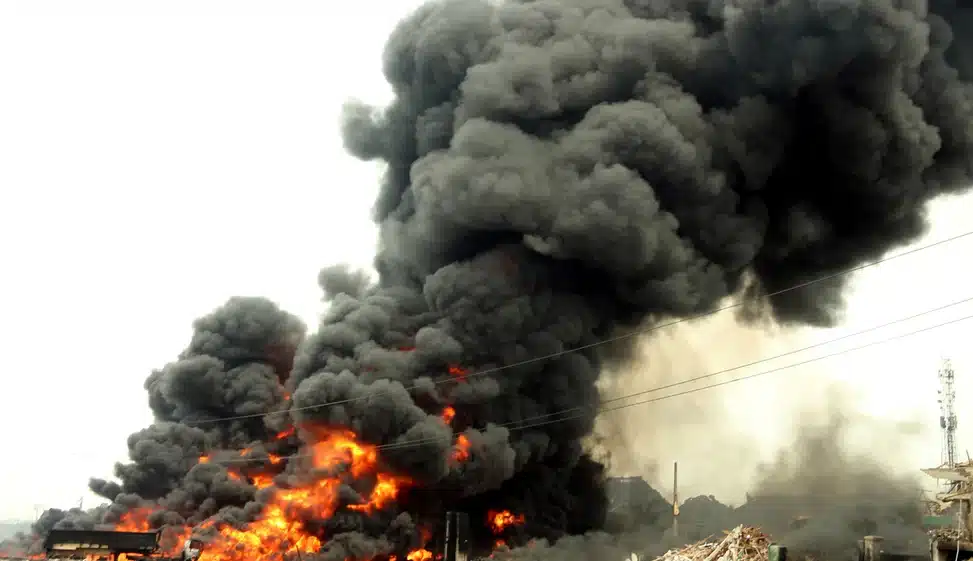
In the span of a single haunting year, the soil of Niger State has drunk deeply of sorrow, as twin tragedies—eerily alike in cause and consequence—struck the land, leaving behind only ash, grief, and unanswered questions.
The latest horror unfolded at Essa village, along the Bida–Agaie expressway in Katcha Local Government Area, where a petrol tanker lost control and overturned in a lone crash.
Moments later, flames consumed the scene in a furious inferno. Drawn by desperation and the promise of a few litres of spilled fuel, villagers and passersby rushed toward the leaking tanker. Within moments, the air erupted in fire and screams—at least 35 souls were lost, burned beyond recognition, and 46 others suffered terrible injuries, many now clinging to life in the wards of Federal Medical Centre, Bida.
This was not the first time the people of Niger State were plunged into mourning.
Just months before, in January, a nearly identical tragedy had struck near the Suleja axis. There too, a tanker, toppled by the treacherous roads, spilled its deadly cargo. Residents, some in their homes and shops, others scrambling to scoop fuel, were caught in the explosion. At least 40 lives were lost in that earlier fire, and many more were maimed, disfigured, or left bereaved.
These fatality figures are just the official ones. Other sources suggest high figures including those who die in the following weeks and months after.
The fire does not discriminate—it consumes the old, the young, the greedy, and the merely curious alike. In both tragedies, most victims died not in distant hospitals but on the very soil where they stood, turned to ash and smoke under the unrelenting blaze.
Federal Road Safety Corps officials, including Sector Commander Hajiya Aishatu Sa’adu, confirmed that these were lone accidents caused by driver error and made lethal by the tragic impulse of people who believed survival might be found in a few litres of petrol. Warnings, it seems, have not been enough.
“We keep telling them,” Sa’adu said, voice heavy with sorrow, “that scooping fuel is not just dangerous—it is death walking.” She added, “It is God who gives wealth. People should not trade their lives for fleeting gain.”
The Chairman of the Tanker Drivers Association in the state, Mr. Farouk Kawo, voiced deep concern, blaming the deplorable state of the roads for the growing list of tanker crashes. “More than 30 accidents in just October,” he said grimly, “and still, nothing is done.” He pleaded for urgent repairs and intervention from the state government, warning that more blood will be spilled if nothing changes.
Governor Mohammed Umaru Bago, in his statement, called the repeated incidents “pathetic” and “worrisome.” Yet even his words carried the weight of weary frustration. “It is disheartening how people continue to approach fallen tankers,” said his Chief Press Secretary, “even after so many awareness campaigns.”
But awareness, it seems, is no match for hunger, poverty, and the fragile hope of finding value in spilled fuel. And so, the fires keep coming.
Across Nigeria, fuel tanker explosions have become a sorrowful refrain. In Jigawa State last year, 153 lives were lost in yet another inferno. And now, in Niger State, two cruel reminders in one year have turned once-quiet villages into graveyards.
Charred earth. Empty homes. Hospital beds filled with pain. This is the price of bad roads, poor regulation, and a desperation that turns ordinary people into victims of flame.
How many more must burn before the warnings become action?
How many more must die before the roads are made safe, and the people no longer see death as the cost of a litre of fuel?
The year may pass—but for Niger State, the fire lingers still.