
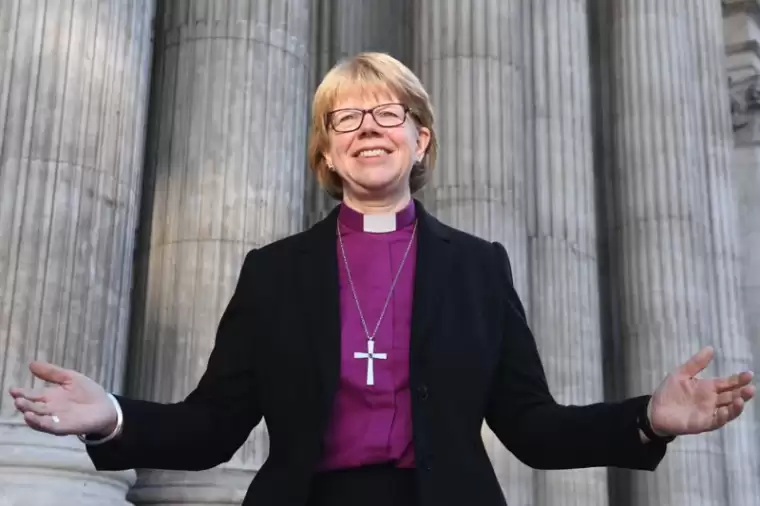
In a historic moment for the Church of England, Dame Sarah Mullally, 63, has been appointed as the new Archbishop of Canterbury — becoming the first woman to hold the role in the Church’s nearly 500-year history.
The former Chief Nursing Officer of England and current Bishop of London will become the spiritual leader of the Church of England and the worldwide Anglican Communion, which represents over 85 million Christians globally.
Her appointment ends nearly a year of vacancy following the resignation of Archbishop Justin Welby in 2024 over his handling of a safeguarding scandal. Mullally will formally assume the role after a confirmation ceremony in January, followed by a traditional enthronement service.
Mullally brings a diverse background to the role. After a career in nursing, including time as England’s top nurse, she was ordained as a priest in 2002 and became one of the Church’s first female bishops in 2015. In 2018, she was appointed Bishop of London — the third most senior position in the Church of England.
In a statement from Canterbury Cathedral, Mullally addressed the challenges ahead, pledging to foster unity across the Communion’s theological divides.
“I will seek to help every ministry to flourish, whatever our tradition,” she said. “The Church must face up to its past failures, especially regarding safeguarding and the misuse of power.”
Mixed Reactions Across the Anglican World
While many within the Church of England and across British society welcomed the news, Mullally’s appointment has drawn sharp criticism from conservative Anglican leaders in Africa and Asia.
Laurent Mbanda, Archbishop of Rwanda and chairman of a global group of conservative Anglican churches, told Reuters the decision would not heal existing divisions. A Nigerian bishop called the appointment “very dangerous,” citing traditional views on male leadership.
The Global Fellowship of Confessing Anglicans released a statement saying the majority of the global Communion still believes in male-only episcopacy, despite some regions embracing reforms.
Social Issues and Church Division
Mullally’s progressive stance on LGBTQ+ issues is also expected to stir debate within the Anglican Communion. She has supported blessings for same-sex couples — a controversial topic in many countries where homosexuality remains criminalized.
“These are complex and long-standing issues that will not be resolved quickly,” she told Reuters.
She also used her first public remarks to condemn antisemitism, following a deadly attack on a Manchester synagogue the day before her appointment. “Hatred and racism cannot tear us apart,” she said.
Mullally’s appointment comes as the Church of England continues to reckon with its history of mishandling abuse cases. Her predecessor, Justin Welby, resigned amid criticism over his failure to act on reports of abuse linked to evangelist John Smyth.
Mullally emphasized the importance of transparency and accountability in her new role, calling for the Church to lead in safeguarding reforms.
Archbishop of York Stephen Cottrell, who temporarily filled Welby’s duties, supported the appointment despite facing his own scrutiny over a separate abuse case.
From Nursing to the Pulpit
Mullally has often spoken about the parallels between nursing and Christian ministry.
“It’s all about people, and sitting with people during the most difficult times in their lives,” she said in a past interview.
As a member of the House of Lords, Mullally has also voiced her opposition to assisted dying legislation, aligning her with more traditional Church teachings on the sanctity of life.
The appointment was formally made by Prime Minister Sir Keir Starmer and approved by King Charles III, in line with Church tradition. The monarch remains the Supreme Governor of the Church of England, a role dating back to Henry VIII.
Starmer congratulated Mullally, saying, “I wish her every success and look forward to working together.”
Buckingham Palace also released a statement praising her appointment, calling the role “of such importance in the UK and across the global Anglican Communion.”
While Mullally’s leadership marks a progressive shift for the Church of England, she takes on the position amid deep global divisions and declining church attendance in many parts of the UK.
Still, supporters hope her background in both healthcare and faith will offer a unique combination of compassion and competence.
“Her emphasis on unity, gentleness and strength is exactly what the Church — and the nation — needs right now,” said Linda Woodhead, professor of theology at King’s College London.
Local voices in Canterbury echoed similar sentiments. “Some Archbishops have been good, some have been controversial,” said David Pestell, a 74-year-old tour guide. “I hope this one is remembered as one of the greats.”
