By Ogwu OmaOmale
A fiery comment made on American television alleging the systematic genocide of Christians in Nigeria has sparked a diplomatic and political storm, drawing sharp rebuttals from President Bola Ahmed Tinubu, federal ministers, and prominent Nigerian voices.
The catalyst: a statement by American comedian and political commentator Bill Maher during the September 26 episode of Real Time with Bill Maher, where he accused Nigerian authorities and Islamist extremists of carrying out or condoning a mass extermination of Christians.
“They’ve killed over 100,000 [Christians] since 2009. They’ve burned 18,000 churches,” Maher declared. “They are literally attempting to wipe out the Christian population of an entire country… You are in a BUBBLE if you don’t know what’s going on in Nigeria.”
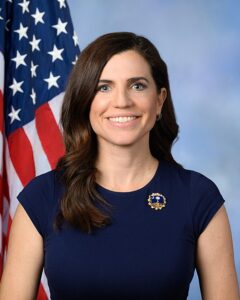
The remarks, met with thunderous applause on the show and praise from U.S. Congresswoman Nancy Mace, and which enjoyed the support of Northern Nigerian Christians, suffering persecution in the hands of terrorists, bandits and militant Fulani herdsmen in Benue, Plateau, and parts of southern Kaduna States, just like other Muslims in Zamfara, Sokoto, Niger and Katsina States, ignited outrage in Nigeria, where both the government and prominent figures swiftly denied the claims and criticised what they called a dangerous misrepresentation of Nigeria’s complex security realities.
It is to be noted that most of the attacks in Zamfara, Sokoto, Niger, and Katsina States have taken ethnic colouration with analysts suggesting it is a battle of supremacy between the majority Hausa stock and their Fulani neighbours. The mining activities taking place in those places have also often been blamed.
Speaking in Owerri, Imo State, on Tuesday, President Tinubu categorically dismissed the allegations of religious genocide in Nigeria as “unfounded and misleading.”
“There is no religious genocide in Nigeria. No religion is under siege,” the President declared during the unveiling of a book chronicling a decade of APC governance, authored by Governor Hope Uzodimma.
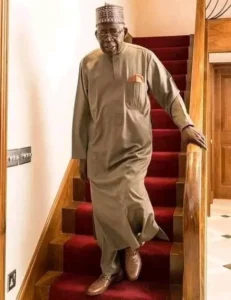
The President emphasised Nigeria’s long-standing tradition of religious and cultural coexistence and argued that the country has matured, 65 years after independence, into a nation that draws strength from its diversity.
The Federal Ministry of Information, through Minister Mohammed Idris, issued a formal response that strongly condemned Maher’s assertions and similar narratives circulating on international platforms.
“Such claims are false, baseless, despicable, and divisive,” the Minister said in a September 28 statement.
He explained that while Nigeria grapples with terrorism, it is inaccurate to frame the crisis as a targeted war against Christians.
“These criminals target all who reject their murderous ideology, regardless of faith. Muslims, Christians, and those of no religion have all suffered.”
The Minister highlighted military progress under the Tinubu administration, citing over 13,000 terrorists neutralized and nearly 10,000 hostages rescued between May 2023 and February 2025. He also referenced the recent capture of top leadership of ANSARU, Nigeria’s Al-Qaeda affiliate, as evidence of ongoing counter-terrorism successes.
Idris insisted that Nigeria remains a “multi-religious state,” where both Christians and Muslims occupy powerful positions—including leadership of the Armed Forces and Police.
“Christianity is neither endangered nor marginalised in Nigeria,” the statement said, citing the country’s religious pluralism and recent peace accolades, such as the Commonwealth Peace Prize awarded to Nigerian interfaith leaders earlier this year.
Joining the Federal government officials’ chorus of condemnation, former Aviation Minister, Femi Fani-Kayode, directly accused Maher of spreading disinformation aimed at destabilizing Nigeria.
“It is a lie from the pit of hell,” said Fani-Kayode. “Christians and Muslims are being killed. These terrorists are not representatives of Islam. They are criminals.”
He questioned the timing of Maher’s comments, suggesting they were a retaliatory move following Nigeria’s bold stance at the United Nations over the conflict in Gaza.
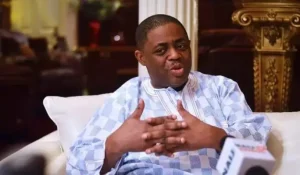
“A few days ago, our Vice President gave a courageous speech at the UN condemning the genocide in Gaza. Suddenly, we have this orchestrated attack on Nigeria’s image,” he noted.
Fani-Kayode, often accused of seeking to ingratiate himself to the present administration, which head, Tinubu, he had previously denigrated, when he was in the Peoples Democratic Party (PDP), said Maher’s claims were not only exaggerated but part of a calculated campaign to portray Nigeria as a failed state and justify foreign interference or sanctions.
“We’re doing our best, without help from America, France, or Britain. The idea that only Christians are being slaughtered is a complete falsehood.”
An Explosive Claim or a Needed Wake-Up Call?
While Maher’s statement gained more than four million views and earned applause from American audiences, Nigerian officials warn of the dangerous implications of oversimplifying the country’s challenges.
Security experts note that Nigeria’s terrorism crisis—though severe—is primarily driven by a blend of religious extremism, economic marginalisation, and local grievances, not a coordinated religious purge.
Yet, human rights groups and Christian organisations at home and abroad have long raised concerns about targeted violence against Christian communities, especially in the country’s Middle Belt and northern regions.
But the Nigerian government insists such narratives risk inflaming tensions and undermining efforts at unity and security.
The Bigger Picture: A Nation Still in Struggle
Nigeria’s fight against terrorism is far from over. But the country’s leadership is adamant that the conflict is not religious in nature and must not be painted as such.
“The Nigerian story is not one of religious genocide or persecution,” Minister Idris stressed. “Rather, it is a story of resilience, diversity, and a globally acknowledged commitment to peaceful coexistence.”
As the war of narratives rages on, what remains clear is that Nigeria is caught in a delicate balancing act: confronting real and ongoing security threats while defending its reputation on the global stage.