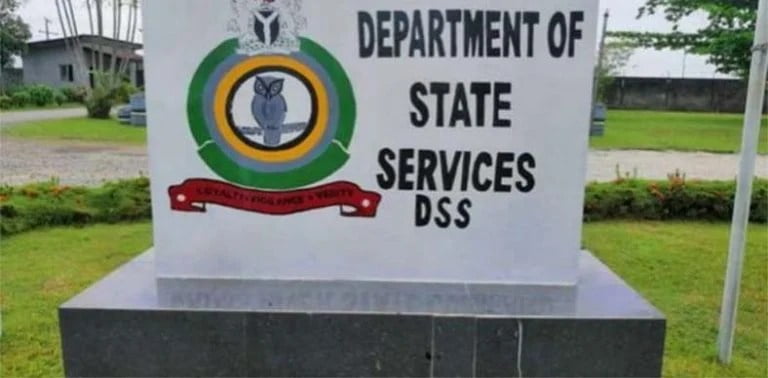
Social media giant X (formerly Twitter) is facing mounting pressure from the Nigerian government after the country’s domestic intelligence agency, the Department of State Services (DSS), demanded the suspension of Nigerian journalist and activist Omoyele Sowore’s account over a controversial post targeting President Bola Ahmed Tinubu.
The DSS, in an official letter to X Corp., called for the immediate removal of a tweet posted by Sowore on August 25, 2025, at 11:38 PM (WAT), and requested the deactivation of his verified account, @YeleSowore. The tweet read:
“This criminal @officialABAT actually went to Brazil to state that there is NO MORE corruption under his regime in Nigeria. What audacity to lie shamelessly!”
The post directly tagged President Tinubu’s official X account, @officialABAT, and has since triggered a flurry of online debate and street protests. The DSS described the post as “disparaging and ridiculing,” accusing Sowore of spreading “misleading information, online harassment, and hate speech.”
According to the DSS, the tweet poses a threat to national security by inciting unrest among politically sensitive groups and undermining the reputation of the presidency. “Supporters of the President have started taking to the streets in protest, thereby creating political tension and threatening the country’s national security,” the agency wrote.
The DSS cited multiple Nigerian laws allegedly violated by the post, including:
• Section 51 of the Criminal Code Act (false publication),
• Sections 19, 22, and 24 of the Cyber Crimes Act, 2025 (offensive or harmful content),
• Section 2(3) of the Terrorism (Prevention and Prohibition) Act, 2022 (promotion of ideologies that could incite domestic terrorism).
Furthermore, the DSS warned X Corp. that failure to act could render the platform criminally liable under Nigerian law for hosting such content. The agency urged the company to suspend or ban any accounts associated with Sowore to prevent further “damage to the image of Nigeria.”
Sowore responds: “unconstitutional attempt to silence dissent”
In a swift response, Omoyele Sowore, a long-time critic of successive Nigerian governments and founder of the media outlet SaharaReporters, rejected the DSS’s claims and threats as “unconstitutional, unlawful, and a gross abuse of power.”
Through his legal team, led by human rights lawyer Tope Temokun, Sowore wrote to X Corp.’s legal and policy team, firmly challenging the DSS’s request. The letter, titled ‘RE: Request by the Nigerian Department of State Services (DSS) to Remove Content Posted by Omoyele Sowore’, argued that the demand lacks legal standing and violates both Nigerian and international human rights standards.
Citing Section 39(1) of Nigeria’s Constitution, which guarantees freedom of expression, and Article 9 of the African Charter on Human and Peoples’ Rights, Temokun stated that only a valid court order—not a directive from a security agency—can mandate content removal or account suspension.
“No administrative agency, including the SSS [DSS], has the authority to censor citizens or compel private platforms to remove content without judicial oversight,” the letter stated.
Temokun also referenced landmark court rulings, including Director, SSS v. Agbakoba and Arthur Nwankwo v. The State, as precedents affirming that fundamental rights cannot be overridden by executive fiat.
The legal team warned that if X Corp. complies with the DSS’s demand, it would be complicit in violating Sowore’s rights and could face litigation in domestic or international courts. “Our client reserves the right to seek redress before competent national and international fora should any action be taken that violates his rights,” the letter concluded.
Pattern of Harassment and Suppression
Sowore, in a personal statement posted to Facebook, described the DSS’s letter to X as part of an ongoing campaign of harassment intended to silence his dissent. “This is a desecration of national dignity and a desperate attempt to suppress criticism beyond Nigeria’s borders,” he wrote.
He claimed to have discovered a “ridiculously crafted letter” from the DSS demanding that his account be taken down within 24 hours. “I won’t be surprised if they send the same threat to Facebook next,” he added, referencing previous state-led harassment including multiple arrests, passport seizures, and prolonged detentions since 2019.
Sowore has been a lightning rod in Nigerian political discourse, particularly since his 2019 presidential run. His outspoken activism and investigative journalism have made him a frequent target of state security operations.
X Corp caught between free speech and government pressure
As of press time, X Corp. has not publicly responded to the DSS’s request. The platform has frequently found itself at the crossroads of free expression and government pressure globally, particularly in politically volatile regions.
This latest controversy brings renewed focus to the complex role of tech platforms in moderating political speech—especially in authoritarian-leaning environments where dissent is often labeled as a threat to national stability.
With growing scrutiny over the limits of digital expression and the powers of government agencies to demand censorship, the showdown between the Nigerian state and Omoyele Sowore could set a significant precedent—both for online speech in Nigeria and the broader fight for democratic accountability in the digital age.