
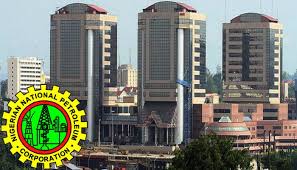
In a bombshell revelation that has sent shockwaves through Nigeria’s corridors of power, Ola Olukoyede, Chairman of the Economic and Financial Crimes Commission (EFCC), has disclosed that a preliminary probe into the Nigerian National Petroleum Company Limited (NNPCL) has uncovered staggering levels of corruption.
Speaking Wednesday at the National Conference on Public Accounts and Fiscal Governance in Abuja, Olukoyede said early findings from a sweeping investigation into the country’s oil and gas sector have revealed “mind-boggling” financial malfeasance — despite the fact that investigators have only just scratched the surface.
“In the last three weeks, we launched a commission-wide investigation into the extractive industry, particularly oil and gas. What we’ve discovered is shocking,” Olukoyede told lawmakers. “We’ve only opened the books. If this is what’s at the surface, imagine what’s buried beneath.”
The EFCC probe comes just months after President Bola Tinubu ousted Mele Kyari, the longtime Group Chief Executive Officer of NNPCL, and replaced him with Bashir Ojulari amid mounting concerns over transparency in the state-owned oil firm. Kyari had led NNPCL since 2019.
Olukoyede made it clear that the corruption plaguing NNPCL is symptomatic of deeper, systemic failures in Nigeria’s fiscal governance. He linked the mismanagement of public funds directly to the country’s worsening security crisis.
“There’s a very strong connection between the mismanagement of our national resources and the insecurity plaguing this country,” he warned. “From banditry to terrorism, when you trace the roots, you often find a trail of stolen public funds.”
A Plea for Reform
One of Olukoyede’s most urgent appeals was directed at the National Assembly: pass the long-delayed Unexplained Wealth Bill. The legislation would empower law enforcement to seize assets whose owners cannot credibly justify how they were acquired.
“I’ve been begging for the past year,” he said, visibly frustrated. “The last Assembly threw it out. But if we don’t start holding individuals accountable for assets that don’t match their known income, we’ll never fix this country.”
Illustrating the absurdity of the current legal framework, he cited an example of a civil servant with five luxury properties—two in Maitama and three in Asokoro—despite decades of modest public service salaries. “We’re told to prove a predicate offence before we can act. That is absurd,” he said.
Chasing Nigeria’s Stolen Wealth Across the Globe
Olukoyede revealed that the EFCC is actively tracking illicit assets across several continents, including countries not typically associated with Nigerian capital flight.
“Last month alone, I visited four or five countries chasing stolen assets. An ambassador even told me they found an entire estate in Iceland owned by a Nigerian. Iceland, of all places!” he exclaimed.
But the global trail of looted funds has exposed another challenge: reluctance by foreign governments to return stolen Nigerian assets. “There’s no anti-corruption agency on Earth that can recover even half of what has been looted from this country,” Olukoyede admitted. “Foreign custodians don’t want to let go. Under international law, they’re just as guilty as the original thieves.”
A Culture of Impunity
Beyond the oil sector, Olukoyede lamented a broader culture of impunity in Nigeria’s public service, where individuals under investigation or trial for corruption are still being celebrated — even glorified.
“We present evidence. We show you where the money went. We’re already in court. Yet these people are being praised like heroes,” he said. “Does that suggest we’re serious about fighting corruption?”
He also pointed to more than 700 federal Ministries, Departments, and Agencies (MDAs) still operating without adequate internal controls. “How many books can you check? How many files will you read?” he asked lawmakers. “We need systems that proactively prevent corruption before it happens.”
According to internal EFCC data, 90 percent of all stolen public funds in a given year are funneled abroad — money that could otherwise fund hospitals, schools, and infrastructure projects.
“Nigeria has no business borrowing money to survive,” Olukoyede said. “Not with the kind of wealth we have — in people, in natural resources. But without accountability, we’re wasting our future.”
In a stark warning to the political class, Olukoyede said this administration may represent the country’s last chance to right the ship. He called on leaders across party lines to put aside divisions and face corruption head-on.
“If we execute even 60 percent of our capital budget efficiently in 2025 and 2026, we will transform this country. We’ll empower small businesses, build infrastructure, and stabilize the economy,” he said.
“This is not about politics. This is about rescuing the soul of Nigeria.”