
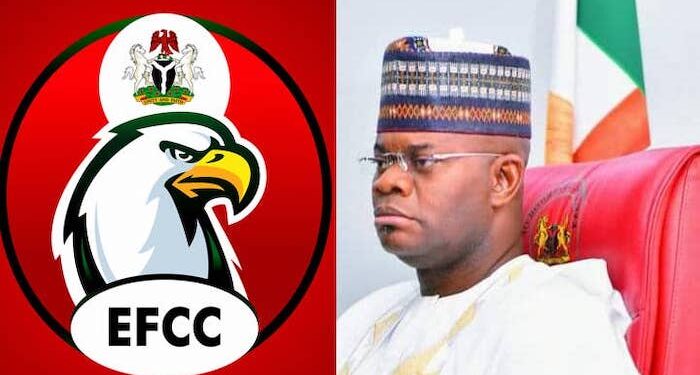
A tense moment unfolded at the Federal High Court in Abuja on Friday. EFCC witness Mshellia Bata, a Compliance Officer at Zenith Bank, publicly rejected claims by the anti-graft agency that he had been harassed or intimidated by security aides of former Kogi State Governor Yahaya Bello due to his testimony.
In open court before Justice Emeka Nwite, Mshellia clarified that at no point—before, during, or after his testimony on June 26—did he experience any harassment, contradicting EFCC’s earlier allegations.
On June 27, EFCC counsel Kemi Pinheiro, SAN, had claimed that Mshellia was intimidated by Bello’s security team following his June 26 testimony. Bello’s lawyer, J.B. Daudu, SAN, dismissed this, noting that no such incident had been reported during proceedings in either the Federal High Court or the FCT High Court. He pledged to investigate and report back.
Justice Nwite urged Daudu to examine the matter. The courtroom drama intensified when Mshellia requested the court’s permission to set the record straight, stating: “I was not harassed by any of the security details attached to the defendant … I was not harassed at all.” He also noted he had made no complaints to any authority.
Daudu then drew the court’s attention to an EFCC website report alleging harassment and misrepresentation of the previous day’s proceedings. Pinheiro responded that the EFCC would address the misinformation.
Daudu praised Mshellia’s integrity in making the clarification publicly. During cross-examination, the witness affirmed that former governor Bello was neither a signatory nor beneficiary of the bank accounts related to the Kogi Government House (Exhibit 22A, pages 24–413). “His Excellency … Yahaya Adoza Bello’s name did not feature in any … transaction in the documents before me,” Mshellia confirmed.
Mshellia had earlier identified the actual account signatories, including top officials such as the Permanent Secretary and Chief Accountant, and verified letters appointing key replacements. When Daudu asked him to clarify whether Bello benefited from the accounts, Pinheiro objected, asserting it exceeded the documents’ scope. Justice Nwite overruled, noting the witness’s expertise.
Mshellia also explained that he oversees a cluster of 13 Zenith Bank branches within Abuja—including Gwagwalada, University of Abuja, and Garki—but none outside the Federal Capital Territory.
Following the testimony, Daudu applied for the release of Bello’s travel documents for medical treatment in the UK. The EFCC opposed via a counter-affidavit, calling the application technically flawed and an abuse of process. Daudu argued a further affidavit had been filed overnight, stating Bello needed international travel for medical reasons after eight years.
The court adjourned to July 3–4 for the continuation of trial and set a ruling on the travel request for July 21.
Previously, on Thursday, Justice Nwite had denied EFCC’s attempt to cross-examine its third witness, Nicholas Ojehomon, CEO of Efab Property Limited, who testified there were no wired transfers from Kogi State Government to the American school in question.
