● 13 killed at Wedding in Kaduna
Grief and outrage have swept across Nigeria’s Middle Belt following a series of coordinated attacks over the Palm Sunday weekend that left dozens dead and many more injured, prompting urgent calls for both national and international intervention.
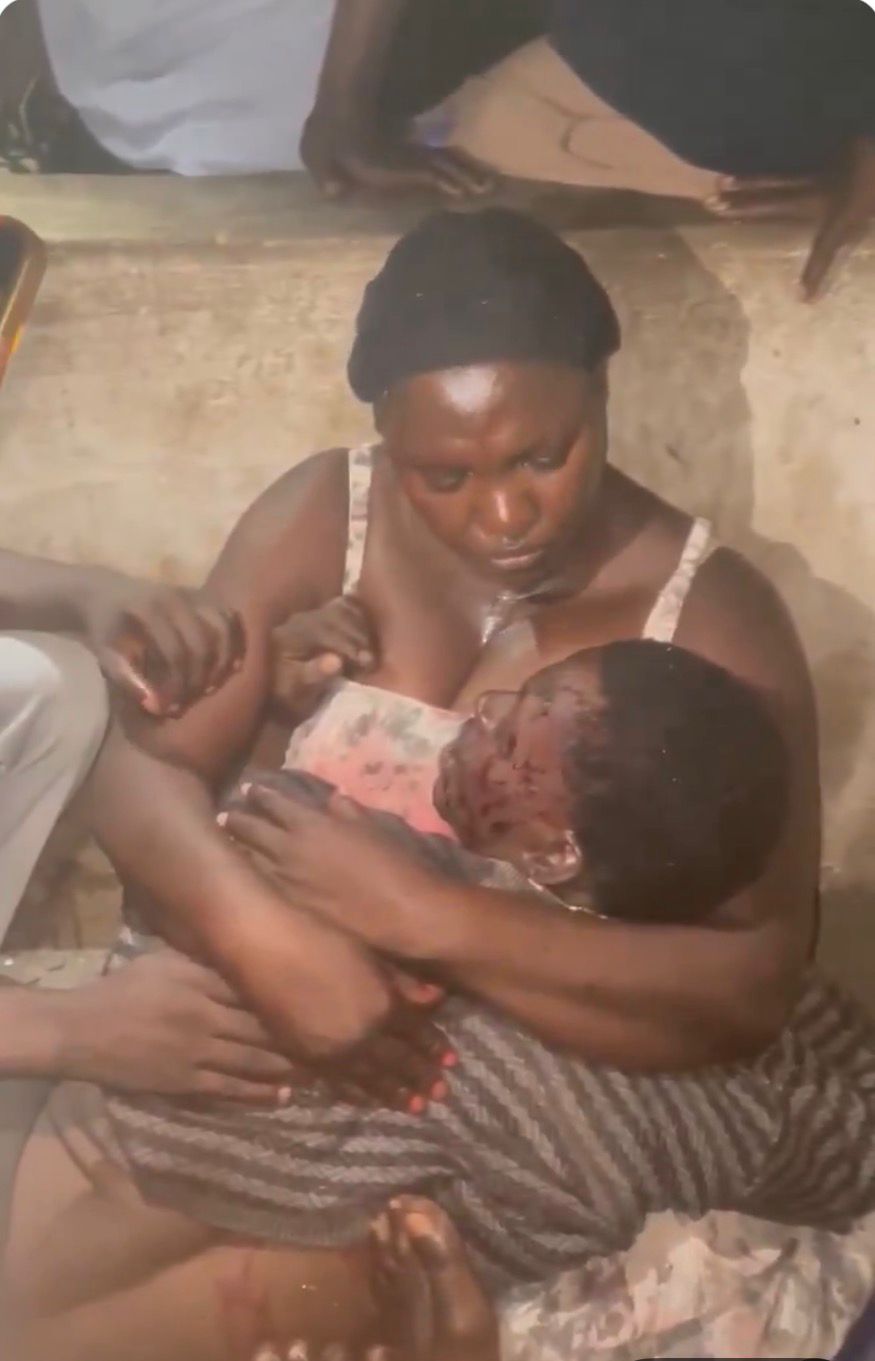
In one of the most harrowing scenes, a bereaved mother in Jos was seen clutching the lifeless body of her son, a victim of the violence. Witnesses described her as inconsolable, repeatedly pleading for him to wake up.
The attacks, which occurred on March 29, 2026, have been described by the U.S.–Nigeria Civil Society Coalition to End Genocide Against Christians and Other Vulnerable Groups as “Bloody Palm Sunday,” citing their timing on one of Christianity’s most sacred observances.
According to situational reports released by the Coalition, multiple communities across Plateau State, Taraba State, and Kaduna State were targeted in near-simultaneous assaults.
In Anguwan Rukuba, Jos, at least 25 civilians were killed when heavily armed attackers stormed the area. Dozens sustained critical injuries, with local sources indicating that the attacks coincided with church activities, amplifying fear among worshippers.
Further east in Takum, violence unfolded in multiple locations. A police officer was fatally stabbed at Mayo Fuel Station, while a civilian, identified as Kumater Atornyi, was killed at Kasuwan Shanu Market. In Atsahaa Village, two internally displaced persons were ambushed and murdered while attempting to retrieve food for their families.
Meanwhile, in Kahir Village, Kagarko Local Government Area of Kaduna State, gunmen attacked a wedding ceremony late at night, killing 13 attendees and abducting several others, including women and young people. Survivors recounted scenes of chaos as guests fled into nearby bushes under heavy gunfire.
The Coalition argues that the attacks are part of a larger and persistent pattern of targeted violence in the Middle Belt, often coinciding with significant religious observances.
Data from civil society monitors suggests that more than 7,000 Christians were killed within the first 220 days of 2025 alone – an average exceeding 30 deaths per day.
Despite reported intelligence warnings about armed group movements across the Donga River and surrounding forests, affected communities were allegedly left without adequate security presence.
“Every citizen deserves the right to life, safety, and freedom of religion,” the Coalition stated. “The persistent failure to protect vulnerable communities raises serious concerns of gross negligence, if not complicity.”
The Coalition has issued an urgent appeal to the Federal Government and the international community, outlining key demands:
• Enhanced Security Deployment: Immediate and sustained military and police presence in high-risk areas such as Jos and Takum.
• Accountability: Independent investigations into the attacks, with perpetrators identified and prosecuted.
• International Intervention: Engagement from the United Nations and the United States Department of State to recognize the incidents as potential atrocity crimes and provide support.
• Humanitarian Assistance: Urgent aid for displaced persons facing food insecurity and limited access to farmland.
The Middle Belt has long been a flashpoint for communal violence involving farmers, herders, and armed groups. However, rights advocates warn that the scale, coordination, and timing of these recent attacks signal a dangerous escalation.
“The time for statements of concern has passed,” the Coalition emphasized. “Decisive action and accountability are now imperative.”
As families mourn and communities bury their dead, the haunting image from Jos – of a mother holding her fallen son – has become a stark symbol of the human cost of a crisis that shows little sign of abating.
Coalition Members Include:
• Save Nigeria Group USA — Stephen Osemwegie, President & Founder (Minnesota)
• Equipping the Persecuted — Judd Saul, Founder & Executive Director (Iowa)
• Save the Persecuted Christians — Dede Laugesen, President & CEO (Colorado)
• Center for Caring, Empowerment, and Peace Initiative (CCEPI USA) — Rev. Dr. Rebecca Samuel Dali (Iowa)
• U.S.–Nigeria Law Group — Emmanuel Ogebe (Washington, DC)
• African Christian Fellowship Washington, DC Advocacy Group — Dr. G. Ukwuani
• Berom Community North America — Pam Davou (Boston, MA)
• International Committee on Nigeria (ICON) — Stephen Enada (Atlanta, GA)
• International Peace and Development Initiative (IPDI) — Rev. Dr. Chris Gankon (Los Angeles, CA)
• Christian Association of Nigerian Americans (CANAN USA) — Banjo Olaniyan (Houston, TX)
• Global Mission Community Development (GMCD) — Evangelist Stephen Esele (New York)
• Ogidi Inwellian North America (OINA) — Dr. Chuck Abuadinma (Washington, DC)
• Nigerian Faith-Based Community Organization New Jersey — Bishop Samuel Tunji Ayeni
Home For The Needy Foundation- Rev. Solomon Folorunsho (Benin City, Nigeria)
• LEAH Foundation — Dr. Gloria Samdi Puldu (Jos, Nigeria)
• Berom Diaspora Coalition (BDC) — Rev. Dr. John Haruna (Pennsylvania)
• Stride Leadership Foundation — Rev. Dr. Polycarp Gbaja (Nigeria)
• Pathway Ministries — Rev. Fave Goje (Abuja, Nigeria)
