
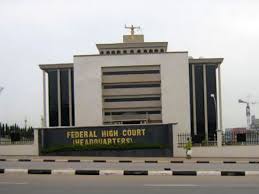
The Chief Judge of the Federal High Court, John Terhemba Tsoho, has declared his readiness to appear before the Code of Conduct Bureau (CCB) following allegations that he failed to disclose multiple bank accounts in his most recent asset declaration.
The development marks a rare moment in Nigeria’s judicial history, with a sitting head of a superior court publicly acknowledging an invitation from the constitutionally established anti-corruption body tasked with enforcing compliance with asset declaration laws.
In a statement issued Monday by Catherine Christopher, Director of Information of the Federal High Court, Justice Tsoho affirmed his willingness to cooperate fully with the Bureau.
According to the statement, the Chief Judge has communicated to the CCB that he is prepared to honor its invitation and is available on any date within the week beginning March 16, 2026.
Christopher stated that Justice Tsoho would be accompanied by his legal counsel, Kanu Godwin Agabi, SAN. Agabi is reportedly outside the country for medical reasons but has indicated readiness to appear alongside the Chief Judge upon his return.
“In accordance with his constitutional right to consult and be represented by counsel of his choice, his legal representative has indicated his readiness to accompany the Honourable Chief Judge to the Bureau upon his return to Nigeria,” the statement read.
The Federal High Court spokesperson added that the CCB has been duly informed of the Chief Judge’s position.
Justice Tsoho, through the statement, reiterated his commitment to due process, transparency, and respect for the rule of law.
The invitation follows a report by Premium Times, which alleged that Justice Tsoho failed to declare several bank accounts in the asset declaration form he submitted to the CCB on April 29, 2024.
According to the publication, at least three accounts held with United Bank for Africa and one account with Access Bank were allegedly omitted from the declaration.
The report suggested that if the omission is established as deliberate or material, it could constitute a breach of Section 15 of the Code of Conduct Bureau and Tribunal Act, which criminalizes false declaration or failure to declare assets.
The Chief Judge has not publicly addressed the specifics of the alleged accounts but has maintained his readiness to submit himself to the Bureau’s processes.
Under Nigeria’s constitutional and statutory framework, public officers are required to declare all assets, liabilities, and bank accounts – including domiciliary and foreign accounts – upon assumption of office and at the end of their tenure.
The CCB derives its authority from the 1999 Constitution (as amended) and is empowered to investigate complaints of non-compliance. Where a prima facie case is established, matters may be referred to the Code of Conduct Tribunal (CCT) for adjudication.
Sanctions for proven violations can be severe. They include:
• Removal from office
• Disqualification from holding public office for up to 10 years
• Forfeiture of improperly declared or undeclared assets
Legal analysts note that proceedings before the CCT are quasi-criminal in nature, meaning allegations must be established through evidence and due process.
The allegations come at a sensitive time for Nigeria’s judiciary, which has faced recurring scrutiny over issues of transparency and accountability.
As Chief Judge of the Federal High Court – a court with nationwide jurisdiction over constitutional, financial, and high-profile corruption cases – Justice Tsoho occupies a pivotal position in the country’s legal architecture.
Observers say the manner in which the CCB handles the matter, and the Chief Judge’s cooperation with the investigation, could significantly affect public perception of institutional integrity.
With Justice Tsoho and his counsel proposing dates beginning March 16, attention now turns to the CCB’s response and the scheduling of his appearance.
Should the Bureau find grounds for further action, the case may proceed to the Code of Conduct Tribunal. However, until any formal charges are filed, the allegations remain under investigation.
