
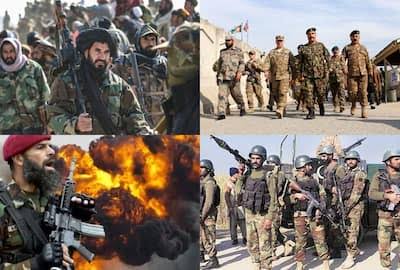
In a striking escalation of tensions that have simmered for years, Pakistan and Afghanistan are locked in what Islamabad’s defence leadership calls an “open war,” following a sharp flare-up of cross-border hostilities that began on February 26. The conflict has seen airstrikes deep inside Afghan territory, fierce ground clashes along the grueling Durand Line, and mutually irreconcilable claims of battlefield success and heavy losses.
Pakistan’s Defence Minister Khawaja Muhammad Asif publicly declared on February 27 that the two neighbours were in “open war,” after Kabul-based forces launched what Islamabad says was a large-scale offensive against Pakistani military posts along the border. In a statement posted on social media, Mr Asif said Islamabad’s “patience has run out,” describing the conflict as self-defense against a regime it accuses of harbouring militants intent on striking Pakistani soil.
Islamabad has dubbed its military counter-offensive Operation Ghazab lil Haq – which translates roughly as “Wrath for the Truth” – and says it is targeting Taliban military infrastructure across multiple Afghan provinces. Pakistani warplanes, drones and artillery have struck locations in Kabul, Kandahar, Jalalabad, and Paktia, according to multiple official statements.
The Taliban-led government in Kabul has robustly denied Pakistan’s accusations of sheltering militants, describing the bombardment of Afghan cities as a blatant violation of its sovereignty and international law. Afghan authorities say they have fired back at Pakistani jets and repelled attempted airstrikes, including near the strategically significant Bagram Air Base, where anti-aircraft systems were deployed to thwart what Kabul called a Pakistani attack early Sunday.
Both sides have released starkly different casualty figures that cannot be independently verified. Islamabad claims hundreds of Afghan fighters have been killed and dozens of military posts destroyed – figures echoed in a number of Pakistani official statements – while Afghan officials claim they have killed scores of Pakistani soldiers and seized military positions. Pakistan has dismissed Afghan claims of downing a fighter jet and capturing its pilot as “totally untrue.”
Explosions and gunfire have been reported in Kabul itself, prompting panic among residents and underscoring how far the conflict has moved beyond remote frontier skirmishes.
Root Causes: Militancy and the Durand Line
Analysts say the present escalation is rooted in long-standing disputes over security, sovereignty, and the Durand Line – the more than 2,600-kilometre frontier that Afghanistan refuses to formally recognize. Islamabad has repeatedly accused Kabul of allowing Tehreek-e-Taliban Pakistan (TTP) fighters and other militants to operate from Afghan soil, claiming these groups have carried out deadly attacks inside Pakistan. Kabul denies such allegations, insisting it does not allow Afghan territory to be used for attacks on any neighbour.
The current outbreak of fighting follows months of tit-for-tat border clashes, sporadic air operations, and failed diplomatic efforts, including previous ceasefires and negotiations brokered by Gulf mediators.
The sudden deterioration in security has also had political implications. Pakistani Prime Minister Shehbaz Sharif postponed a scheduled diplomatic visit to Russia in early March, citing the “regional and internal situation.”
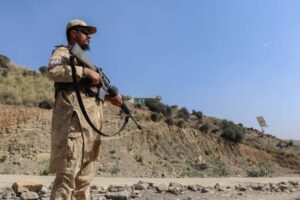
International reactions have been mixed. The United States has publicly affirmed Pakistan’s right to defend itself against attacks, while the United Nations, the European Union, and several other regional actors have called for an immediate cessation of hostilities and a return to dialogue to protect civilian lives. Regional powers – including Saudi Arabia, Qatar, Iran, Russia, and China – have offered to mediate to prevent a broader conflict.
Human rights observers and international aid groups warn that continued aerial bombardments and ground clashes risk a sharp increase in civilian casualties and displacement in already vulnerable Afghan communities. Hospitals in cities like Kabul are reported to be overwhelmed with casualties, while ordinary citizens recount scenes of chaos and fear as explosions shake residential districts.
Despite pressure from international mediators and calls for restraint, both sides appear poised to sustain offensive operations. With diplomatic channels strained and trust at a low point, experts warn that the conflict could harden into a protracted confrontation, with serious implications for South Asian stability.
How Conflict Escalated To Open War
Long-Running Tensions (2021–2025)
• After the Taliban returned to power in Kabul in 2021, relations between Pakistan and Afghanistan quickly deteriorated.
• Islamabad repeatedly accused Kabul of sheltering militants from Tehreek-e-Taliban Pakistan (TTP), responsible for attacks inside Pakistan.
• The Taliban government denied harboring militants and accused Pakistan of violating Afghan sovereignty through cross-border shelling.
• Clashes intensified along the disputed Durand Line, the 2,600-kilometer frontier Afghanistan has never formally recognized.
February 26, 2026 — Major Border Offensive
• Fighting sharply escalated after what Pakistani officials described as a coordinated Afghan assault on multiple Pakistani border posts.
• Afghan officials claimed they were responding to prior Pakistani air incursions.
• Artillery exchanges were reported in Khyber Pakhtunkhwa and eastern Afghan provinces including Nangarhar and Khost.
February 27 — “Open War” Declaration
• Pakistan’s Defence Minister Khawaja Asif declared the situation an “open war.”
• Islamabad launched Operation Ghazab Lil Haq (“Wrath for the Truth”), targeting Afghan military infrastructure.
• Airstrikes were reported in:
• Kabul
• Kandahar
• Jalalabad
• Bagram Air Base
Afghan forces said anti-aircraft systems repelled a strike near Bagram.
February 28 – Conflicting Battlefield Claims
• Pakistan’s Information Minister Attaullah Tarar claimed:
• 415 Afghan soldiers killed
• 46 military locations struck
• Taliban officials claimed:
• Over 80 Pakistani soldiers killed
• 27 Pakistani posts captured
• A Pakistani fighter jet shot down in Jalalabad (Pakistan denies this)
Independent verification remains impossible due to restricted media access in conflict zones.
March 1 – Regional Shockwaves
• Prime Minister Shehbaz Sharif postponed a scheduled visit to Russia, citing the “regional and internal situation.”
• The conflict drew urgent international reactions (see below).
• Civilian casualties began rising in urban centers, particularly Kabul.
State Of Regional Security
1. Risk of a Prolonged Cross-Border War
This is no longer limited to sporadic artillery exchanges. The use of:
• Fighter jets
• Armed drones
• Urban airstrikes
…signals a shift toward sustained interstate conflict – something rarely seen between these two neighbors since the Taliban’s return to power.
If operations continue, both militaries may entrench positions along the Durand Line, creating a semi-permanent war frontier.
2. Militant Spillover & Insurgency Escalation
The conflict could:
• Strengthen hardline factions within the TTP
• Inspire retaliatory attacks inside Pakistan’s major cities
• Encourage splinter groups to exploit instability
If Afghan territory becomes a battleground between Taliban factions and Pakistani forces, regional militant networks could re-mobilize.
3. Nuclear Shadow (Indirect but Serious)
While Afghanistan is not a nuclear power, Pakistan is. Any prolonged destabilization of Pakistan – especially internal militant attacks – raises international anxiety because Pakistan possesses nuclear weapons.
Though no nuclear threat is currently implied, global powers are watching closely.
4. Regional Power Involvement
Several actors are closely monitoring developments:
• The United States has voiced support for Pakistan’s right to defend itself.
• United Nations Secretary-General António Guterres called for de-escalation.
• The European Union urged an immediate ceasefire.
• Saudi Arabia and Qatar are reportedly attempting quiet mediation.
China, Iran, and Russia are also believed to be engaging diplomatically behind the scenes to prevent broader instability in Central and South Asia.
HUMANITARIAN IMPACT
Urban Fear in Kabul
Unlike past border skirmishes, strikes have reached major Afghan cities. Residents of Kabul report:
• Nighttime explosions
• Power outages
• Panic buying of food and fuel
• Overwhelmed hospitals
Afghanistan’s economy was already fragile following years of sanctions and aid reductions. Urban bombardment could worsen humanitarian collapse.
Displacement Risk
Eastern Afghan provinces may see:
• Civilian flight toward Kabul
• Refugee movement toward Iran
• Border tightening by Pakistan
If Pakistan closes crossing points, humanitarian corridors may shrink dramatically.
Economic Shock
Trade routes between the two countries are critical:
• Afghanistan depends heavily on Pakistani ports.
• Border closures could spike food and fuel prices inside Afghanistan within weeks.
Scenarios
Three possible scenarios:
1️⃣ Rapid Mediation (Best Case)
Saudi/Qatari mediation results in a temporary ceasefire within days.
2️⃣ Controlled Escalation (Most Likely)
Airstrikes and artillery continue for weeks, but both sides avoid full ground invasion.
3️⃣ Entrenched Conflict (Worst Case)
Frontlines solidify along the Durand Line, creating a prolonged war with rising civilian casualties and militant spillover.
