
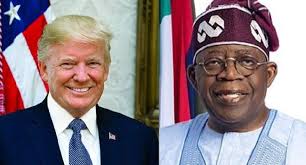
The Federal Government on Tuesday firmly rejected allegations of religious persecution in Nigeria, maintaining that there is no state policy or official backing for discrimination or violence against any religious group.
The rebuttal followed the submission of a joint report by committees of the United States Congress to President Donald Trump, alleging persecution of Christians and highlighting extremist violence in parts of Nigeria.
The report, compiled by the U.S. House Committees on Appropriations and Foreign Affairs after months of investigations and on-the-ground assessments, was presented at the White House on Monday. It followed President Trump’s recent redesignation of Nigeria as a Country of Particular Concern (CPC) over alleged violations of religious freedom. The president had tasked Congressman Riley Moore and House Appropriations Committee Chairman Tom Cole to spearhead a Congressional probe into claims of religious persecution and terrorism-related violence in the country.
Moore confirmed the submission of the report in a statement posted on his official X account, describing the White House meeting as the culmination of extensive bipartisan efforts. He said the engagements offered what he termed a clearer understanding of the scale of insecurity and the mounting challenges facing Christian communities in some regions of Nigeria.
According to him, the findings reflected concerns raised during consultations with stakeholders, faith-based organisations and security experts, particularly regarding attacks attributed to terrorist groups, armed bandits and other non-state actors.
However, Nigeria’s Minister of Information and National Orientation, Mohammed Idris, dismissed suggestions that the violence amounted to religious persecution sanctioned by the state.
In a statement issued in Abuja on Tuesday, Idris said the Federal Government had taken note of the recommendations emerging from engagements within the U.S. Congress but stressed that Nigeria “does not have, and has never had, a state policy of religious persecution.”
He acknowledged that parts of the country continue to grapple with serious security challenges, including terrorism, banditry and communal conflicts, which have led to significant loss of life and property.
“Nigeria acknowledges that parts of the country continue to face serious security challenges, including terrorism, banditry and communal conflicts that have tragically affected many communities,” the minister said. “The Federal Government remains deeply concerned about the loss of lives and destruction of property resulting from these criminal acts, and we extend our sympathies to all victims and their families, regardless of faith, ethnicity or region.”
Idris emphasised that the violence being addressed by Nigerian security agencies stems from complex threats such as terrorism, organised criminality and longstanding communal tensions — not from government policy or religious bias.
He further underscored that the Nigerian Constitution guarantees freedom of religion and worship for all citizens, and that the Federal Government remains committed to upholding these protections and ensuring equal treatment under the law.
Reaffirming diplomatic ties, the minister said Nigeria values its longstanding strategic partnership with the United States, noting shared interests in promoting security, economic development and regional stability.
“We remain open to constructive dialogue and cooperation rooted in mutual respect, shared responsibility, and recognition of Nigeria’s constitutional framework and sovereignty,” Idris stated.
He added that the Federal Government would continue to engage international partners through appropriate diplomatic channels while focusing on its primary responsibility — the protection of all Nigerians, irrespective of religious or ethnic affiliation.
The exchange underscores growing international scrutiny of Nigeria’s security situation, even as Abuja insists that its counterterrorism and law enforcement efforts are not targeted at any religious group but are aimed at restoring peace and stability nationwide.
An overview of the report prepared after President Donald Trump’s redesignation of Nigeria as a “Country of Particular Concern” (CPC) for religious freedom issues shows that it came after months of investigation, including:
A bipartisan congressional fact-finding trip to Nigeria, hearings with expert witnesses, consultations with religious leaders and internally displaced persons (IDPs), and an
engagement with senior Nigerian officials.
Core Findings Highlighted in the Report
The report paints a grim picture of the security situation in Nigeria and characterises parts of the violence as having a religious dimension. Some of the figures and observations included are:
• Estimates of large numbers of Christian civilians killed, with some summaries suggesting over 7,000 Christian deaths in 2025 alone.
• Thousands of churches have reportedly been destroyed over the past decade.
(Note: These figures come from reporting about the Congressional findings; independent research organisations have slightly different estimates, and there is no universally agreed official count. )
Lawmakers didn’t just document alleged persecution — the report also made several policy recommendations, many of which go beyond routine advisory suggestions:
▪︎Bilateral U.S.–Nigeria Security Agreement
To protect vulnerable communities and dismantle extremist networks.
Conditional U.S. Funding
Recommend withholding some U.S. non-humanitarian aid until measurable steps are taken by the Nigerian government to curb the violence and improve protection.
▪︎Target individuals or groups allegedly complicit in religious violence.
▪︎Calls to review or repeal Sharia and blasphemy laws that are argued in the report to undermine religious freedom.
▪︎Some media summaries say the report even suggested economic tools like reviewing export policies (e.g., blocking beef exports) as part of broader leverage strategies.
▪︎Proposals include encouraging Nigeria to move away from some foreign military equipment toward U.S. defence systems to deepen security ties.
The submission of this report marks a significant escalation in U.S. legislative scrutiny of Nigeria’s security and human rights record, potentially reshaping diplomatic and aid relationships.
The figure and characterisation of violence in the report are disputed by Nigerian authorities, who argue that the conflicts are criminal, communal, and terrorism-related rather than state-sponsored or religiously targeted.
Independent data from conflict analysts show that violence in Nigeria is complex and multifaceted, with both Muslims and Christians among the victims, and often driven by a mix of terrorism, banditry, and local disputes.
